Mechanic

Best Universal TTRPGs

Universal TTRPGs are toolkits for tables that want one engine to handle many genres, tones, or campaigns. Start with Cortex Prime, Fate Core, BESM (Big Eyes, Small Mouth), and Savage Worlds as comparison points, then move down the list based on the kind of mechanical focus your group actually wants.

When comparing universal games, look at how much hacking is required, genre support, character-building flexibility, GM workload, and whether the system has a strong default play style. Those details matter more than the tag itself, because two games can share a category while asking completely different things from the GM and players.

Use the top picks as anchors rather than treating the page like a simple popularity ranking. The goal is to answer the practical table question: which game will produce the kind of first session, campaign rhythm, and player buy-in your group is likely to enjoy?

A universal game is rarely prep-free; the table must usually decide what genre procedures matter before play.

13 games All categories
Top picks

Best games in this category

Quick starting points if you want the clearest expressions of what Universal games do well.

Cortex Prime
Top pick

Cortex Prime

Start with Cortex Prime when you want a universal option that makes the category visible in play, not just in premise. Compare it on how much hacking is required, genre support, character-building flexibility, GM workload, and whether the system has a strong default play style. It is especially strong for design-minded groups who like tuning systems and tables emulating a specific genre or property.
Fate Core
Top pick

Fate Core

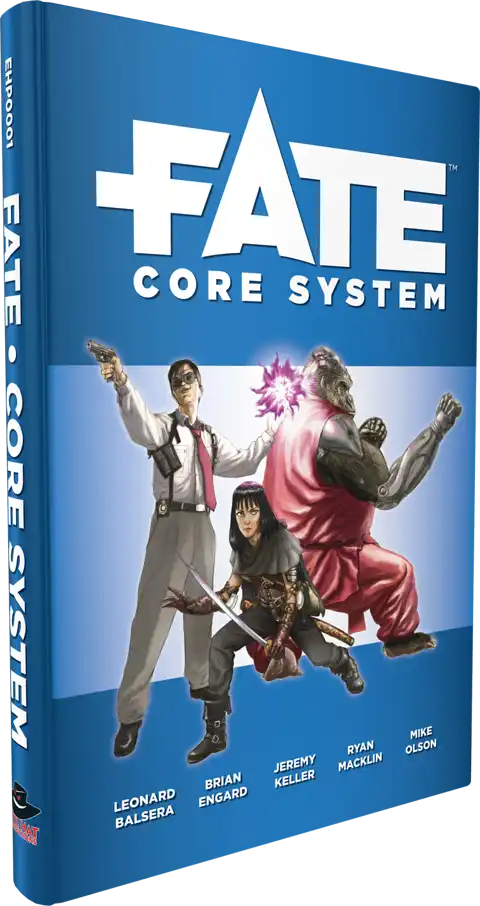
Start with Fate Core when you want a universal option that makes the category visible in play, not just in premise. Compare it on how much hacking is required, genre support, character-building flexibility, GM workload, and whether the system has a strong default play style. It is especially strong for groups that want fiction-first play and campaigns that need genre flexibility.

BESM (Big Eyes, Small Mouth)
Top pick

BESM (Big Eyes, Small Mouth)

Start with BESM when you want a universal option built for broad anime-style range rather than one default setting frame. It is especially useful for tables that want classless custom builds, a reusable engine across very different campaign ideas, and enough structure to support longer arcs without turning into a heavyweight tactical game.

Compare

How to choose the right Universal TTRPG

Choose by the job at the table. For universal TTRPGs, compare how much hacking is required, genre support, character-building flexibility, GM workload, and whether the system has a strong default play style. If that sounds too abstract, ask what the game makes players decide in the first hour.

Use the top picks as contrasts. Cortex Prime and Fate Core are useful side-by-side because they show different ways this category can work. BESM (Big Eyes, Small Mouth) adds another angle, while Savage Worlds helps test whether your table wants a different commitment level.

  • Cortex Prime: Start with Cortex Prime when you want a universal option that makes the category visible in play, not just in premise.
  • Fate Core: Start with Fate Core when you want a universal option that makes the category visible in play, not just in premise.
  • BESM (Big Eyes, Small Mouth): Start with BESM (Big Eyes, Small Mouth) when you want a universal option that makes the category visible in play, not just in premise.
  • Savage Worlds: Start with Savage Worlds when you want a universal option that makes the category visible in play, not just in premise.

Match scope before rules. Some universal games are best as one-shots, some need a short arc, and some only reveal their strengths through campaign play. Decide that scope first, then choose the rules weight your group will actually tolerate.

FAQ

Questions players ask

Which universal TTRPG should my table try first?
Start with Cortex Prime if you want the clearest first comparison point, then compare Fate Core, BESM (Big Eyes, Small Mouth), and Savage Worlds based on how much hacking is required, genre support, character-building flexibility, GM workload, and whether the system has a strong default play style. The right first pick is the one that makes your next session easiest to imagine and run.
How do I choose between universal games?
Compare how much hacking is required, genre support, character-building flexibility, GM workload, and whether the system has a strong default play style. Pay special attention to what the game asks players to do repeatedly: solve tactical problems, improvise drama, manage scarce resources, investigate, build characters, or share authorship.
Are universal TTRPGs better for one-shots or campaigns?
That depends on the procedures. For one-shots, favor fast setup, immediate pressure, and a clear ending. For campaigns, look for advancement, changing relationships, faction or location pressure, downtime, and enough variety to keep the core activity interesting.
What should I check before pitching a universal TTRPG to my group?
A universal game is rarely prep-free; the table must usually decide what genre procedures matter before play. Also check rules weight, safety expectations, prep load, and whether the players are excited by the actual scenes the game creates rather than only the premise.
More to compare

More Universal TTRPGs to compare

BESM (Big Eyes, Small Mouth)

BESM (Big Eyes, Small Mouth)

BESM is a genuine universal toolkit: the same Tri-Stat engine can stretch from school drama to mecha action to fantasy quests, but the GM has to define tone and limits up front. Use it when genre range and custom protagonists matter more than having one preset campaign loop.

Savage Worlds

Savage Worlds

Savage Worlds belongs in universal when your table wants that label to matter in play instead of only in browsing. Savage Worlds Adventure Edition is a medium-weight universal TTRPG built for pulpy action, fast combat turns, and one reusable rules engine that can power everything from weird west horror to fantasy, supers, and science fiction.

Mythic

Mythic

Mythic belongs in universal when your table wants that label to shape actual play. Mythic Role-Playing is a GMless and solo-friendly fantasy engine built around the original Mythic Game Master Emulator, making improvisation and oracle-driven surprise the heart of play.

GURPS

GURPS

GURPS belongs here because the core game is explicitly a genre-agnostic engine. It works best for tables willing to assemble the exact realism, power level, and setting mix they want instead of inherit a single default world.

Risus

Risus

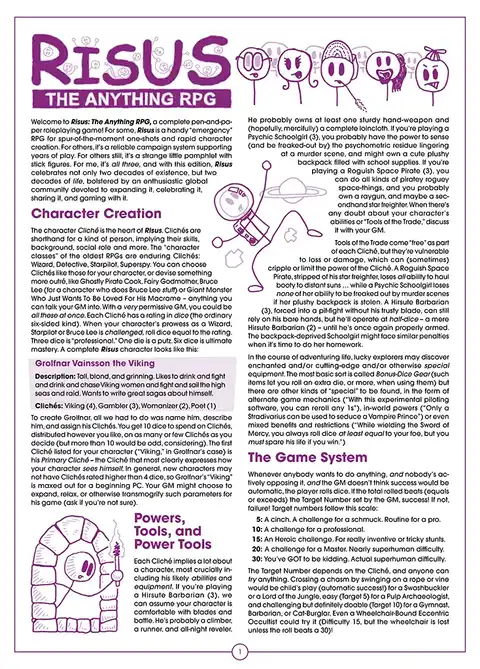
Risus belongs in universal when your table wants that label to shape actual play. Risus is a tiny free universal RPG built around cliché dice, making it one of the fastest ways to get a one-shot or comedy-leaning campaign off the ground.

Agêratos

Agêratos

Use Agêratos when your table wants universal play to shape real choices. It is most worth comparing for how much hacking is required, genre support, character-building flexibility, GM workload, and whether the system has a strong default play style. Agêratos is a narrative-driven, fiction-first TTRPG system where players and GM alike share authorship of...

Cortex Prime

Cortex Prime

Cortex Prime is a universal toolkit for groups that want one adaptable dramatic engine, but it is more build-your-own than plug-and-play. Its strength is tailoring traits and mods to the exact genre or property being emulated.

Everywhen

Everywhen

Everywhen fits Universal because the whole point is a single 2d6 chassis that can be retuned for pulp fantasy, weird west, occult modern, or science-fiction campaigns. It is a good match when your group wants one adaptable engine without jumping to a much heavier generic system.

Fate Accelerated Edition

Fate Accelerated Edition

Use Fate Accelerated when your table wants universal play to shape real choices. It is most worth comparing for how much hacking is required, genre support, character-building flexibility, GM workload, and whether the system has a strong default play style. Fate Accelerated is a rules‑lite, universal RPG that trades classes and skill lists for Aspects,...

Fate Core

Fate Core

Use Fate Core when your table wants universal play to shape real choices. It is most worth comparing for how much hacking is required, genre support, character-building flexibility, GM workload, and whether the system has a strong default play style. Fate Core is the flagship narrative edition of Fate, built around aspects, fate points, and fiction-first...

minimald6

minimald6

Use minimald6 when your table wants universal play to shape real choices. It is most worth comparing for how much hacking is required, genre support, character-building flexibility, GM workload, and whether the system has a strong default play style. minimald6 is a rules‑lite universal engine using 2–3d6, where 5–6s are successes.

Push SRD

Push SRD

Use Push SRD when your table wants universal play to shape real choices. It is most worth comparing for how much hacking is required, genre support, character-building flexibility, GM workload, and whether the system has a strong default play style. Push SRD is a rules‑lite, narrative engine built around a single d6 push‑your‑luck roll.

Tricube Tales

Tricube Tales

Use Tricube Tales when your table wants universal play to shape real choices. It is most worth comparing for how much hacking is required, genre support, character-building flexibility, GM workload, and whether the system has a strong default play style. Tricube Tales is a tiny generic RPG built for one-page play, fast setup, and flexible genre hacking...

Keep browsing

Related categories