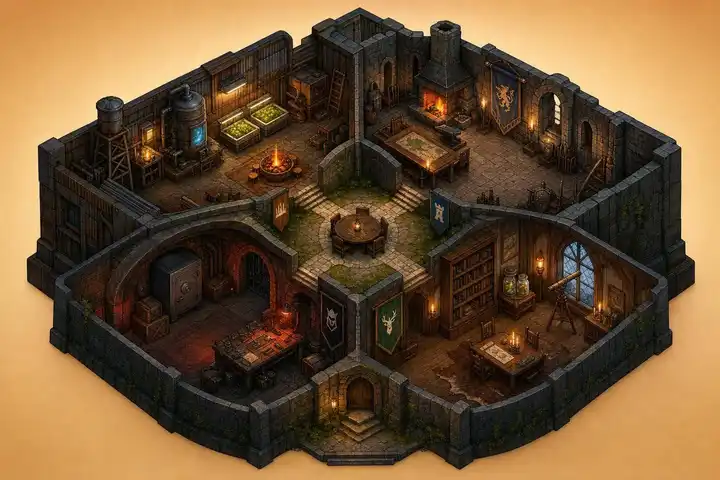
If you want a base that shapes play every session, pick Mutant: Year Zero or Forbidden Lands. If you want a base that supports the story more than the math, pick Blades in the Dark or Vaesen.
I’d break these 4 games into 2 groups right away:
- Base-heavy play: Mutant: Year Zero, Forbidden Lands
- Base-light play: Blades in the Dark, Vaesen
Here’s the short version:
- Blades in the Dark uses a lair tied to crew growth, claims, and faction pressure.
- Mutant: Year Zero uses the Ark as a core part of campaign progress, with projects tied to survival.
- Vaesen uses Castle Gyllencreutz as a headquarters that supports mysteries between cases.
- Forbidden Lands uses a stronghold with buildings, hirelings, upkeep, raids, and trade pressure.
That means your choice mostly comes down to one question: How much work do you want your home base to do at the table?
If you want:
- survival pressure, go with Mutant: Year Zero
- domain play and upkeep, go with Forbidden Lands
- criminal crew growth, go with Blades in the Dark
- mood and story support, go with Vaesen
Quick Comparison
| Game | Base | Growth Style | How Often It Matters | Best For |
|---|---|---|---|---|
| Blades in the Dark | Lair | Claims and upgrades | Mostly downtime | Crew identity and faction play |
| Mutant: Year Zero | Ark | Community projects | Every session | Survival and long-term planning |
| Vaesen | Castle Gyllencreutz | Rooms, staff, contacts | Between mysteries | Light base play and story support |
| Forbidden Lands | Stronghold | Buildings and hirelings | Regularly, with upkeep | Sandbox settlement play |
One last way I’d frame it: 50% of these games treat the base as a main system, and 50% treat it as support. If you know which side your group wants, the pick gets much easier.

TTRPG Base Building Compared: Blades in the Dark vs Mutant Year Zero vs Vaesen vs Forbidden Lands
How Each Game Handles Bases
Here’s the core difference at a glance:
| Game | Base Name | How It Grows | When It Matters |
|---|---|---|---|
| Blades in the Dark | Lair | Claims & Upgrades | Every downtime phase |
| Mutant: Year Zero | The Ark | Community Projects | Every session |
| Vaesen | Castle Gyllencreutz | Facilities & Staff | Between mysteries |
| Forbidden Lands | Stronghold | Buildings & Hirelings | Quarter-day upkeep |
Blades in the Dark and Mutant: Year Zero weave the base into character and campaign growth from the start. Vaesen and Forbidden Lands use it in a more stop-and-start way. That’s the big split: in some games, the base helps drive progress. In others, it supports downtime, prep, and investigation.
Blades in the Dark: Crew Lair, Claims, and Upgrades
In Blades in the Dark, the lair says a lot about who the crew is. It’s not just where they hide out. It shows their style, their reach, and what kind of operation they’re building.
Claims push the crew’s influence across the city. Upgrades improve the lair itself with things like training rooms, vaults, and cohorts. Those two systems plug straight into the game’s core loop, shaping what the crew can do and which jobs start to open up.
Mutant: Year Zero and Vaesen: The Ark vs. the Castle
In Mutant: Year Zero, the Ark is a campaign engine, not just set dressing. Players run Projects tied to Food, Culture, Technology, and Warfare. That means building farms, generators, defensive walls, and other pieces of a working community. Each trip into the Zone can shift priorities fast, because what the group finds out there often changes what the Ark needs next.
Vaesen goes much lighter. Castle Gyllencreutz grows between mysteries instead of sitting at the center of moment-to-moment play. Players restore the headquarters over time, add facilities like libraries and séance parlors, hire staff like physicians, and build contacts that help with supernatural investigations. The castle helps the hunt, but it doesn’t act like a survival machine.
Forbidden Lands: Strongholds, Hirelings, and Upkeep
In Forbidden Lands, the stronghold feels like part of the day-to-day life of the sandbox. Players can claim or build one, then expand it with practical buildings like ramparts, forges, and gardens. They can also bring in hirelings such as guards and workers, which gives the place a sense of scale and strain at the same time.
Silver matters here, because upkeep never drifts far into the background. Strongholds can face raids or sieges, and the quarter-day upkeep clock tracks things like mercenary companies, feeding fighters, and traderoad caravans. That gives the base some teeth. It’s not just a home base; it’s something the group has to keep running.
Progression, Complexity, and Campaign Impact
Once the base types are clear, the next step is figuring out how much each one changes play from session to session. That’s the main divide here: how much the base shapes planning, upkeep, and the pace of the campaign.
Which Games Put More Weight on Planning and Resources
Mutant: Year Zero and Forbidden Lands put the most pressure on base management during regular play. In Mutant: Year Zero, the Ark sits at the center of the campaign. Ark projects force the group to weigh day-to-day survival against the pull of Zone expeditions.
Forbidden Lands takes that same idea and pushes it further. Maintenance, supply concerns, and settlement logistics sit inside the core loop of play. It leans hardest into logistics, with settlement play, faction pressure, and mass combat all connected to the stronghold. The 2E manuscript adds mercenary companies on a Quarter Day clock, traderoad caravans for moving freight, and warehouse projects, which keeps the stronghold involved in regular play.
Which Games Keep the Base in the Background
Vaesen and Blades in the Dark still give players base upgrades that matter, but they stay lighter than the settlement-focused games above. In Blades in the Dark, the crew’s lair and claims connect more to reputation and faction standing, so the pressure comes from social and political trouble, not supply lines and upkeep. In Vaesen, the castle grows over time and mostly strengthens the campaign’s tone and character ties.
In both games, the base supports the story instead of steering it. That gap helps frame the next choice: whether a group wants a base that drives strategy, backs the story, or does some of both.
Which Game Fits Your Group
This table makes the choice a lot easier. Once you know how each game handles its home base, the next step is simple: match that system to how your group likes to play.
| What Your Group Wants | Best Fit | Runner-Up |
|---|---|---|
| Resource management and survival pressure | Mutant: Year Zero | Forbidden Lands |
| Sandbox domain building and trade economy | Forbidden Lands | Mutant: Year Zero |
| Faction growth and criminal underworld play | Blades in the Dark | - |
| Atmospheric headquarters with minimal bookkeeping | Vaesen | Blades in the Dark |
Best for Resource Management and Long-Term Planning
If your group wants base choices to matter over time, Mutant: Year Zero and Forbidden Lands stand out. They just aim at different kinds of play.
Pick Mutant: Year Zero if you want each expedition to shape the Ark’s next step. That core loop ties travel, scavenging, and base growth together in a clean way, so planning feels important without turning into spreadsheet work.
Go with Forbidden Lands if your group wants a more hands-on approach. Upkeep, trade, and hirelings all matter here. The stronghold links long-term campaign pressure to logistics, faction trouble, and settlement play, and it stays active between sessions.
Best for Story-Focused Campaigns
If your group would rather keep the base in the background, Vaesen and Blades in the Dark are the lighter picks.
Choose Vaesen if you want the base to support the story instead of driving play. The castle gives the campaign mood and a steady home for investigations, but it doesn’t ask for the same level of attention as an Ark or stronghold.
Blades in the Dark is also light, but in a different lane. It works well if you want the base tied to crew identity and faction growth, where claims, crew upgrades, and outside pressure shape progress more than upkeep or supply lines.
Conclusion: Pick the Base-Building Style That Matches Your Campaign Goals
Each game treats the home base in its own way, and that choice changes the feel of the whole campaign. Blades in the Dark connects the lair to crew identity and faction politics through claims and upgrades. Mutant: Year Zero puts the Ark at the center of play, with expeditions feeding Ark projects. Vaesen uses the castle more as story support than as a big drain on time or resources. Forbidden Lands goes deepest on the stronghold side, with hirelings, upkeep, construction, and trade routes.
At the simplest level, this comes down to one thing: how much control and upkeep your group wants. If you want the base to shape most of the campaign, Mutant: Year Zero and Forbidden Lands make the strongest match. If you want the base to stay more in the background while the characters lead the action, Vaesen and Blades in the Dark will likely feel like a better fit.
The best pick is the one that matches your group’s preferred mix of strategy, story, and upkeep. Go with the system that fits how your table wants to play, not just the one with the most moving parts.
FAQs
Which game has the deepest base-building rules?
Forbidden Lands 2nd Edition has the deepest base-building rules of the bunch. Other games connect bases to one main story or resource loop. This unofficial but detailed 2nd Edition manuscript does more than that. It folds settlement play into the campaign in a much bigger way.
You’re not just adding a few rooms or buying upgrades. The rules cover villages, towns, jobs, petitions, carousing, civic pressure, and political faction play. That gives you a setup where stronghold management feels like a core part of long-term play, not a side activity.
Which game is best if my group wants less bookkeeping?
Mutant: Year Zero is the best fit here. It keeps the rules load lighter and play more streamlined, so the focus stays on exploration, survival, and the story instead of a lot of admin.
By contrast, Forbidden Lands and Blades in the Dark tend to ask for more attention to mechanics tied to strongholds, upgrades, or reputation clocks.
Can a home base drive the whole campaign?
Yes. A home base can act as the main engine of a campaign. In Mutant: Year Zero, the Ark sits at the center of play: the group heads out to scavenge supplies, then brings those resources back to grow and protect the settlement.
In games with stronghold or crew mechanics, the base also helps keep the campaign focused. Progress isn’t just about what happens to each character. It’s tied to what the group builds, defends, and earns over time through upgrades, reputation, and the pressure of keeping the base safe.


