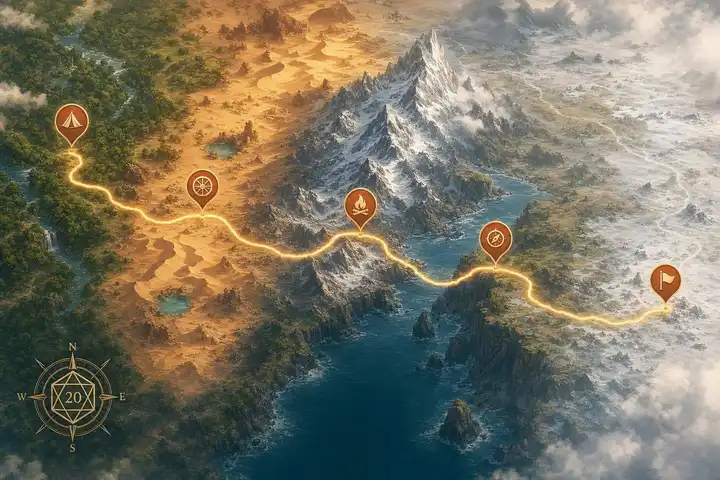
If you want travel to matter, these 5 games do it in 5 very different ways. I’d pick Ryuutama for a soft road-trip feel, The One Ring for bond-heavy treks, Forbidden Lands for hex-crawl survival, Ultraviolet Grasslands for caravan trade on a strange road, and Torchbearer for the harshest supply grind.
Here’s the short version: this comparison looks at 4 things - journey procedure, resource pressure, discovery style, and party bonds. Across these 5 games, the biggest split is how hard they push food, fatigue, gear, and time. On one end, Ryuutama keeps tracking light. On the other, Torchbearer makes almost every mile cost something.
If you’re choosing fast, this is the map:
- The One Ring: best for long treks where fatigue and fellowship shape the story
- Ryuutama: best for cozy travel with simple daily travel checks
- Forbidden Lands: best for open-map survival and risky route choice
- Ultraviolet Grasslands: best for caravan play, cargo, debt, and trade
- Torchbearer: best for groups that want harsh time and supply pressure
Quick Comparison
| Game | Journey Procedure | Resource Pressure | Discovery Style | Party Bonds |
|---|---|---|---|---|
| The One Ring | Role-based overland travel on a hex map | Medium; fatigue is the main threat | Event-driven travel with terrain and season effects | Strong; Hope and Fellowship ties matter |
| Ryuutama | Simple day-by-day loop | Light; food, water, and gear wear | Small stops, weather, and slice-of-life moments | Strong in play through camp scenes and shared tasks |
| Forbidden Lands | Quarter-day hex travel | Heavy; food, water, shelter, and gear matter a lot | Sandbox map play with ruins, rumors, and random finds | Built through dependence, Pride, and road choices |
| Ultraviolet Grasslands | Weekly pointcrawl caravan turns | Medium; sacks, fuel, forage, and debt | Strange route play tied to trade stops | Strong through shared caravan calls and hired help |
| Torchbearer | Phase-based journey and turn pressure | Very heavy; time, light, food, and conditions grind the party down | Risky travel where even a campsite can change the trip | Built through shared suffering and hard camp choices |
So if you want a trek, look at The One Ring. If you want a road trip, go with Ryuutama. For a hex-crawl, choose Forbidden Lands. For a caravan campaign, pick Ultraviolet Grasslands. And if you want a rough expedition, Torchbearer is the clear fit.

5 Travel-Focused TTRPGs Compared: Journey, Resources, Discovery & Bonds
1. The One Ring
The One Ring (second edition) makes travel a core part of play, not just the bit between scenes. What makes it work so well is how neatly it turns route choice, fatigue, and camp duties into the adventure itself.
Journey Procedure
Each trip starts with a planned route on a hex map. The group assigns Guide, Hunter, Look-out, and Scout roles, and the Guide's Travel rolls decide when journey events hit. That setup gives every player a job with clear game impact. Instead of hand-waving overland movement, the system turns it into a steady source of tension, setbacks, and story.
And those jobs aren't just flavor. They matter because the game makes wasted miles hurt.
Resource Pressure
Fatigue is the main source of pressure. Journey events add strain during travel, and the end of the trip decides how much of that strain still lingers. Any fatigue left over adds to a character's Load and can leave them Weary, which makes them less effective in later rolls and combat. So a rough journey doesn't stay neatly boxed inside the travel scene. It can shape what happens in the next fight, the next choice, and the next stretch of the campaign.
Mounts matter too. Their Vigour rating can soak up some fatigue before it hits the rider, which makes horses more than set dressing. They're a real asset when the road turns rough.
Discovery Style
Discovery is baked into the event system. Each Guide roll sets how far the company gets before something happens, whether that's a mishap, an encounter, a weather threat, or even a shortcut. Terrain and season affect what shows up. Rough land and winter roads bring harsher, more frequent events, while good roads in summer can give the party longer quiet stretches. Even blank spaces on the map can matter, since areas without marked settlements may hide villages the company meets for the first time.
That gives travel a nice rhythm. One stretch feels quiet, the next throws trouble at the whole party, and the map starts to feel lived in instead of empty.
Party Bonds
The One Ring also links relationships to survival through Hope and Fellowship Focus. Fellowship Focus marks a character's closest bond in the party, and a successful protective spend refunds the Inspiration. That's a smart touch because it makes group loyalty part of play, not just backstory.
The travel roles push that even further. The Hunter keeps everyone fed, the Look-out keeps watch at night, and the Scout helps the group move ahead. When danger shows up, it doesn't feel like some abstract travel tax. It feels tied to who is carrying the group through the dark.
The tone lands somewhere between melancholic, mythic, and grounded. It fits ranger patrols, desperate rides, and long quests where distance should leave a mark.
2. Ryuutama
If The One Ring treats travel like a long, worn-down trek, Ryuutama goes the other way. It feels more like a cozy road trip through the countryside. The game follows ordinary people - farmers, merchants, healers, and hunters - heading out across a bright, pastoral world. The mood is gentle. The stakes stay close to everyday life. And the trip itself matters just as much as the destination.
Journey Procedure
Each day on the road follows a simple loop: morning prep, travel checks, an event or encounter, and then camp at night. That rhythm gives the game a steady pace without making it feel stiff.
Players roll Travel and Direction checks using paired attributes. When a Travel check goes badly, a character can lose half their HP. When a Direction check fails, the group may have its movement cut in half and end up stuck in the same terrain the next day. That gives even a quiet day on the road some tension.
The GM also has a special role as the Ryuujin, a dragon guardian who watches over the party. The Ryuujin can use limited Benedictions to gently steer the trip when needed. It’s a neat touch. The routine is easy to pick up, but the rules keep travel from fading into the background.
Resource Pressure
The resource game stays light, but it still has teeth. At the start of each day, every traveler uses 1 food ration and 1 water. On top of that, gear has durability based on size, so rough travel and bad rolls slowly wear equipment down.
That said, Ryuutama doesn’t lean hard on survival math. The pressure is soft on purpose. You feel it, but it doesn’t drown the table in bookkeeping. The bigger payoff comes from what the party sees, shares, and remembers along the road.
Discovery Style
Discovery in Ryuutama is built from small, colorful moments instead of dense hex-by-hex mapping. The GM lays out broad regions, notes a few key stops, and then zooms in on whatever fits that day’s story - a roadside inn, a shrine, a burst of rain, a village festival.
Terrain and weather also change the difficulty from place to place. That gives each route a bit of mechanical feel without burying the session in map detail. It’s enough structure to make the road matter, while still leaving room for quiet scenes and little surprises.
Party Bonds
The party works because each person carries part of the trip. One traveler keeps an eye on supplies. Another smooths things over with the innkeeper. Someone notices the mood around the campfire. Someone else helps the group stay steady when things get rough.
That shared effort matters because every role helps move the day along. Small moments - meals, campfire talks, tiny rituals at the end of the night - get real screen time here. The Ryuujin’s guidance also nudges players toward cooperation and emotional honesty, which makes the game a strong pick for travel stories built on trust and companionship.
3. Forbidden Lands

Where Ryuutama feels warm and The One Ring carries a sad, worn-down mood, Forbidden Lands goes hardest on survival. This dark fantasy hex-crawl makes the wilderness the main threat. The core boxed set comes with a large color hex map and stickers for found locations and graves, so the map becomes a hands-on record of the trip. It’s a nice touch, and it gives the campaign a sense of wear and history as the party moves across it. If you want a harsher, stranger road than this, the next game takes travel in a more surreal direction.
Journey Procedure
Each travel day is split into quarter-days, and every block counts. In each quarter-day, the party can travel one hex, rest, forage, or keep watch. So movement never fades into the background as simple narration.
Players also take on roles such as scout, lookout, and quartermaster, then roll travel-focused skills like Survival and Scouting. Terrain shapes the trip too. Forests, mountains, and swamps can slow the party down or make each stretch more dangerous.
Resource Pressure
Characters track food, water, and gear durability, and running short can trigger rolls on the Starvation and Dehydration tables. Weapons and armor wear down, can break, and need repairs. Sleep out in bad weather without proper shelter, and fatigue or exposure can hit hard.
Encumbrance matters too, which means the party can’t haul every item they’d like to bring. Food, water, worn gear, shelter, and carrying limits all stay at the center of play every day.
Discovery Style
The hex map drives exploration, while random encounter and rumor tables fill the spaces between adventure sites. Ruins, lairs, villages, and landmarks can turn into threats, leads, or rewards.
Adventure sites support sandbox play with factions, secrets, and physical challenges that can play out across several sessions. Discovery feels earned and risky, not automatic. The campaign grows from what the players decide to chase, ignore, or come back to later.
Party Bonds
Forbidden Lands builds party dynamics through personal relationships, Pride, and group-driven goals. Each character has relationships the GM can lean on - who they trust, dislike, or depend on. Pride gives each one a defining trait or belief they can call on for a game effect.
That setup turns travel scenes into roleplay scenes. Sharing food, taking the rough watch shift, or arguing over whether to help a stranger suddenly carries weight. On the road, those small calls make the party feel tied together and dependent on each other.
4. Ultraviolet Grasslands
If Forbidden Lands treats the wild as harsh and hard-won, Ultraviolet Grasslands goes in a very different direction. Here, the road feels strange, dreamy, and alive. It’s a psychedelic metal science-fantasy caravan-crawl where the party leads a trade caravan from Violet City toward the far-off Black City.
Journey Procedure
UVG runs on a pointcrawl. So instead of tracking every mile, campfire, or detour, travel moves from one major location to the next. Each stretch of the journey plays out in weekly turns: pick a route and pace, check supplies and inventory, deal with road events or encounters, then arrive at the next stop and decide what comes next.
The caravan also acts like a group character, complete with its own sheet. Players take on set roles such as expedition leader, navigator, captain of the guards, mechanic or animal handler, and doctor. That means the travel loop doesn’t just move the party forward. It gives different players a chance to take the lead from week to week.
The caravan itself can get wonderfully odd. Mounts and vehicles can be as ordinary as camels and carts or as weird as autogolems and porcelain walkers, and that mix directly affects how fast the group moves and how much it can carry.
Resource Pressure
Supplies are tracked in abstract sacks, which keeps the math light but still leaves plenty of pressure. Each human-sized traveler uses one sack of supplies per week. Grazing mounts use one sack of forage, and fuel-powered vehicles burn one sack of fuel per week.
When those supplies run low, things get ugly fast. The party may have to eat livestock, scrape together water, raid ancient automatic canneries, or turn around and resupply.
Money adds another layer of strain. A common starting setup gives each character about $290 in cash and $1,000 in debt at 100% annual interest, so every route choice feels like a gamble with teeth.
Discovery Style
Discovery in UVG is surreal, but it’s also tied to trade. Each point on the map can be both an adventure site and a business stop, with local goods that can be bought cheap in one place and sold for profit somewhere else.
Between those stops, encounter tables fill the road with weird travelers, odd sights, and bad luck. You might run into strange caravans, roadside phenomena, or incidents that put cargo and crew at risk. The overall feel is less like a hex crawl and more like a string of strange, sharply different places.
Party Bonds
Because the big calls belong to the caravan, the game naturally creates table talk in character. What should the group carry? Which route is worth the risk? Who should they hire? Those choices create shared stakes almost by default.
UVG also suggests giving the party an NPC patron who fronts the starting loan and hands out jobs, which gives everyone a shared debt and a common thread running through the campaign. And the caravan rarely feels empty. Hirelings, animals, and NPCs such as revolutionaries or zombie porters travel with the group and matter both in the rules and in the story, so the caravan starts to feel like a moving community, not just a wagon train.
UVG turns travel into trade, logistics, and surreal discovery. Torchbearer pushes that same pressure into harsher survival.
5. Torchbearer

Torchbearer turns travel into a grind. Not in a bad way - in a survival way. Other games make the road matter. Torchbearer makes it harsh, draining, and hard to ignore.
Journey Procedure
Torchbearer splits play into four phases: Adventure, Journey, Camp, and Town. For long overland travel, the game uses the Journey phase, where the group tracks waypoints, distance, and trouble across multiple days. Short trips by road or river can move along without tests or supply costs, but long expeditions use the full process.
Resource Pressure
This is where the pressure starts to bite. Characters must use food, water, and seasonal resources each day. Spring costs 1, Summer 0, Autumn 2, and Winter 3 before weather changes those numbers, and light sources burn out on fixed turn intervals. That means every torch, ration, and stop along the way matters.
At the center of all this is The Grind. Every four turns in the Adventure phase, each character automatically takes the next condition in order, moving through worsening states until dead. It’s brutal, and that’s the point. Conditions can only be removed in sequence, so one bad call can keep hurting the group for a long stretch.
Recovery runs on checks. Players earn them by using traits against themselves and accepting setbacks, then spend them on rest, repair, and getting back on their feet. So even recovery has a price. Nothing comes cheap here.
Discovery Style
In the Adventure phase, every test moves the turn count forward. Open a door, take a detour, poke around a side passage - it all costs time. And in Torchbearer, time is never just time.
That changes what discovery feels like. A safe campsite or a steady water source can matter as much as treasure because it helps the party survive the trip back. When something unexpected happens on the road, the game drops back into Adventure mode to handle it, then returns to Journey play after that.
Party Bonds
Torchbearer builds group bonds through shared suffering, not through a separate relationship system. The whole party feels the weight of conditions, and checks used at Camp can help everyone, so players start thinking like a unit. Who takes the hit? Who’s already too worn down? Who needs cover right now?
Camp is where those choices get sharp. The group has to decide who gets treated, who pushes through, and who spends a check to recover or fix gear. Over time, that kind of pressure pulls the party together. Not because the rules tell them to care, but because staying alive depends on it.
What sets Torchbearer apart from the other four games is the way strict turn tracking and rising conditions put a price on every mile. It is the harshest logistics-first choice in this lineup.
Pros and Cons at a Glance
Five games, five very different ways to handle travel. If you want the short version, this is the fastest way to line up each game with the kind of campaign you want to run.
| Game | Best At | Tradeoff | Best For | Play Style |
|---|---|---|---|---|
| The One Ring | Fellowship bonds and structured travel phases | Less suited to sandbox or gonzo campaigns | Groups who want travel to carry emotional weight | Overland trek with structured travel phases |
| Ryuutama | Gentle, characterful road stories | Low stakes may not satisfy players wanting grit | New players and cozy-fantasy groups | Episodic journeying with weather and camp scenes |
| Forbidden Lands | Sandbox hex-crawl and emergent exploration | Heavier survival tracking and system complexity | Players who want open-world exploration and accept PC death | Dangerous wilderness crawl with player-driven discovery |
| Ultraviolet Grasslands | Surreal caravan trade-route play | Its tone and structure are less familiar | Groups who enjoy weird fiction and commerce | Episodic caravan road trip through bizarre markets and routes |
| Torchbearer | Harsh resource pressure and survival tension | The heaviest rules load | Players who enjoy tight resource puzzles | Difficult expeditions where scarcity drives every decision |
The table gives you the broad match. The notes below help sort out the closest choices.
The biggest split comes down to bookkeeping. Torchbearer is the strictest, while Ryuutama is the lightest.
The One Ring fits best if you want relationships to matter in play, not just in the story. It does the most with party bonds in mechanical terms.
Forbidden Lands works best for groups that want exploration to shape the map as they move. You discover the world by pushing into it.
Ultraviolet Grasslands is the clear pick for caravan play and trade-driven travel. That’s the main fork in the road here: wilderness mapping on one side, caravan route play on the other.
Conclusion
These games all put travel at center stage, but they don’t chase the same kind of trip. The first move is simple: decide what kind of feel you want at the table. Once that’s clear, the tone usually follows.
A good way to judge them is by looking at four things: journey procedure, resource pressure, discovery, and party bonds. The One Ring leans into mythic hardship and fellowship. Ryuutama is more about cozy road stories. Forbidden Lands pushes a hostile hex-crawl. Ultraviolet Grasslands turns the road into caravan trade and strange routes. Torchbearer goes hard on punishing expedition survival. After that, it comes down to how much logistics your group wants to deal with and how much pressure they enjoy.
If your table wants lighter logistics, go with Ryuutama or The One Ring. If they want heavier survival play, Forbidden Lands or Torchbearer make more sense. Ultraviolet Grasslands sits in its own lane, with caravan logistics and less punishment than Torchbearer.
It also helps to name the campaign frame up front: trek, road trip, hex-crawl, caravan, or expedition. That one choice will usually get you to the right system faster than comparing rule sets line by line. Bring that match into session zero.
The road is the adventure. Pick the game that makes your road worth traveling.
FAQs
Which game is easiest for beginners?
Mouse Guard is the easiest pick for beginners. It’s built with new players in mind, with moderate complexity (3/5), a gentle presentation, and a clear mission structure.
That setup makes travel- and duty-based play much easier to run than heavier systems like Traveller.
How much travel bookkeeping does each game need?
From the results provided, only The Wildsea includes clear travel bookkeeping details. It uses progress tracks, journeys, and montages, which points to a moderate, structured level of tracking instead of loose, freeform travel notes.
For The One Ring, Ryuutama, Forbidden Lands, Ultraviolet Grasslands, and Torchbearer, the sources given here don’t explain how travel records are handled. So based on this material alone, their bookkeeping needs can’t be determined.
Which game is best for a long campaign?
For long-form campaigns, Traveller stands out for the depth of its campaigns and the way it builds momentum over time.
Other strong picks include Offworlders and Quest, both of which support steady table momentum across many sessions. Tales of Argosa and Mouse Guard are also described outright as campaign-friendly systems, especially for longer play built around exploration.


