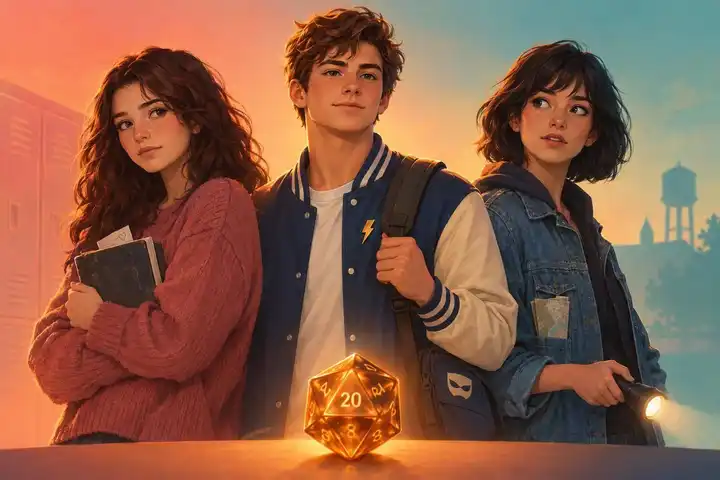
My picks: Monsterhearts 2 for messy teen relationships, Masks for teen superheroes, and Kids on Bikes for small-town mysteries. I’d choose based on what your group wants to spend most scenes doing - not just which powers sound fun.
- Monsterhearts 2: Play supernatural teens whose desires, secrets, and emotional leverage drive conflict. I’d prepare relationships rather than a fixed plot.
- Masks: A New Generation: Choose from 10 core playbooks and balance superhero action with changing self-image. I’d build sessions around teammates, mentors, and adult expectations.
- Kids on Bikes, Second Edition: Play kids, teens, or adults investigating strange events. I’d prepare town secrets, clues, and threats, with room for players to shape the town.
Quick Comparison
| Feature | Monsterhearts 2 | Masks | Kids on Bikes |
|---|---|---|---|
| Character choices | Supernatural Skins | Teen hero playbooks | Age, trope, strengths, and flaws |
| Relationships and identity | Emotional leverage and personal turmoil | Influence and shifting self-image | Shared history and town ties |
| Main rolls | 2d6 + stat | 2d6 + Label | Stat dice from d4 to d20 |
| GM preparation | Desires and relationship fallout | Threats and identity pressure | Clues and growing danger |
| Best fit | Intense relationship drama | Heroics and personal growth | Group investigation |
My first step with any of these games: agree on tone and boundaries before play. All three support teenage stories, but none puts grid-based tactical combat first. The deciding question is simple: Do you want relationships, heroics, or clues to drive the next scene?

Which Teen TTRPG Fits Your Group?
1. Monsterhearts 2
Character Options
Monsterhearts 2 uses Skins: archetypes that pair emotional damage with supernatural power. The Vampire, Ghost, Fae, and Werewolf each offer stat choices, signature moves, relationship prompts, a sex move, and a Darkest Self - the destructive mode a character enters under stress. Pick a Skin for the vulnerability you want to examine, not just its powers. Relationships are the game’s main source of power, so that choice matters.
Relationships and Identity
Strings give characters emotional leverage. Conditions are labels others can use for bonuses or pressure. Both carry social fallout from one scene into the next, giving relationships lasting consequences.
Sex moves spell out how intimacy changes the game’s mechanics; they don’t require explicit sexual narration. Before play, set boundaries around intimacy, coercion, and sexual content using lines, veils, or an open-door policy. No reward overrides consent.
Conflict Rules
Moves trigger through events in the story. Players then roll 2d6 plus the relevant stat: Hot, Cold, Volatile, or Dark. Even success can deepen the harm: Strings, Conditions, and Darkest Self keep the fallout in play. This makes Monsterhearts 2 the most emotionally intense of the three.
Campaigns and Preparation
Prepare a relationship map, important adults, and places where characters’ needs collide - not a fixed plot. Ask each player for a desire, a fear, a secret, and an existing connection. Then track who witnessed major conflicts and which relationships changed.
Five experience points buy an advancement, such as better stats, new moves, or moves from other Skins. Let those changes follow the story, so growth reflects a shifting identity rather than just more power. For groups that want teen feelings to drive every scene, build preparation around those emotional ties.
2. Masks: A New Generation
Character Options
Masks: A New Generation follows teenage superheroes whose powers and identities are under constant pressure. Its 10 core playbooks make being a teen part of the rules:
The Legacy is tied to a heroic tradition, the Delinquent resists authority, and the Transformed deals with being visibly or fundamentally different.
Powers establish what heroes can do in the story rather than serving as detailed combat builds.
Relationships and Identity
Five shifting Labels describe how heroes see themselves: Danger means threatening, Freak unusual or inhuman, Savior protective, Superior better than others, and Mundane connected to ordinary people.
Influence tracks whose opinions matter, whether that’s parents, mentors, teammates, or rivals. When someone with Influence tells your hero who they are, you can accept their view and shift Labels - or reject it and trigger a move with consequences.
Conflict Rules
Most moves use 2d6 plus a Label. A 10+ gives a strong success, while 7–9 adds a cost, complication, or hard choice. Heroes don’t track hit points. Instead, they mark Conditions: Afraid, Angry, Guilty, Hopeless, or Insecure. These can weaken later moves. Team, playbook moves, and Conditions give cooperation and vulnerability a place in the rules.
Each playbook also has a Moment of Truth: a turning-point scene that gives the player strong control over the story.
The Legacy confronts inherited expectations, the Delinquent proves that rebellion or unconventional thinking can save the day, and the Transformed embraces or redefines their difference.
Afterward, one Label locks permanently. That part of the hero’s identity is now settled.
Campaigns and Preparation
Before play, agree on the setting, team base, school and home life, and tone. Set boundaries around bullying, family pressure, and public humiliation. During character creation, build relationships and decide who has Influence.
Tie mentors, rivals, family pressure, and threats to school, home, and public image. That way, every fight also tests who the heroes think they are.
For groups that want teen characters with fewer costumes and more clues, the next game trades superhero pressure for small-town investigation.
3. Kids on Bikes
Character Options
Kids on Bikes, Second Edition is a coming-of-age mystery RPG where kids, teens, or adults investigate strange events in a small town. To build a character, choose a trope, an age, two strengths, and one flaw. Assign d4 through d20 once each to Brawn, Brain, Fight, Flight, Charm, and Grit. Bigger dice mean stronger abilities. Flaws give characters weak spots and can earn extra Adversity Tokens when they complicate play.
While the other two games focus on emotional pressure or heroic identity, this one puts the town at the center.
Relationships and Identity
Character-creation questions build shared history: trust, rivalry, family ties, secrets, and resentment. Those answers explain why the characters investigate together - and what might pull them apart. Teen identity takes shape through age, flaws, and a character’s place in town rather than a condition track. Friendship supports the mystery; relationship drama takes a back seat.
The rules keep that focus with simple, story-first rolls.
Conflict Rules
When an action carries risk, roll the relevant stat die against a target number. Roll the die’s maximum, and it explodes: roll again and add the result. Keep going if you roll another maximum.
Each session starts with three Adversity Tokens. Failed checks earn one more, and you can spend tokens after a roll to add +1 per token. Confrontations use opposed rolls, with the margin determining how severe the outcome is instead of relying on detailed tactical combat.
Campaigns and Preparation
Build the town together, agree on tone and safety boundaries, and connect the characters. Then prepare clues, leads, and threats that grow over time. Don’t let one failed check stop the investigation. Failure can cost time or draw danger while leaving a path forward, keeping attention on clues rather than combat.
You’ll also need to decide whether to include the optional Powered Character, an extraordinary companion shared by the players. Divide its traits and aspects of control among the group instead of handing it to one player. Set its abilities, limits, and costs before play so its powers help the investigation without solving every problem. This shared companion fits a game that is the most clue-driven of the three.
The Best TTRPGs you've never heard of
How the Games Compare
Monsterhearts centers emotional fallout, Masks centers identity under pressure, and Kids on Bikes centers mystery-solving. That’s the shortest way to tell them apart.
Character Options
Choose your character’s main struggle before their powers: emotional drama, heroic action and identity, or solving a mystery.
| Character choice | Monsterhearts 2 | Masks: A New Generation | Kids on Bikes |
|---|---|---|---|
| Protagonist premise | Supernatural teens in emotional turmoil | Teenage heroes defining themselves | Young protagonists facing a small-town mystery |
| Character-building structure | Skins link monster archetypes to moves and emotional problems | Playbooks link heroic archetypes to powers, moves, and Labels | Age, trope, strengths, flaws, and six stat dice |
Relationships and Identity
Strings track leverage; Influence tracks whose judgment matters. In Kids on Bikes, character questions and shared history do more of the work of defining relationships.
| Social pressure | Monsterhearts 2 | Masks: A New Generation | Kids on Bikes |
|---|---|---|---|
| Relationship mechanic | Strings turn attraction, resentment, and dependency into leverage characters can use | Influence gives certain people emotional authority | Relationship questions and shared history |
| Identity mechanic | Skin, Conditions, and Darkest Self express personal conflict | Five shifting Labels: Danger, Freak, Savior, Superior, and Mundane | No equivalent identity-changing track |
Conflict Rules
Monsterhearts 2 and Masks use 2d6-based moves. Kids on Bikes uses stat-die checks and Adversity Tokens. None puts grid-based tactical combat first.
| Conflict feature | Monsterhearts 2 | Masks: A New Generation | Kids on Bikes |
|---|---|---|---|
| Dice | 2d6 + stat | 2d6 + Label | Stat die against a difficulty or opposing roll |
| Setbacks | Mixed results and misses make trouble worse | Mixed results complicate heroics | Failed checks earn Adversity Tokens; each can add +1 later |
| Consequences | Harm, Conditions, and social fallout | Emotional Conditions - not hit points; overwhelm can mean being taken out or changing the situation | Consequences scale with the roll margin |
| Tactical combat | Little emphasis; violence feeds relationship conflict | Superhero action without detailed tactical attrition | Cinematic danger rather than positional combat |
Your prep shifts with the game, too: relationships in Monsterhearts, pressure points in Masks, and clues in Kids on Bikes.
Campaigns and Preparation
Prepare pressures and consequences, not predetermined outcomes. Kids on Bikes has no dedicated clue-solving subsystem. Before play, agree on boundaries around intimacy, coercion, violence, and other sensitive material.
| Campaign feature | Monsterhearts 2 | Masks: A New Generation | Kids on Bikes |
|---|---|---|---|
| Session focus and momentum | Relationship fallout | Heroic missions and responsibility | Following leads |
| GM preparation | NPC desires and volatile relationships | Threats and adult expectations | Discoverable information and escalating obstacles |
| Shared world-building | Players establish social connections | Players establish team history and relationships | Players help define town history, landmarks, and rumors |
| Typical tone | Intense, vulnerable drama | Heroic action under identity pressure | Suspense that can become deeply personal |
Strengths and Trade-Offs
If the choice still feels close, here’s what each game does best - and where it might not fit your group.
| Game | Best at | Strengths | Potential limitations |
|---|---|---|---|
| Monsterhearts 2 | Supernatural teen drama | Puts intimacy, emotional leverage, betrayal, and hard interpersonal choices at the center of play. | Not suited to light, combat-first, or romance-free play. |
| Masks: A New Generation | Teen heroes | Gives peer support, adult approval, and growing self-confidence weight alongside superhero action. | Not suited to detailed power simulation or heroes who already know who they are. |
| Kids on Bikes | Small-town mysteries | Gets players invested through shared histories, local secrets, and ordinary people facing forces they barely understand. | Not suited to identity-heavy drama, a focus on intimacy, or tactical combat. Its optional collaborative companion fits group play rather than a solo spotlight. |
Your group’s preferred tone can help narrow the choice:
- Pick Monsterhearts 2 when emotional fallout should drive play. Set firm consent boundaries for its intense teen drama, which can include coercion, sexuality, trauma, abuse, and marginalization.
- Pick Masks when growth, support, and identity matter as much as winning fights.
- Pick Kids on Bikes when shared discovery matters more than personal power.
Final Verdict: Which Game Fits Your Group?
Choose the game built around the conflict your group most wants to play: Monsterhearts 2 for supernatural teen drama, Masks: A New Generation for teenage superhero identity, or Kids on Bikes for friendship-driven mystery-solving.
Before play, agree on tone and boundaries for romance, bullying, and violence. Set clear rules for pausing a scene, too.
Want all three? Decide which theme takes priority when they clash: emotional entanglements, heroic self-definition, or ordinary teens investigating strange events.
FAQs
Which game is easiest for first-time players?
Monster of the Week and Masks: A New Generation are beginner-friendly Powered by the Apocalypse games. Both put storytelling first, use a simple 2d6 system, and provide character playbooks that make character creation easier.
For the fastest start, try the Tales from the Loop starter set. It comes with pregenerated characters, dice, and an introductory rules booklet so new groups can jump straight into play.
Are these games appropriate for teenage players?
Generally, yes, though themes vary by game. Masks: A New Generation suits all ages, with positive superhero stories and a focus on personal growth. Monster of the Week is better suited to teens and older players because of its supernatural horror.
Tales from the Loop features uncanny elements, childhood peril, and family conflict. Players should agree on what feels emotionally comfortable before playing. Monsterhearts 2 examines teenage identity, messy social dynamics, and adolescent relationships that may involve more mature themes.
Can these games work as one-shots?
Yes. Masks: A New Generation and Monster of the Week work well for a single evening, with a story arc typically wrapping up in 2–4 hours. Pre-generated characters or quick-start scenarios can cut prep time.
Kids on Bikes and Tales from the Loop also support standalone sessions. Green Dawn Mall focuses on a single search for a lost friend, making it a good fit for a one-shot.


