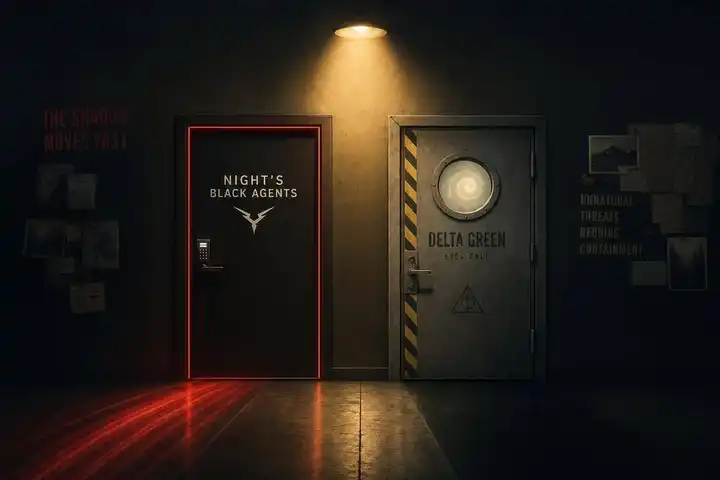
If I had to sum it up in one line: I’d pick Night’s Black Agents for fast spy-horror action, and I’d pick Delta Green for bleak horror where every case leaves scars.
Here’s the short answer:
- Night’s Black Agents is about ex-spies taking the fight to a vampire conspiracy.
- Delta Green is about agents trying to contain the unnatural while their lives fall apart.
- One game leans toward momentum, planning, and direct action.
- The other leans toward dread, failure risk, and mental strain.
I think the biggest split is simple: do you want to hunt the conspiracy, or just survive contact with it? That one choice shapes clues, combat, pacing, and campaign fallout.
A few key facts from the article:
- Night’s Black Agents uses GUMSHOE, where the right investigative ability gets you the clue.
- Delta Green uses d100 rolls, so failed checks can slow the case or push the team into danger.
- In Delta Green, losing 5+ SAN in one incident can trigger temporary insanity.
- In Delta Green, Bonds and sanity damage turn horror into long-term personal cost.
- In Night’s Black Agents, pressure stays high, but the game keeps agents in the fight longer.
Quick Comparison
| Criteria | Night’s Black Agents | Delta Green |
|---|---|---|
| Core fantasy | Burned spies hit back | Agents contain the unnatural |
| Tone | Spy thriller with horror | Bleak cosmic horror |
| Clue flow | Clues come fast | Rolls can block or delay leads |
| Player control | High; players plan the next move | Lower; pressure and procedure shape choices |
| Combat feel | Dangerous, but built for action | Harsh and often lethal |
| Long campaign feel | Strike the conspiracy piece by piece | Watch agents wear down over time |
If you want, I can say it even more plainly: pick Night’s Black Agents for action-led conspiracy play, and pick Delta Green for slow-burn horror with a heavy cost.

Night's Black Agents vs. Delta Green: TTRPG Comparison Chart
Night's Black Agents RPG -- Deep-Dive Review
Core premise and table fit
Choose based on the fantasy: hunt the conspiracy or survive it?
Night's Black Agents: Burned operatives taking the fight to the conspiracy
Night's Black Agents is a Jason Bourne-style vampire spy thriller. Your characters are skilled operatives who stumble onto a vampire conspiracy and decide to hit back. They are made to move, plan, and strike.
The GUMSHOE engine backs that up. Characters come with strong investigative and operational abilities, so the tension isn't about whether they spot the clue. It's about what they do once they have it. The Conspyramid gives players an enemy structure they can study, test, and tear apart. Play often feels like setting up a heist or running a black op: surveillance, recruiting assets, infiltration, and then a hard, direct hit.
That makes it a strong fit for groups that want proactive planning and clear payoffs at the table.
Delta Green: Federal agents containing the unnatural at personal cost
Delta Green begins with containment, not payback. Agents dragged into containment work didn't ask for this life - they got pulled into it, and the game's design leans into that loss of control.
Where Night's Black Agents gives players a target they can map, Delta Green gives them a cold threat they can only hold back. A mission going well doesn't mean the threat is gone. It means it's contained for now, and somebody pays for that time. The price shows up as Sanity loss, strained Bonds, cover-ups, and moral damage that keeps piling up. Its horror comes from both the entities themselves and the agencies that push agents to lie, bury the truth, and keep moving.
That makes it a strong fit for groups that want containment, consequences, and pressure that never quite lets go.
That split shapes clue handling, pacing, combat, and campaign fallout.
How each game plays at the table
Night's Black Agents: Fast clues, player-led operations, and cinematic tradecraft
In Night's Black Agents, sessions move fast. If a player brings the right investigative ability to the right scene, they get the information automatically. Using Electronic Surveillance to sweep a safehouse or Tradecraft to work sources doesn’t call for a roll. That keeps things moving from clue to plan without the usual stop-and-start pause.
That setup rewards players who act like spies, not tourists. One player traces the money, another tails the courier, and the group shifts from gathering clues to running an operation.
The Conspyramid adds pressure in a fun way. Every hit forces a choice, because the moment you weaken one node, the conspiracy pushes back. That pace makes the conspiracy feel like something you can strike at, not just a maze you wander through.
Delta Green: Slow casework, dread, Bonds, and escalating fallout
Where Night's Black Agents runs like an operation, Delta Green feels like a slow collapse. Agents work a case through interviews, records checks, and pattern-hunting. The unnatural tends to show up by implication, not by announcement. The evidence stacks up bit by bit, and then the reveal hits hard.
SAN loss hurts Bonds and leaves damage that sticks, so each case wears down the agent’s life as much as their mind. The job hollows them out over time. Combat adds even more pressure: even trained agents can die fast, and many threats are better contained than fought in a straight-up gun battle.
Rules and play experience compared
Core mechanics, clue structure, and character competence
Those differences on the table don't come out of nowhere. They start with how each game handles information.
Night's Black Agents uses GUMSHOE, which means if you have the right investigative ability, you get the clue without making a roll. That changes the feel of play in a big way. The tension isn't about whether you find the clue. It's about what you do with it, how you connect it, and how you plan around it. In play, investigation feels less like fishing in the dark and more like building an operation.
Delta Green goes the other way. It uses a percentile system (d100), so skill checks can fail. That bit of friction gives every lead more weight. A bad roll can shut a door, slow the team down, or push them toward a riskier choice. You feel the pressure fast.
That same split shows up in character competence. Night's Black Agents leans into elite improvisation. Its characters are built to stay sharp under stress and keep moving when plans fall apart. Delta Green gives you trained agents too, but not action-movie demigods. They know their jobs, yet they still run into hard limits.
Combat lethality, psychological pressure, and long-term wear
The divide gets even clearer once the game hits the table:
| Feature | Night's Black Agents | Delta Green |
|---|---|---|
| Investigation structure | Smooth, clue-forward play | Roll-based investigation with real failure risk |
| Failure cost | Momentum loss, not mission collapse | Direct damage, SAN loss, and Bonds |
| Combat lethality | Dangerous, but built for thriller-style survivability | Extreme; direct confrontation can be instantly fatal |
| Character competence | Elite operatives; reliable under pressure | Trained but fragile; outmatched by the unnatural |
| Campaign pressure | Escalating operations; Heat and Conspyramid drive stakes | Slow deterioration; Bonds erode, disorders accumulate |
| Recovery | Fast, operation-focused recovery | Long-term personal fallout |
Combat makes the contrast hard to miss. In Delta Green, the Lethality rules make heavy weapons instantly deadly on a successful roll. A fight can go bad in seconds. Night's Black Agents can still be dangerous, but it is tuned for thriller-scale survival. You can take hits, make desperate plays, and keep the mission alive a little longer.
The mental side pulls the two games in opposite directions over time. Night's Black Agents tracks Stability as a measure of immediate mental composure, and while breakdown can happen, the system is set up to keep agents in the fight. It wants pressure, panic, and close calls, but it still pushes play forward.
Delta Green is harsher and more personal. It uses Sanity, Breaking Points, and Bonds to model a slow collapse. Agents can project SAN loss onto Bonds instead, which means each mission trades mental survival for damage to a marriage, a friendship, or a hobby. That's the sting of it. You don't just lose pieces of your mind. You burn through the parts of life that made the job bearable in the first place.
The rules make that cost plain. Losing 5 or more SAN in a single incident causes temporary insanity; reaching a Breaking Point grants an indefinite disorder.
So the arc of each game ends up feeling very different. Night's Black Agents pushes play toward confrontation. Delta Green wears people down, one mission at a time. Those mechanics line up with the table fit covered next.
Which game fits your table
The choice comes down to one thing: does your table want momentum or dread?
Choose Night's Black Agents for cinematic espionage and high agency
Pick Night's Black Agents if your group wants to feel effective, fast-moving, and in control. This is a good match for tables that light up at the idea of mapping a surveillance op, flipping an inside asset, or hitting a vampire-backed shell company with a coordinated raid. GUMSHOE keeps clues moving, so the game rarely gets stuck. That makes it a strong fit for groups that want pace.
It also fits tables that love spy-thriller play. Think tradecraft, player-led ops, and a vampire conspiracy the characters can hunt down piece by piece. The hook is simple and strong: burned operatives hunt a vampire conspiracy.
Choose Delta Green for bleak horror, institutional pressure, and slow corruption
Pick Delta Green if your group leans toward dread over momentum. This is for tables that want procedural casework, lethal combat, and the slow breakdown of everything their characters care about. If your players are more interested in ethics, cover stories, and personal fallout than carefully planned strike missions, Delta Green is probably the better fit.
It works best for groups who want failure to leave a mark. The horror comes from the unnatural itself, but also from the pressure of containment under orders. Your agents bury the truth, take the hit, and then get sent to the next case.
Use the table below for the fastest side-by-side answer.
| Night's Black Agents | Delta Green | |
|---|---|---|
| Tone | Cinematic spy thriller with horror | Bleak, procedural cosmic horror |
| Player agency | High; player-led ops and planning | Moderate; bound by procedure and command |
| Investigation | Guaranteed clues, fast pacing | Roll-based, failure is part of the horror |
| Combat | Dangerous but thriller-survivable | Highly lethal; mistakes can be instantly fatal |
| Campaign arc | Dismantle a specific vampire conspiracy | Ongoing containment; gradual PC corruption |
Pick Night's Black Agents if your group wants capable operatives, cinematic tradecraft, and player-driven action against a vampire conspiracy. Pick Delta Green if your group wants cosmic dread, institutional pressure, and campaigns where every win still hurts.
FAQs
Which game is easier for new players?
Delta Green is usually easier for new players to pick up. It gives you a more straightforward, grounded game built around familiar modern settings and investigation that feels a lot like a procedural thriller.
By comparison, Night’s Black Agents leans on the more specialized, skill-heavy Gumshoe system. It also asks players to juggle trickier tradecraft rules and a more cinematic style of action.
Can Night’s Black Agents work without vampires?
Yes. Night’s Black Agents can work without vampires.
At its core, the game is built for espionage thrillers: burned spies, hidden enemies, tense investigations, and big-screen action. That setup still works if you swap vampires for something else.
Instead of undead conspirators, you can put the spotlight on rogue intelligence agencies, crime syndicates, or secret societies. The heart of the game stays the same: proactive tradecraft, sharp investigation, and cinematic action.
Which game is better for long campaigns?
It comes down to the tone your group wants.
Night’s Black Agents works best for long campaigns built around proactive operations, cinematic tradecraft, and investigative mystery.
Delta Green is the better fit for long-term play focused on bleak Lovecraftian dread, psychological horror, and slow institutional corruption.
Both can support extended campaigns if the tone lines up with what your table enjoys.


