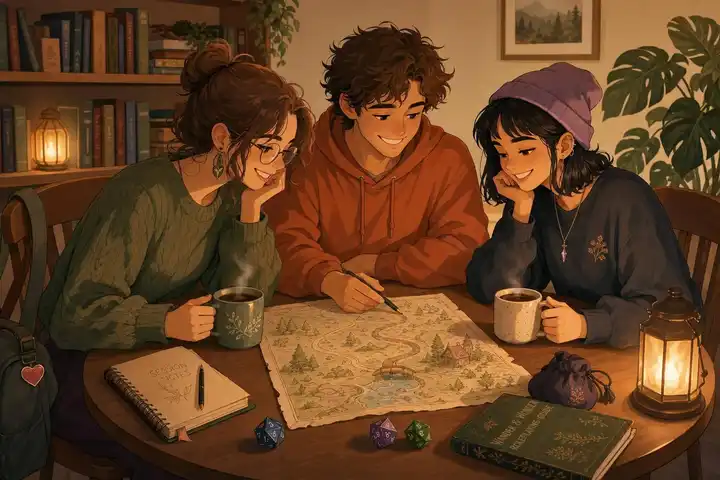
If you want a calm RPG night, these 5 games are the short list I’d start with: Wanderhome, Ryuutama, Golden Sky Stories, Cozy Town, and Beak, Feather & Bone.
I’d sort them like this:
- Best for new or nervous players: Wanderhome
- Best for travel-focused play: Ryuutama
- Best for kindness-first stories: Golden Sky Stories
- Best for town-building: Cozy Town
- Best for map-making in a one-shot: Beak, Feather & Bone
Across this list, 3 of the 5 games are diceless or GM-less, and all 5 keep stress low by putting the focus on community, travel, or shared place instead of hard combat. So if you want a session that feels more like Animal Crossing than a dungeon crawl, this is the lane.
TTRPGS THAT ARE PERFECT FOR YOU COZY GAMERS
Quick Comparison

5 Best Cozy TTRPGs Compared: Rules, Focus & Best Fit
| Game | Main Focus | Rules Style | Best For | Main Tradeoff |
|---|---|---|---|---|
| Wanderhome | Travel and quiet character scenes | GM-less, diceless | First-timers and freeform groups | Can feel too loose |
| Ryuutama | Road-trip fantasy | Light rules, guided travel | Groups that want structure | Less freeform |
| Golden Sky Stories | Helping people in one town | Diceless, non-combat | Small groups and bond-driven play | Small-scale stories |
| Cozy Town | Building a town together | Light story rules | Short campaigns about community | Less about solo hero arcs |
| Beak, Feather & Bone | Filling in a city map together | Light narrative play | One-shots and map-first groups | Less personal character focus |
If I had to give the short answer, it’s this: pick by play style, not just theme. Wanderhome is soft and open, Ryuutama adds road structure, Golden Sky Stories centers kindness, Cozy Town builds a shared home, and Beak, Feather & Bone turns the setting into the main event.
1. Wanderhome
Wanderhome, published by Possum Creek Games, is a pastoral fantasy RPG about animal-folk traveling through the fields, shrines, and villages of Hæth. Picture opossums, salamanders, and little moss-covered towns. The mood takes clear cues from Brian Jacques' Redwall and Tove Jansson's Moomins.
Cozy Tone
This game stays close to everyday life. The player characters aren't out to save the world. They're travelers instead: maybe a tamarin who dances with small forgotten gods, or a leporine mail carrier who uses moths to deliver packages.
That grounded feel matters. There isn't any moral label tied to a species, so a snake can be just as kind and neighborly as a rabbit. The heart of the game comes from small meetings, shared moments, and acts of care, not combat or big missions. It feels gentle without feeling empty.
Rules Weight
Wanderhome uses the Belonging Outside Belonging system. That means no dice, no GM, and very little prep. It keeps the attention on shared storytelling and quiet character moments instead of rule lookups.
Play Structure
Play follows the changing seasons, which gives each session a slow, reflective rhythm. The group moves from village to village. Because of that, Wanderhome works just as well for a one-shot as it does for a long campaign.
Best Fit
Wanderhome makes sense for groups that want a fully collaborative, GM-less game with a low barrier to entry. It's a strong match for players who like quiet, character-led roleplay, fans of gentle fiction, and groups bringing in newcomers who may feel nervous about heavier RPG rules.
It's also an easy starting point for new players who want something low-pressure. And if your table likes cozy play but wants a bit more structure around travel, the next game heads in that direction.
2. Ryuutama

Where Wanderhome feels loose and reflective, Ryuutama brings a clearer travel framework to cozy play. It’s a fantasy RPG built around travel, weather, and the small hassles that come with life on the road.
Cozy Tone
Conflict stays mild, and the game treats friction as part of the journey, not a fight for survival. Danger usually doesn’t push the story forward. The heart of play comes from shared moments on the road.
Play Structure
Its travel-first setup gives each session an easy road-trip rhythm. Play centers on routes, scenery, and stopovers, which helps the journey feel grounded from one session to the next.
Best Fit
Ryuutama works well for groups that want a warm, low-pressure fantasy game with clear travel goals, seasonal mood, and light stakes.
If your group wants something softer and more whimsical, the next game leans even more into emotional connection and everyday magic.
3. Golden Sky Stories
Where Ryuutama is about the journey, Golden Sky Stories stays in one town and focuses on the people in it. It’s a diceless, non-combat game about magical animals helping a small rural town.
You play as henge - shapeshifting animal spirits that can take human form - such as foxes, cats, or rabbits, living in a small, rural Japanese town.
Cozy Tone
The tone is gentle and low-stakes from the start. There’s no combat and no tactical grind. Instead, the game leans into connection, kindness, and small moments that matter.
Rules Weight
Golden Sky Stories is diceless and non-combat. Players spend Feelings and Connections to help others and push scenes ahead. The Dream mechanic rewards kind choices and playful problem-solving.
Play Structure
Scenes usually center on helping townspeople, building trust, and fixing small problems at an easy pace. It’s less about “winning” and more about showing care in little ways.
Best Fit
Golden Sky Stories fits groups that want a gentle, non-combat game built around kindness, bonds, and light imaginative play. If your group wants more shared community-building than one-to-one relationships, the next game heads that way.
4. Cozy Town
While Golden Sky Stories is about helping individual townsfolk, Cozy Town, designed by Rae Nedjadi, turns the camera toward the town itself. The heart of the game is building a place together and figuring out what makes that place feel warm, lived-in, and welcoming.
Cozy Tone
The tone stays gentle and soft. Instead of centering on big hero moments, the game leans into the emotional ties that keep a community together. That shared focus also means everyone at the table has a hand in shaping the setting, which makes the town feel like it belongs to the whole group.
Rules Weight
Cozy Town is light on rules and driven by story. Players shape the town through scenes, conversations, and choices more than through mechanics. That lighter touch leaves plenty of room for town-building moments without the game getting bogged down in systems.
Play Structure
The game unfolds over one full year across four seasons - sweet spring, sunny summer, soft autumn, and snuggled down winter. That built-in timeline gives the group a clear arc from start to finish. It also helps the game land with a satisfying ending, which makes it a strong pick for a short run of sessions instead of a long, open-ended campaign.
Best Fit
Cozy Town works well for groups that want to build a town together, not just wander through one. It fits story-first players who care more about community and atmosphere than individual heroics. If your group wants a gentle, shared game where the setting matters just as much as the characters, this one lands nicely. And if you're looking for something even more intimate, with an even tighter map-making focus, the next game scales things down further.
5. Beak, Feather & Bone
If Cozy Town gets its warmth from a shared sense of community, Beak, Feather & Bone shifts the focus to the city itself. Here, the setting isn't just a backdrop. It's the heart of play, shaped by what its residents build, protect, and fight over together.
Cozy Tone
The cozy feel comes from collaborative map-making and quiet world-building, not from cottages, fields, or pastoral charm. There's something calm about filling in a blank city bit by bit. That hands-on rhythm runs right through the game.
Rules Weight
Beak, Feather & Bone leans hard into narrative play, with a blank city map serving as the main tool at the table. The rules are light and stay focused on shared storytelling instead of combat systems or strict character stats.
Play Structure
Players claim buildings on the blank map, and from there the city starts to take shape. Its people, tensions, and power struggles come out through play as everyone adds detail and meaning to the same place.
Best Fit
Beak, Feather & Bone fits groups that want map-making and collaborative world-building to lead the session. The tradeoff is pretty clear: it leans more toward shared design of the city than deep character drama.
Strengths and Tradeoffs for Each Game
After the individual profiles, this table is the fastest way to compare tone, structure, and group fit.
| Game | Standout Strengths | Tradeoffs | Best Group Type |
|---|---|---|---|
| Wanderhome | Fully collaborative and easy to start | Lack of mechanical structure may feel too loose for some | Collaborative storytellers who want a meditative, GM-free experience |
| Ryuutama | Clear travel structure; warm road-trip pacing | Less open-ended than Wanderhome | Groups that want guided, low-stakes fantasy travel |
| Golden Sky Stories | Diceless, kindness-first scenes; strong emotional warmth | Best for small, relationship-focused stories | Small groups that want gentle, character-driven play |
| Cozy Town | Strong focus on community and collaborative worldbuilding | Limited scope - stays centered on the town rather than individual adventure | Groups who enjoy shared town-building and shared worldbuilding |
| Beak, Feather & Bone | Hands-on map-making; city-building feels tactile and shared | Leans toward shared design of place over deep personal character drama | Groups who want worldbuilding and collaborative cartography to lead the session |
The biggest divide here is how much structure each game gives your table.
Wanderhome is the loosest of the bunch. It gives players a lot of room to shape the experience as they go. Cozy Town and Beak, Feather & Bone add more framework, which can help if your group likes clearer boundaries during play.
That’s the heart of the choice: where does your group’s fun come from? For some tables, it’s freeform collaboration. For others, it’s guided travel, emotional connection, or shared worldbuilding.
One extra point matters with Wanderhome in particular: its four-season arc gives the game a clear beginning, middle, and end without GM direction. That built-in rhythm can make a loose game feel less adrift, especially for groups that want freedom but still like some sense of movement.
How to Choose the Right Cozy TTRPG for Your Group
Start with one simple question: what does your group want to do during the session? That’s the easiest way in.
If you already know the kind of mood you’re after, use the table below to match that feeling to the game structure that makes the most sense.
The fastest way to choose is by play style, not theme.
| Group Need | Best Pick | Why It Fits |
|---|---|---|
| New or nervous players | Wanderhome | No dice, no GM, minimal setup |
| Travel-focused fantasy | Ryuutama | Clear road-trip structure with low stakes |
| Kindness-first emotional play | Golden Sky Stories | Diceless, gentle, and relationship-driven |
| Collaborative worldbuilding | Cozy Town | Players work together to build a shared town and explore its community |
| One-shot session | Beak, Feather & Bone | Fast setup, immediate collaborative worldbuilding, and a clean session shape |
If you’re playing for a short session, Wanderhome or Beak, Feather & Bone are usually the easiest picks. If you want something with room to stretch over a longer arc, go with Cozy Town.
It also helps to settle one thing before you begin: how comfortable is your group with open-ended play? Some players light up when they can make things up as they go. Others need a clearer frame or they start to drift. If your group falls into that second camp, a community-building game like Cozy Town or a map-driven game like Beak, Feather & Bone gives everyone a shared anchor.
FAQs
Which cozy TTRPG is easiest to start with?
Wanderhome is a great place to start if you want a cozy TTRPG. It uses the Belonging Outside Belonging system, which means no dice, no math, and no Game Master. For beginners, that takes a lot of pressure off.
Instead of getting buried in rules, the game leans into pastoral travel and shared storytelling. You and the other players build the world together, scene by scene, which gives it a calm, welcoming feel. It also works well whether you want a short one-shot or a longer run.
Tiny Taverns is another easy, rules-light pick if you're after warm, slice-of-life play.
Are cozy TTRPGs good for one-shots?
Yes. Cozy tabletop RPGs are often a great fit for one-shots because many of them are built for short, warm sessions that don't need much prep or a long commitment.
For example, Tiny Taverns is very one-shot friendly and rules-light, which makes it easy to get to the fun part fast. Wanderhome is a bit more flexible. You can use it for a casual single-session story, or let it stretch into a longer campaign if your group wants to stay in that world a little longer.
Do any of these games still have enough structure for guided play?
Yes. These games are calm and low-stress, but they still have clear structure.
For example, Grandpa’s Farm uses cards to track seasonal progress and plot events. Cozy Town moves through a full year of town-building. Tiny Taverns gives you light rules for handling social or story-based challenges.
Apothecaria and SKEP do something similar. They use journals, prompts, and set mechanics to keep play focused without turning every moment into high-stakes conflict.


