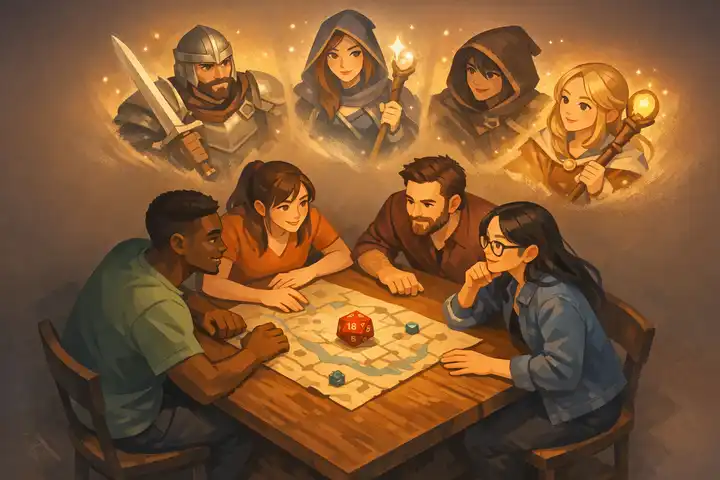
Multi-perspective storytelling in RPGs changes how stories are told by letting players experience events through different character viewpoints. This method creates deeper narratives, increases player involvement, and adds replay value to campaigns. Instead of following a single storyline, players can explore branching paths, making their choices matter more.
Key benefits include:
- Player Engagement: Players actively shape the story using their characters' motivations and backstories.
- Replay Value: Different perspectives encourage revisiting campaigns to see alternate outcomes.
- Deeper Narratives: Multiple viewpoints reveal hidden layers in the story, making it richer and more dynamic.
This approach is already common in literature and video games, such as A Song of Ice and Fire and Final Fantasy 6. RPG systems like Blades in the Dark and Powered by the Apocalypse also use mechanics that support shared storytelling. To get started, tools like the TTRPG Games Directory can help you find games that emphasize this storytelling style.

Key Benefits of Multi-Perspective Storytelling in RPGs
Dynamic Stories for Dynamic Games: Six Ways to Give Each Player a Unique Narrative
What is Multi-Perspective Storytelling?
Multi-perspective storytelling weaves narratives through the eyes of various characters, offering a richer and more layered experience. In narrative theory, this approach is called multiperspectivity: "Multiperspectivity (sometimes polyperspectivity) is a characteristic of narration or representation, where more than one perspective is represented to the audience". In RPGs, this means players navigate the story by controlling multiple characters or exploring events from different viewpoints, which creates multiple narrative possibilities. This method shifts away from traditional storytelling, bringing a dynamic and interactive structure to the table.
Core Characteristics
This storytelling style breaks free from the usual linear narrative. Instead of a straightforward beginning-to-end path, it introduces branching storylines, leading to diverse middles and endings. Each character's perspective either uncovers unique angles of the same event or delves into entirely separate story arcs that eventually converge.
At its core, multi-perspective storytelling prioritizes player agency. Unlike single-perspective narratives where players passively follow a preset path, this approach puts players in control, allowing them to shape the storyline through their choices. The game tracks metrics like relationship dynamics, resources, and knowledge markers to ensure the world reacts consistently to player decisions. This means two players can experience vastly different campaigns depending on the characters they control or the choices they make.
Multi-Perspective Storytelling in Other Media
While widely used in RPGs, this narrative method has also left its mark on literature and video games. In literature, authors like George R.R. Martin (A Song of Ice and Fire) and Jenn Lyons (A Chorus of Dragons) have mastered this technique. Their works use multiple viewpoints to craft intricate, interconnected stories, revealing different layers of their worlds and events. Mosaic novels take this concept further by employing multiple narrators to piece together a unified narrative.
Video games have embraced these principles in compelling ways. Titles like Suikoden 3 and Final Fantasy 6 present their stories through various character perspectives. In Final Fantasy 6, for instance, players navigate dungeons by coordinating separate parties. Mana Khemia 2 takes a unique approach with two protagonists and rival parties, requiring players to experience both perspectives to unlock the "true" ending. Meanwhile, Fire Emblem: Radiant Dawn uses shifting viewpoints to elevate a small-squad adventure into the scale of a full-blown war. These examples highlight how multi-perspective storytelling can transform narratives into deeply immersive experiences across different media.
How Multi-Perspective Storytelling Improves RPGs
Multi-perspective storytelling transforms RPGs into shared creative experiences where players actively contribute to the narrative. This approach fosters deeper immersion and emotional connections, making campaigns more engaging and memorable.
Increased Player Engagement
When players take on narrative roles - shaping scenes, defining character motivations, and influencing the plot - they become more invested in the story. Instead of passively waiting for the GM to reveal the next twist, players drive the narrative forward by weaving in their own character's backstory and personal stakes, like a troubled past or a broken alliance. This collaboration creates a dynamic flow: the GM sets the stage, players take action, and the story evolves organically.
"The GM may set the stage and voice the world, but the players steer the story through the choices, declarations, and actions of their characters." - Tabletop RPG Authority
Game mechanics like Bonds, Drives, or Inspiration rewards further encourage players to act in line with their character's unique traits, keeping them engaged. For instance, one gaming group managed to complete six full campaigns together by embracing this collaborative approach. This level of involvement often leads to unscripted moments - unexpected twists, NPC interactions, or side quests - that enrich the campaign in ways no one could predict.
More Replay Value
Campaigns with multi-perspective storytelling naturally inspire players to revisit the same world, as each viewpoint uncovers new layers of the narrative. Take the Orfhal expansion for Svilland as an example: it allows players to see the same conflict through the eyes of both the Svillanders and the Orfhalars. This dual perspective creates interwoven consequences that reward replaying the game.
"It's about crafting two living stories, each with its own voice, goals, characters, gear, tensions, and truths." - DRS Publishing
This structure adds depth to the experience. Actions taken by one group can create challenges - or opportunities - for another, turning the game world into what DRS Publishing calls "a living organism". Players often return to explore storylines they skipped in their first playthrough or to see how different choices might impact the world. This replayability not only enhances the game's longevity but also deepens the player's connection to the story.
Deeper Narratives
Multiple perspectives allow for richer storytelling by giving players the freedom to introduce unique details, like hidden rivalries or secret alliances, that the GM may not have planned. For example, when a fighter reveals they’re haunted by a mentor’s betrayal, this personal backstory can evolve into a central plotline. The emotional payoff feels more impactful because the player helped shape it.
Games like Blades in the Dark take this a step further by tying character advancement to player-defined goals, such as Bonds and Drives. This ensures that the added narrative depth isn’t just background flavor - it becomes integral to the gameplay. By blending personal stakes with shared storytelling, these systems create campaigns that feel both expansive and intimate.
How to Use Multi-Perspective Storytelling in RPGs
Bringing multi-perspective storytelling into your RPG sessions takes a mix of structure and adaptability. As a game master, you’ll need tools to handle the complexity while keeping things engaging for your players. The trick lies in setting clear boundaries while leaving room for creativity. These strategies can help you weave together narratives that highlight every character's viewpoint.
Creating Multi-Character Narratives
Start with a Session 0 to build interconnected backstories and assign personal side quests that tie into the larger narrative from the beginning. This early groundwork helps avoid characters feeling isolated as the story progresses. Think of it like a TV series - organize the narrative into three threads: a main plot, a major subplot, and a character-focused subplot.
"Acts are not scenes. Acts contain scenes."
- Steven, Author and RPG Designer
To keep things dynamic, use mechanical triggers like Inspiration and Bonds to reward unique character actions. If conflicts arise between backstories, tackle them openly to maintain harmony within the group.
Handling Added Complexity
The Story Stack Framework is a helpful tool for managing intricate, multi-layered narratives. It suggests keeping the "Fantasy" (who the players want their characters to be) and "Actions" (what they do) consistent, while allowing the "Plot" to remain flexible to adapt to player choices. Narrative designer Wojtek Borowicz highlights this idea:
*"Player fantasy is the most powerful element of any narrative experience in games."
Define clear decision-making boundaries: players control their characters' motivations, while the game master handles NPCs, world events, and pacing. This division of roles ensures the story stays cohesive. For one-shots or particularly intricate sessions, try starting in medias res - jumping straight into a crisis or combat scene - to immerse players in immediate problem-solving. You can also incorporate flashback mechanics, letting players retroactively establish shared histories as the story unfolds.
Using Player Feedback
Player feedback is essential for fine-tuning the narrative. Give players opportunities to shape the story by introducing new details about the world or revealing unexpected ties to NPCs mid-session. With a solid narrative structure in place, this input keeps the story dynamic and collaborative. Pay attention to which story arcs resonate most with the group and adjust focus accordingly.
To keep things comfortable and fun, use safety tools like X-Cards, Lines, and Veils. These tools help navigate sensitive content and ensure everyone feels at ease. Stay alert to players' reactions - whether it’s excitement or discomfort - and adjust the story to keep it a shared, enjoyable experience.
Finding Multi-Perspective RPGs with TTRPG Games Directory

Once you’ve decided to dive into multi-perspective storytelling, the next step is finding the perfect game. The TTRPG Games Directory makes this easier by organizing a wide variety of games, complete with descriptions of their mechanics, themes, and storytelling styles. Whether you’re looking for classic options or indie gems, this directory highlights games that focus on shared narratives.
Searching for Multi-Perspective Games
The directory uses searchable metadata - like Genre, Tags, and System - to help you pinpoint games that align with specific storytelling preferences. Filters such as "Narrative", "Storygame", or "Collaborative" are particularly useful for discovering titles that emphasize shared storytelling. For example, Montsegur 1244 is a standout choice. This game invites players to collaboratively weave a narrative about the besieged Cathars in 13th-century France, where each character must confront the tension between survival and faith. You can purchase it as a PDF for $12.00 or in print for $20.00. Its quality has been recognized with nominations for the Diana Jones Award and Indie Game of the Year.
The directory also highlights games with inventive mechanics that support multi-perspective storytelling. Take Cognitus: The Roleplaying Game of the Mind, for instance. This title dives into Jungian psychology, incorporating "persona" entities and Tarot-based progression to create a surreal, multi-viewpoint experience. It’s available as a free download and holds an impressive 5.0 out of 5-star rating on itch.io.
Beyond filtering for mechanics, the directory helps you distinguish between indie innovations and classic approaches to multi-perspective storytelling.
Indie and Classic Multi-Perspective Titles
The directory features a mix of indie games and classic titles that excel in multi-character storytelling. Indie games often experiment with bold narrative mechanics, such as flashbacks or starting scenes in the middle of the action (in medias res), to encourage immediate and impactful decision-making.
Classic games, on the other hand, might achieve multi-perspective storytelling through adventure modules or "story arc swarms." These setups allow multiple independent storylines to explore different aspects of a central theme or situation. As writer and former game creator Talin puts it:
"This is the game equivalent of what, in literature, would be served by having multiple narrative viewpoints".
The directory also provides practical details, such as average session length and book format (e.g., Core Rules or Digest), which can help game masters manage the complexity of multi-perspective gameplay. With this curated resource, you can dive deeper into narrative-driven RPGs and explore the unique storytelling opportunities they offer.
Conclusion: Why Multi-Perspective Storytelling Works
Multi-perspective storytelling takes RPGs to a whole new level, turning them from simple narratives into dynamic, collaborative adventures. In these games, players don’t just follow a story - they help build it, exploring the world from different angles and creating a deeper, more immersive experience. As James Maxwell puts it:
"The storytelling element in RPGs is not limited to the game itself; it extends beyond the game session as players discuss and reflect on the events that occurred".
But the impact doesn’t stop at entertainment. By stepping into the shoes of various characters, players gain a better understanding of different viewpoints, which helps build empathy and emotional awareness. At the same time, these narratives encourage teamwork as players work together to solve challenges, negotiate outcomes, and advance the story. It’s a great way to strengthen communication and collaboration skills, all while having fun.
For those eager to dive into this style of storytelling, the TTRPG Games Directory is a fantastic resource. With filters like "Narrative", "Storygame", and "Collaborative", it makes finding the right multi-perspective game a breeze. Each entry gives detailed information about mechanics, themes, and session lengths, so you can pick a game that fits your group’s playstyle and comfort level with complex storytelling.
FAQs
How do I keep multi-perspective play from feeling confusing?
To keep multi-perspective storytelling clear, make sure each character has a distinct voice, perspective, and storyline. Use natural breaks - like chapter transitions or scene changes - to switch perspectives smoothly. Consistent cues, such as tone or narrative style, can help readers identify who is speaking. Most importantly, ensure every character's perspective contributes something new and relevant to the plot. By giving each voice a purpose and clear identity, you'll keep your story engaging and easy to follow.
How do I balance spotlight time across different viewpoints?
Balancing spotlight time means giving each perspective its fair share of attention without letting one overshadow the others. This can be done by dedicating specific scenes or moments to each character, ensuring they have the chance to grow and play a meaningful role in the story. Smooth transitions between viewpoints are key to maintaining a natural flow, allowing all perspectives to enhance the narrative without one dominating the experience.
What’s the easiest way to start using this in my next session?
The simplest way to weave multi-perspective storytelling into your RPG session is by using a collaborative approach that emphasizes the viewpoints of different characters. Begin by talking with your players about how they can narrate their character’s actions and choices, allowing the story to unfold through their unique lenses. You can assign each player a specific scene or aspect of the narrative to describe. Over time, you can extend this to shared narration, creating a deeper and more immersive storytelling experience.


