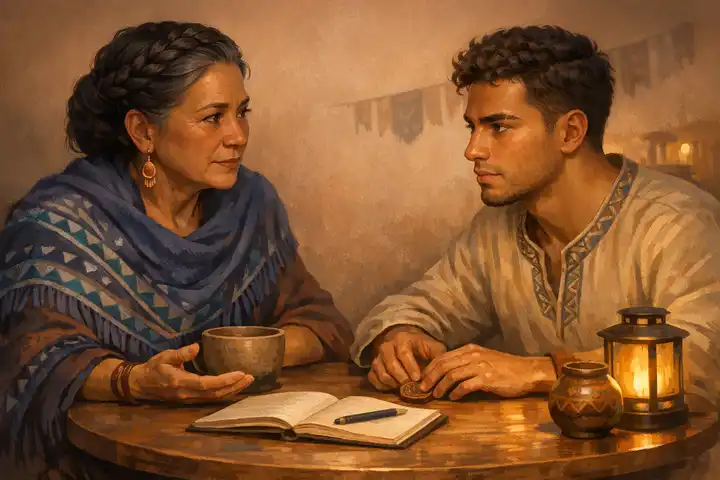
How do you design NPCs that feel real and spark emotional engagement in tabletop role-playing games? The key lies in creating characters with depth, complexity, and ties to the world they inhabit. NPCs (non-player characters) aren’t just background figures - they can drive the story, challenge player assumptions, and bring the setting to life. Here’s how to do it effectively:
- Focus on depth: Use the "Want, Wound, Voice" framework. Give each NPC a goal (immediate and long-term), a past experience that shapes their decisions, and a unique trait that makes them stand out.
- Avoid stereotypes: Root NPCs in their world’s lore and add unexpected contradictions. For example, a feared warrior might secretly value peace.
- Show, don’t tell: Use dialogue, actions, and small details to reflect societal norms, values, and traditions.
- Engage players through conflict: Introduce moments where players unknowingly breach norms or face moral dilemmas tied to NPCs' beliefs or goals.
- Use research and feedback: Dive into historical and cultural sources, and consult sensitivity readers to avoid harmful tropes or misrepresentation.
Games like Gubat Banwa and The Mending Circle demonstrate how mechanics and storytelling can work together to create meaningful NPC interactions. Whether it’s a character’s layered motivations or their role in teaching players about the game world, the best NPCs make your story richer and more immersive.

NPC Design Framework for Cultural Conflict in TTRPGs
Core Principles of NPC Design for Cultural Conflict
Research and Sensitivity in Cultural Representation
When incorporating cultural elements into your NPCs, start with thorough research. Dive into specialized resources like academic texts, works by Indigenous scholars, and insights from historians or cultural leaders. This approach helps capture the richness and depth of real-world cultures.
It’s crucial to understand that cultures are not monolithic. Each community has its own traditions, languages, and variations in governance or technology. If you're drawing inspiration from real-world cultures, be mindful of the distinction between sacred and public elements. Use public aspects as inspiration while avoiding sacred practices, which are often deeply personal and not meant for external adaptation.
"Indigenous cultures have long histories of misrepresentation, appropriation, and erasure in popular media... When done thoughtfully and respectfully, incorporating Indigenous influences can deepen the narrative" - Inn Keeper from Inn at the End
To ensure accuracy and avoid harmful stereotypes, hire sensitivity readers. These experts can review your character designs and settings, flagging potential issues before they reach your players. A standout example of respectful cultural integration is the TTRPG "Coyote & Crow", released in March 2025. Developed by an Indigenous team, it showcases how sci-fi and fantasy settings can celebrate Indigenous themes without falling into colonialist narratives.
Once you’ve established a solid cultural foundation, the next step is crafting NPCs that feel layered and alive.
Building Layers of Complexity
One effective method for creating compelling NPCs is the "Want, Wound, Voice" framework. Every major NPC should have three key elements:
- Want: This includes both their immediate goal and a deeper, long-term motivation.
- Wound: A significant past event that has shaped their personality and decisions.
- Voice: A distinctive habit - whether verbal or physical - that makes them stand out.
The immediate want drives individual interactions, while the deeper want shapes ongoing relationships and long-term storytelling.
For principal NPCs, invest in detailed backstories, relationship dynamics, and layered motivations. This "Deep Investment" approach ensures they feel fully fleshed out. On the other hand, background NPCs who serve more transactional roles can be kept simple with "Shallow Investment" - just enough detail to serve the scene without distracting from the story. If an NPC’s personality or history doesn’t impact the game, there’s no need to overcomplicate things.
A great example of nuanced NPC design is Strahd von Zarovich from the "Curse of Strahd" supplement for Dungeons & Dragons 5th Edition. Released in 2016, this character is often praised for his consistent and layered motivations, which make him more than just a reactive villain.
Once you’ve built depth into your NPCs, focus on making them reflect the unique traits of their local setting.
Balancing Generalization and Individuality
Avoid generic archetypes by rooting your NPCs in local lore and adding unexpected contradictions. For instance, a seemingly ruthless noble could secretly be seeking redemption, creating a more complex and relatable character.
"Layering contradictions - such as a seemingly ruthless noble who secretly seeks redemption - adds depth and relatability, making players more invested in their stories" - GM Craft Tavern
A useful tool is the 10-second description test: Try summarizing your NPC in one sentence without relying on stereotypes. If you can’t, it’s a sign the character needs more unique traits or motivations. To make NPCs even more memorable, use the von Restorff effect - give them 2-3 vivid sensory traits. This could be an unusual voice, a striking appearance, or a distinctive mannerism. These small details help players see them as individuals rather than forgettable background figures.
Practical Techniques for Designing NPCs with Cultural Depth
Using Historical and Contemporary Analogies
Take inspiration from real-world events to add depth to your game world. By adapting specific historical moments or social structures, you can create rich, believable conflicts. For instance, if your story involves two factions at odds, look into historical trade disputes or religious divides. Instead of copying surface details, focus on the underlying tensions and emotional stakes. This method allows you to craft compelling scenarios without directly borrowing or misrepresenting cultural practices.
Details matter. Avoid generic archetypes like the "mysterious mystic" by anchoring your NPCs in your world’s lore. Maybe they guard a rare artifact tied to a forgotten ritual or serve as the last practitioner of an ancient tradition. A great example of this is Shadow of Mordor's "Nemesis System", which allowed NPCs to evolve based on player actions, creating personal and culturally grounded emotional arcs. By rooting your characters in history and context, you can create dynamic interactions that surprise and engage players.
Dynamic Interactions and Conflict Triggers
Cultural depth shines when NPCs challenge player assumptions. Introduce taboos as conflict triggers - situations where players unknowingly break cultural norms, like using forbidden magic or ignoring specific etiquette. These moments force players to reconsider their actions and adapt their approach.
To structure interactions, use the "Hook, Role, and Cost" framework. The hook grabs attention, the role defines the NPC’s purpose in the story, and the cost introduces stakes - what the NPC requires in return. Costs could be reputational damage with a faction, a moral compromise, or a shift in the party’s values. This approach ensures that every interaction feels meaningful and tied to the NPC’s cultural background. Research shows that 76% of players want NPCs to be more emotionally aware and situationally responsive. By reflecting real emotional stakes in NPC reactions, you can avoid creating obstacles that feel arbitrary or forced.
Role of NPCs in Worldbuilding
NPCs do more than just fill out quests - they embody the norms and values of your world. Use the Cultural Framework Matrix to ground each character in four key areas: Values (what they honor), Traditions (their rituals), Taboos (what they avoid), and Daily Life (how they live). For example, an NPC who refuses to negotiate during a sacred festival or insists on a particular greeting ritual organically teaches players about the society they inhabit. These moments make the world feel alive rather than artificially constructed.
"The NPC is the GM's primary tool for making the world feel inhabited rather than constructed." - Tabletop RPG Authority
Showcase societal hierarchies through NPC behavior. A character in a theocracy might constantly reference religious leaders, while someone in a meritocracy might emphasize skills and achievements. These nuances can emerge naturally through dialogue and decisions, giving players a sense of the world’s power structures without overwhelming them with exposition. By weaving these elements into gameplay, you create a world that feels immersive and authentic.
Examples from Existing TTRPGs
Games Modeling Cultural Narratives
Gubat Banwa is a standout example of a Southeast Asian-inspired fantasy TTRPG that intricately blends cultural conflict into its design. Available for $20 on itch.io, the game boasts an impressive 4.9-star rating from 183 reviewers as of March 2026. Set in a Philippine-centric fantasy setting, the game revolves around "war drama", where characters grapple with conflicting loyalties. Lead developer makapatag captures this emotional weight, describing it as:
"It's about being forced to kill your closest loved one amid a blood-stained storm because they serve a datu that blasphemed your sultan".
The game’s Debt system plays a central role, reflecting the complexities of social hierarchies and obligations, adding depth to the narrative.
On the other hand, The Mending Circle, created by Martin Nerurkar and released in October 2021 for $16.00, takes a more restorative approach, focusing on healing instead of combat. With a perfect 5.0-star rating from 19 reviewers, the game employs a unique Wound Sigil mechanic, guiding players through three stages of NPC recovery. Jason Pitre of Genesis of Legend Publishing highlights the game's relevance:
"Compassionate games are vital in our chaotic world. The Mending Circle is a game focused on those who offer succor and healing to those in need".
In this game, NPCs - referred to as "The Torn" - represent marginalized individuals whose cultural wounds shape the story. This design aligns with earlier ideas of creating layered and culturally grounded NPCs. Together, these games illustrate how inventive mechanics can enhance culturally meaningful storytelling.
Lessons for NPC Design
Gubat Banwa’s debt-based mechanics show how cultural obligations can drive narratives and create meaningful consequences for players. Meanwhile, The Mending Circle shifts the focus from conflict to empathy, using healing mechanics to explore characters' pain and recovery. Both games highlight the importance of tying NPCs’ cultural motivations to their roles in the story.
Further refining NPC complexity, designer Murkdice applied the GLW framework (Goals, Leverage, Weaknesses) in December 2025 to craft NPCs for the INKVEIN megadungeon. One example is Sykri, a thief with a clear goal, leverage, and a specific weakness, which clarified his cultural and narrative significance. This method showcases how targeted cultural conflicts can enrich NPC design.
Conclusion and Additional Resources
Key Takeaways
Creating NPCs for cultural conflict revolves around three essential elements: a Want (immediate and deeper motivations), a Wound (a formative past experience), and a Voice (a unique verbal or physical trait). These components elevate NPCs from flat placeholders to memorable characters. Focus on developing key NPCs while keeping others functional. As Tabletop RPG Authority wisely puts it:
"If the NPC can be replaced by a door, a sign, or a die roll, they probably don't need a backstory".
To avoid clichés, give NPCs 2–3 striking traits. For example, describe someone as a "keeper of a rare local ritual" instead of a generic "mysterious mystic". Adding contradictions - like a ruthless noble secretly yearning for redemption - introduces complexity and mirrors cultural tensions. Stats show that 99% of players believe smarter NPCs enhance gameplay, and 76% want characters with emotional depth.
Mirror NPCs, which reflect aspects of the players’ backgrounds or fears, can spark meaningful roleplay. Use the 10-Second Test to ensure your NPC stands out: describe them in one sentence without leaning on stereotypes. These strategies help create NPCs that enrich gameplay with cultural nuance. Drawing inspiration from Johan Eriksson's design philosophy, these methods ensure every NPC adds depth and resonance to your story.
Finding More TTRPGs
If you're looking to dive deeper into games with intricate cultural narratives and nuanced NPC design, check out the TTRPG Games Directory at https://ttrpg-games.com. This resource features a wide range of tabletop role-playing games, complete with detailed descriptions of their mechanics, themes, and standout features. Whether you're interested in strategic combat, immersive worldbuilding, or character-driven storytelling, you'll find something that fits your style. From classics like Curse of Strahd to indie gems, the directory showcases how different systems approach cultural conflict through their NPCs.
Make NPCs your party will obsess over
FAQs
How do I show cultural norms in play without doing a lore dump?
To convey cultural norms without resorting to an overwhelming info dump, integrate them seamlessly into how NPCs interact and behave. Pay attention to the little things - like their mannerisms, speech styles, traditions, or how they respond to certain situations. These subtle touches let players pick up on the culture organically, making the game feel more immersive while adding layers of depth and believability to the world.
When is an NPC “deep” enough versus overbuilt for the table?
NPCs feel "deep" when they come across as realistic and memorable, but that doesn’t mean they need to be overly complex. Their depth should align with their role in the story. For minor NPCs, a few traits - like a unique mannerism or a simple goal - are enough to make them stand out. On the other hand, key NPCs, such as antagonists, benefit from more detailed development, including a fleshed-out backstory or personal stakes.
That said, it’s important not to go overboard. Too much detail can bog down gameplay and distract from the experience. Keep their development proportional to their importance and the level of interaction they’ll have with players.
How can I use cultural taboos to create tension without punishing players?
Using cultural taboos in a thoughtful way can add layers of tension without penalizing players. Instead of using taboos as a way to punish, weave them into the beliefs and actions of NPCs. For instance, an NPC might avoid speaking to outsiders because of a deeply ingrained cultural taboo. This kind of approach enhances storytelling and encourages meaningful role-play, focusing on character interactions and immersion rather than relying on game mechanics to enforce consequences.


