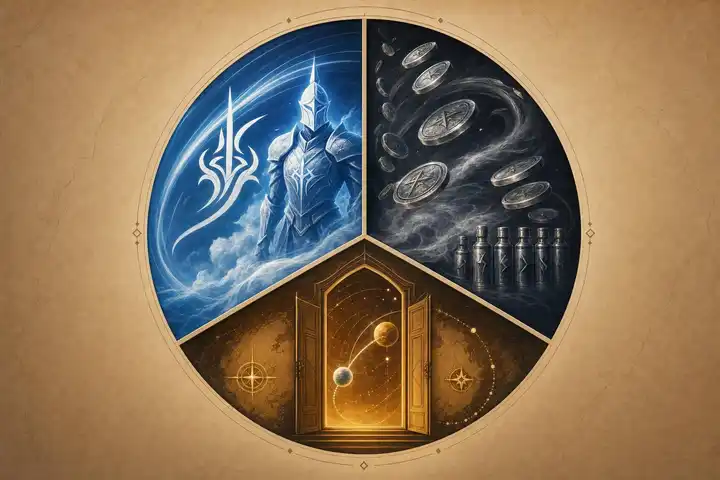
If I had to sum it up in one line: Stormlight is for epic oath-driven play, Mistborn is for metal-fueled heists, and Worldhopper is for cross-planet parties with the most rules and lore to track.
I’m looking at 3 campaign styles, 2 main home worlds, and 1 shared rules engine. All of them use the same d20 base, the same 6 attributes, the same 6 Heroic Paths, and the same Plot Die that can add Opportunities or Complications to a roll.
If you’re picking a campaign, here’s the short version:
- Stormlight / Roshar: big conflicts, Oaths, Surgebinding, caste tension, and Highstorms
- Mistborn / Scadrial: heists, urban pressure, metal-based powers, class conflict, ash, and mists
- Worldhopper: Shadesmar travel, mixed power sets, cross-planet groups, and the heaviest GM load
What changes most is the tone, power source, prep work, and lore load. Stormlight leans toward redemption and large stakes. Mistborn leans toward planning and mission play. Worldhopper adds the most moving parts because it mixes worlds, timelines, and magic systems.

Cosmere RPG Campaign Styles Compared: Stormlight vs Mistborn vs Worldhopper
How to Play The Cosmere RPG | A Complete Beginners Guide

Quick Comparison
| Campaign style | Main setting | Core feel | Magic focus | GM focus | Best for |
|---|---|---|---|---|---|
| Stormlight | Roshar | Epic, personal, war-scale | Spren bonds, Oaths, Surgebinding | Storm cycles, character milestones | Groups that want big arcs and moral choices |
| Mistborn | Scadrial | Heists, intrigue, pressure | Allomancy, Feruchemy, metal use | Metal limits, mission planning | Groups that like tactics and city jobs |
| Worldhopper | Multiple worlds via Shadesmar | High-scope cross-world play | Mixed Investiture systems | Travel, lore, power mix, canon timing | Groups already deep into Cosmere lore |
A few facts stand out fast:
- Combat uses a three-action turn system
- Mistborn Legacy spans 2 eras
- The Cosmere is tied to 16 Shards
- Worldhopper play can mix heroes from more than one planet in the same party
So if you want the easiest first pick, I’d frame it like this: choose Stormlight for character vows and war-scale drama, choose Mistborn for tight missions and metal tactics, and choose Worldhopper only if your group wants the most lore-heavy version of the game.
Core Rules and Shared Cosmere Foundations
All three campaign styles run on the same rules engine, the same character framework, and the same underlying cosmology. Before Stormlight, Mistborn, and Worldhopper play start to branch off, this is the shared base everything sits on.
How Play Works at the Table Across All Campaigns
Play uses the same d20 framework in Conversations, Endeavors, and Combat. At its core, the loop is simple: roll a d20, add your skill modifier, and try to meet or beat a GM-set DC.
That same loop shows up in every kind of scene. Conversations cover social play. Endeavors handle bigger tasks like travel, heists, or other multi-step problems. Combat uses a three-action turn structure, with fast and slow turns each round. So even when the scene changes, the way you interact with the game stays familiar.
The Plot Die adds another layer. It’s a custom d6 with Opportunity, Complication (+2 or +4), and blank faces. Instead of just saying “you pass” or “you fail,” it can add a twist, a setback, or one of those success-at-a-cost moments that make play feel less flat.
With that core loop in place, the next piece is how characters are built and how they get access to power.
What Every Cosmere Character Is Built From
Every character uses the same six attributes, grouped into three pairs:
- Physical: Strength and Speed
- Cognitive: Intellect and Willpower
- Spiritual: Awareness and Presence
These attributes shape things like health, movement, defense, Focus, and Investiture.
Each character also chooses a Heroic Path: Agent, Envoy, Hunter, Leader, Scholar, or Warrior. Your path gives you a starting skill and opens up a branching talent tree.
| Heroic Path | Starting Skill | Core Function |
|---|---|---|
| Agent | Insight | Stealth, investigation, and opportunism |
| Envoy | Discipline | Social influence, negotiation, and support |
| Hunter | Perception | Ranged combat, tracking, and scouting |
| Leader | Leadership | Tactics, command, and buffing allies |
| Scholar | Lore | Technical knowledge, medicine, and crafting |
| Warrior | Athletics | Frontline combat and defensive stances |
World-specific powers are layered on top of this shared chassis. That’s what lets Stormlight, Mistborn, and Worldhopper campaigns feel different because of their power source, not because the core character math changes. In practice, that makes switching between campaign styles much easier. You’re not learning a whole new game each time. You’re learning how a new setting bends the same base rules.
All three styles also share the same cosmology: Investiture powers magic, Shards are Adonalsium's 16 fragments, and Worldhoppers move through the Cognitive Realm. Once that base is clear, the differences from one world to another stand out much more cleanly.
Stormlight Campaigns vs. Mistborn Campaigns
Roshar and Scadrial don’t just look different on the page. They feel different once you start playing.
| Feature | Stormlight (Roshar) | Mistborn (Scadrial) |
|---|---|---|
| Tone | Epic heroism, personal growth, redemption | Tactical heists, rebellion, noir mystery |
| Scale | Grand-scale, world-shifting events | Intimate stakes, city-focused missions |
| Tech Level | Fabrial high magic | Medieval in Era 1; industrial/firearms in Era 2 |
| Political Focus | Rigid Lighteyes/Darkeyes caste system | Noble/Skaa class conflict and secret societies |
| Power Style | Spren bonds and Oaths | Burned metals (Allomancy) or stored attributes (Feruchemy) |
| Primary Hazard | Highstorms | Ashfalls and mists |
| GM Prep | Managing storm cycles and moral milestones | Managing metal scarcity and heist logic |
Stormlight Campaigns on Roshar: Oaths, Surgebinding, and Large-scale Conflict

Stormlight campaigns lean big. You’re dealing with wars, ideals, and choices that can reshape lives and nations.
The political backdrop runs through the Lighteyes/Darkeyes caste system, and Shardblades and Shardplate work as markers of rank just as much as tools for battle. Roshar also supports human and Singer ancestries, with Singers able to grow carapace armor naturally. That alone gives the setting a very different feel at the table.
Character growth in Roshar is tightly tied to story. Knights Radiant advance through Oaths and Ideals, so progress comes from what characters stand for and the choices they make, not just what they defeat.
Mistborn Campaigns on Scadrial: Metals, Heists, and Urban Tension

Mistborn campaigns are more focused and tense. Instead of giant warfronts, you often get pressure-filled jobs, city intrigue, and careful planning.
Scadrial’s magic system is built around metal. Allomancy lets characters burn metals for power, while Feruchemy lets them store attributes in metal and pull them back later. The setting centers on a wide range of Allomancy and Feruchemy powers.
The Mistborn Legacy campaign spans two eras - Era 1 (levels 1–6) and Era 2 (levels 3–6). That split gives groups two different flavors of Scadrial, from the more medieval tone of Era 1 to the industrial, firearm-equipped style of Era 2.
Emotional Allomancy adds another layer. The setting introduces "Soothing" and "Rioting" as mechanical conditions to reflect it without removing player agency. And if your table likes crossover play, Worldhopper campaigns open the door to travel between worlds, mixed party roles, and powers pulled from more than one setting.
How to Choose Between Roshar and Scadrial for Your First Campaign
Stormlight fits groups that want epic heroism, personal growth, and redemption. The Welcome to Roshar guide is designed to be spoiler-free, so it’s easy to hand to players who haven’t read the novels. For the GM, the main challenge is keeping track of storm cycles and moral milestones.
Mistborn is a better match for groups that want tactical heists, rebellion, and noir mystery. The tradeoff is in prep: the GM has to think more like a planner, with heist logic and metal scarcity shaping how sessions run. If picking one world feels too limiting, Worldhopper campaigns push things even further with cross-world travel and mixed-setting play.
Worldhopper Campaigns and Cross-Cosmere Play
Worldhopper campaigns send the party from planet to planet through Shadesmar. You get a much bigger stage, but it comes with more moving parts for the GM.
What a Worldhopper Party Looks Like
Once that kind of travel is on the table, the party no longer has to stay tied to one world. A worldhopper group might include native heroes and full-time travelers side by side. That can mean a party linked to a group like the 17th Shard, a duo such as a Rosharan Singer and a Scadrian Misting, or a single-world crew that slowly grows into something bigger as the campaign moves across planets.
How Crossover Powers and Travel Change the Campaign
This setup matters most when multiple magic systems end up in the same party. The shared Investiture framework makes that possible by giving those systems one rules chassis.
The main balancing tool is the three-action economy. Brotherwise Games says this system helps balance faster styles like Mistborn against slower but high-power systems like Elantrian magic. As Johnny O'Neal, Creative Director, Brotherwise Games, explains:
"Part of the reason why we broke out our system in actions the way we did is specifically so that we can balance Elantrian superpowers with everything else that's going on, because the other systems are all faster."
At the table, that means a Mistborn character can act fast and often, while an Elantrian may spend several actions or even multiple turns drawing symbols to produce a very powerful effect.
Travel between worlds also brings in Cosmere-wide groups like the Ghostbloods, which gives GMs ready-made plot hooks without much setup.
Those tradeoffs usually show up in a few clear ways:
| Feature | Single-World Campaign | Worldhopper Campaign |
|---|---|---|
| Lore Load | Focused on one planet's history and culture | Requires knowledge of multiple planetary systems |
| Complexity | Standard; one primary magic system | High; mixing multiple Investiture traditions |
| Prep Demands | Moderate | High; tracking cross-world travel and secret groups |
One more thing matters for canon play: because Stormlight predates Mistborn Era 1, canon-accurate crossovers need a clear in-world timeline reason.
Which Cosmere Campaign Style Fits Your Group
Matching Campaign Style to Tone, Rules Load, and Lore Commitment
Pick based on three things: tone, rules load, and lore depth. Stormlight leans into epic heroism. Mistborn is a better fit for mission-focused play. Worldhopper is for groups that want to jump across worlds and deal with a lot more Cosmere lore.
This section takes the earlier rules and setting breakdown and turns it into a practical choice.
Stormlight works well for groups pulled toward epic heroism, redemption arcs, and large-scale conflict on Roshar. Mistborn fits tables that like heists, intrigue, rebellion, and clear mission structure. Its Legacy campaigns also run longer than a standard Stormlight campaign, so it makes sense for groups ready to stay with one game for a while. Worldhopper is built more for veteran groups that already know the Cosmere well and want to mix powers across worlds.
Here’s the fastest way to compare them side by side.
| Feature | Stormlight (Roshar) | Mistborn (Scadrial) | Worldhopper |
|---|---|---|---|
| Tone | Epic heroism & redemption | Heists, intrigue & rebellion | Sweeping, high-scope adventure |
| Rules Complexity | High | High | Highest |
| Lore Commitment | High | Moderate | Very High |
| GM Prep Demand | Moderate | High | Highest |
| Campaign Length | Standard | Long (Legacy campaigns) | Variable; potentially the longest |
Use that grid to line up your group’s taste for tone, complexity, and lore depth.
Stormlight, Mistborn, and Worldhopper all run on the same core system. What changes is the amount of scale, rules weight, and lore your table wants to deal with.
FAQs
Which Cosmere campaign is best for beginners?
The Stormlight Archive campaign is the best place for new players to start. It was the game’s first launch setting, and it comes with the free Bridge Nine starter adventure.
These starter materials help players learn the system and the setting without needing deep knowledge of Brandon Sanderson’s novels first. They also come with pre-generated characters and intro rules, so your group can jump in and start playing right away.
Do I need to read the books before playing?
No. The Cosmere RPG is built so you can jump in even if you haven’t read Brandon Sanderson’s novels.
The rulebooks include setting overviews and clear guidance on how to handle canon. So your group can stick close to the source material, or go with a looser, more customized approach.
Can one party mix Stormlight and Mistborn powers?
Yes. The Cosmere Roleplaying Game uses a d20-based system, so different magic systems are built to work together in the same party.
Some campaigns stay on a single world. But the game also plainly supports Worldhopper adventures.
Its Investiture system goes a step further by allowing interaction across magic systems. For example, Allomancy can detect active Investiture from other settings.


