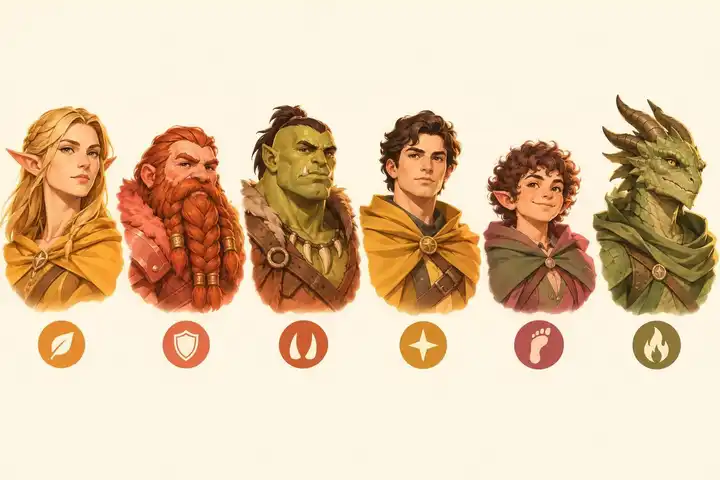
My rule for choosing an RPG race: start with your character idea, then check the edition, traits, and GM approval. There’s no best choice for every party or campaign.
I compare options by what they let you do, not by how they tell you to act:
- Rules: D&D 2024 has 10 Player’s Handbook species and puts ability-score increases in backgrounds. D&D 2014 and Pathfinder Second Edition use different character-building rules.
- Choices: Human, elf, dwarf, halfling, gnome, goblin, orc, dragonborn, tiefling, and goliath each offer different tools for movement, survival, senses, or magic.
- Fit: I check party needs, terrain, languages, action costs, usage limits, and later character choices - not just starting traits.
My final test is simple: <u>Will I enjoy playing this character?</u> Strong numbers help, but they don’t replace a character you want to bring to the table.

How to Choose an RPG Race, Species, or Ancestry
ULTIMATE GUIDE TO SPECIES | D&D 2024 PLAYER'S HANDBOOK
How Different RPGs Handle Ancestry
The same label can mean different things across games. Compare different TTRPG games by what each choice gives your character at creation.
| Game and edition | Terminology | Chosen at character creation | Mechanical benefits | Customization layers | Class interactions |
|---|---|---|---|---|---|
| D&D, 2024 rules | Species; background | Species and background | Species traits; background grants ability score increases, proficiencies, equipment, and an Origin feat | Species and background | Species does not normally limit class selection; background shapes starting ability scores. |
| D&D, 2014 rules | Race | Race and background | Racial traits and, in many entries, fixed ability-score increases | Race and background | Fixed increases can affect build efficiency. Do not combine 2014 racial bonuses with 2024 background-based ability scores. |
| Pathfinder Second Edition, remastered | Ancestry; heritage; ancestry feats | Ancestry, heritage, and a 1st-level ancestry feat; additional ancestry feats at levels 5, 9, 13, and 17 | Ancestry Hit Points, size, Speed, languages, ability boosts or flaws, and other traits | Heritage, ancestry feats, and background | Heritage and feat choices support class strategies; ancestry feats do not replace class feats. |
Dungeons & Dragons 2024 Species
Look at what a species does for your build, not just how it fits your character concept.
Wizards of the Coast’s 2024 Player’s Handbook includes Aasimar, Dragonborn, Dwarf, Elf, Gnome, Goliath, Halfling, Human, Orc, and Tiefling. Even if you know a species from an earlier edition, use its 2024 entry.
Each background lists three ability scores. Choose +2 to one and +1 to another, or +1 to all three. Neither option can increase a score above 20.
Pathfinder Second Edition Ancestries and Heritages
Paizo’s Player Core presents the remastered framework; the Core Rulebook uses the legacy rules. Ancestry is a starting package, not a single trait. A versatile heritage replaces one standard heritage. Check ancestry, heritage, and ancestry feats separately, since each grants different benefits.
The remastered rules also offer alternative ancestry boosts: any ancestry can take two free boosts instead of the fixed boosts and flaws in its entry. Before using voluntary flaws, check your rules version. The legacy and remastered procedures are not interchangeable.
Later ancestry feats must be your level or lower, and you must meet their prerequisites. Look over those future options before committing to a build.
Separate Origin Choices and Non-Fantasy Species
In sci-fi and horror games, check whether physiology, origin, and role are separate choices. Science-fiction rules may separate alien physiology or an android chassis from upbringing and career. Horror games may focus instead on curses, exposure, or transformation.
Common Fantasy Options and Trade-Offs
Treat these examples as patterns - not rankings or rules about personality.
| Option | Recurring mechanical themes | Narrative hooks | Party role | Limits |
|---|---|---|---|---|
| Human | Broad skill access, extra feats, flexible choices | Migration, family ties, several communities | Filling skill gaps; customization | Available feats and proficiencies |
| Elf | Heightened senses, mobility, innate magic | Long memory, changing homelands, ancestral ties | Scouting, perception, magical utility | Senses and spells vary |
| Dwarf | Resilience, poison resistance, darkvision or low-light vision | Community duties, craft traditions, lost homes | Hazard resistance, defensive support | Mobility varies |
| Halfling | Luck, bravery, stealth | Community bonds, travel, underdog survival | Risk-heavy checks, infiltration | Reroll triggers vary |
| Gnome | Illusion, unusual senses, magical abilities | Research, invention, family traditions | Utility magic, knowledge, problem-solving | Invention lore grants no crafting skills |
| Goblin | Resourcefulness, mobility, survival, fire-related traits | Resourceful communities, rebuilding, belonging | Skirmishing, improvisation, exploration | Heritage or feat requirements |
| Orc | Endurance, recovery, survival | Family expectations, service, self-definition | Staying active in danger; protecting allies | Recovery usage limits |
| Dragonborn | Breath weapons, elemental resistance | Draconic legacy, community obligations | Area damage, hazard protection | Breath weapon rules vary |
| Tiefling | Resistance, innate spells, supernatural senses | Family history, social assumptions, religious conflict | Magical utility, hazard resistance | Legacy determines powers |
| Goliath | Giant-associated gifts, athletics, enlargement | Family legacy, community service, personal goals | Lifting, rescue work, defensive support | Size changes follow separate rules |
Start with the familiar staples, then check what each option changes at the table.
Humans, Elves, and Dwarves
Human flexibility matters when it fills a gap in your party. Elven senses help with exploration, while a long lifespan can shape relationships. Dwarven resilience helps in dangerous surroundings, but craftsmanship is story flavor - not a requirement.
Halflings, Gnomes, and Goblins
Keep halfling luck, gnome illusion, and goblin survival abilities separate from portrayals of their communities. None requires a peaceful, eccentric, or reckless personality.
Before choosing a Small character, check Speed, reach, carrying capacity, weapon use, mounts, and space. Read each ability’s trigger and action cost, too. A limited reroll or an illusion that takes an action calls for a different plan than a passive benefit.
These options often come with stronger legacy hooks. Keep those story details separate from what the abilities do in play.
Orcs, Dragonborn, Tieflings, and Goliaths
Endurance, draconic powers, supernatural inheritance, and giant-associated gifts describe capabilities - not intelligence, morality, or class.
For dragonborn, compare the breath weapon’s damage type with its matching resistance. For tieflings, Wizards of the Coast’s 2024 Player’s Handbook offers three fiendish legacies: Abyssal, Chthonic, and Infernal. Read your chosen legacy carefully, since it determines your powers.
If the campaign includes discrimination, agree on its scope and limits before play.
Choose an Option That Fits Your Character
Start with your character concept, then check the rules. Confirm the game, edition, and allowed books. Read the full entry, paying attention to movement, senses, defenses, languages, and advancement choices. Shortlist three options: the best story fit, the best mechanical fit, and the one that creates the most tension. Then narrow your choices by checking party role and campaign fit.
Match Traits to Party Roles
Once the concept fits, connect its traits to the job you want at the table. Durability and movement help with front-line work. Senses and escape abilities suit scouting, while protection or innate magic can support spellcasting. Communication and protective abilities can also help the party.
Synergy helps, but it isn't required. Class features, equipment, and tactics matter, too. Roles also vary by game: support might mean gathering information rather than healing.
Use this table as a comparison model for species choices in any RPG. These examples use D&D 2024 species. Traits describe the rules package; story and class suggestions aren't restrictions.
Species Signature traits Strengths Limitations Best story fit Best class fit Campaign requirements Human Extra Origin feat; flexible size Flexible enough to fit most parties Benefits depend on feat choice Resourceful problem-solver Any class Confirm available feats Elf Keen senses; lineage-based magic Scouting and magical utility Movement benefits vary by lineage Scout or magical investigator Ranger, Rogue, Wizard, Bard Check exploration needs Dwarf Poison resilience; stone-based tremorsense Durability; underground detection Tremorsense requires stone contact Underground explorer Fighter, Cleric, Paladin Check terrain Goliath Giant gifts; strong movement; temporary enlargement Front-line mobility and lifting Enlargement begins at level 5 Mobile protector Barbarian, Fighter, Monk, Ranger Check space for enlargement Tiefling Fiend-touched appearance and innate magic Magical utility and resistance Benefits depend on legacy Supernatural investigator Warlock, Sorcerer, Bard, Paladin Agree on social treatment Dragonborn Draconic ancestry and breath-weapon identity Area damage and resistance Positioning and limited uses Elemental defender Paladin, Fighter, Sorcerer, Cleric Check likely damage types
Check Campaign Needs and GM Approval
Next, make sure the choice works in the campaign. Ask about languages, terrain, climate, travel, and combat frequency before committing. Will special movement solve common problems, or will it slow the table down?
Discuss unusual choices with the GM. Confirm sourcebook access, equipment availability, and the setting's social expectations. In Pathfinder Second Edition, rarity and access rules may require GM approval. An available character option isn't automatically allowed in every campaign.
Review Advancement and Build Choices
Check how the option holds up at later levels and how its benefits work with your class and background choices. In Pathfinder Second Edition, you choose a heritage at 1st level, so review later ancestry feats as well. Check action costs, limited uses, and future level choices before you commit.
Conclusion: Your Character Selection Checklist
No race, species, or ancestry is best for every character. Choose one that fits your concept, rules, party, and campaign.
- Concept fit: Does it support your character’s identity, history, appearance, and goals?
- Rules fit: Have you checked the edition, terminology, and version of the option?
- Table fit: Can it do the job you want while working well with the rest of the party?
- Useful abilities: Which traits will come up often in this campaign? Do you understand their limits?
- Campaign fit: Does it match the setting, tone, expected adventures, and social assumptions?
- Approval: Are the books, supplements, legacy options, and third-party materials you’re using allowed? Has the GM approved any unusual mechanics or setting premises?
- Advancement plan: Will later feats, heritage options, class choices, or ability increases support your concept?
- Table enjoyment: Will you enjoy portraying and playing this character throughout the campaign? Treat that enjoyment as a requirement, not a bonus - a rules-legal choice you enjoy beats a stronger option you don’t want to play.
FAQs
Can I use a 2014 race with D&D 2024 rules?
Yes, you can use a 2014 race with D&D 2024 rules. Work with your group to make sure it fits your campaign’s balance and setting. Mixing content from different editions is a common way to tailor your game as the rules change.
For character-building ideas and game systems that handle race and class differently, check out the TTRPG Games Directory.
How do I create a mixed-ancestry character?
Blend your character’s heritage and personal history to shape who they are. In the Cosmere RPG, you can choose two cultural origins that shape their skills and worldview.
For example, Alethi and Thaylen roots could shape a warrior skilled in maritime trade.
Work with your Game Master to fit these choices into the world. If the system has no mixed-ancestry mechanics, use your backstory to show how different backgrounds shaped your character’s upbringing and training.
Can I change a species’ appearance without changing its traits?
Yes, you can usually customize your character’s appearance - including markings, scars, or clothing - without changing their mechanical traits. Most systems keep appearance separate from core abilities, using it to support your character’s backstory and roleplay.
Some species work differently. Singers in the Cosmere RPG, for example, have specific forms that grant mechanical benefits. Work with your Game Master to make sure your visual choices fit the game’s setting.


