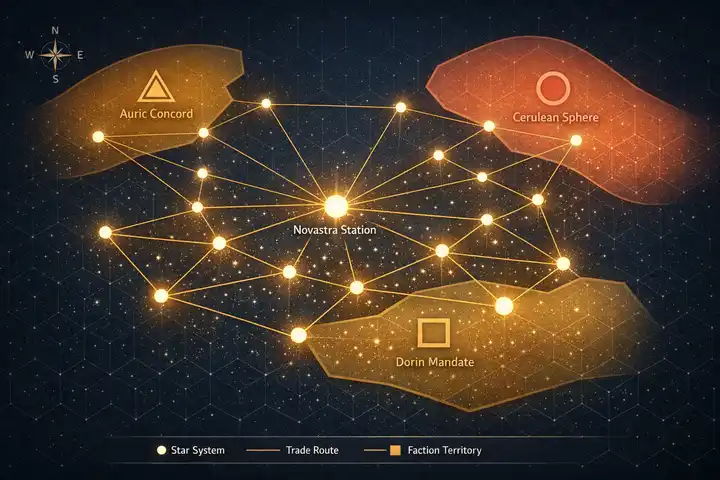
Stars Without Number is a sci-fi tabletop RPG set in a post-apocalyptic galaxy. It combines old-school mechanics with modern sandbox tools, offering vast possibilities for exploration and storytelling. Players enjoy open-ended gameplay, dynamic faction systems, and tools for creating rich interstellar settings. The Revised Edition adds new features like hybrid classes, advanced character options, and expanded world-building resources.
Key Features:
- System: Uses 2d6 for skills and d20 for combat, balancing predictability with risk.
- World-Building: Includes 60+ planetary tags, random generation tools, and faction mechanics.
- Character Options: Four main classes (Warrior, Expert, Psychic, Adventurer) with customizable skills and Foci.
- Free Access: Core rules are available as a free PDF, with an expanded Revised Edition for deeper gameplay.
This game is ideal for GMs who enjoy crafting dynamic sci-fi worlds and players seeking meaningful choices in an open sandbox. Whether you're into tactical combat, rich storytelling, or interstellar politics, Stars Without Number delivers a flexible and engaging experience.

Stars Without Number: Core Mechanics and Character Classes Overview
Stars Without Number - Revised Edition: OSR DnD Book Review

Core Mechanics and Game Design
Stars Without Number uses a mix of dice systems: 2d6 for skill checks and a d20 for combat and saving throws. This combination adds a layer of unpredictability to gameplay. Reviewer Chris P Wolf describes it as follows:
The contrast between the smooth probability curve of 2d6 and the arbitrary swinginess of a d20 means that players can be at least somewhat confident in their characters' skills, but that combat is always a scary, random mess.
The 2d6 system creates a bell curve, which makes skill outcomes more reliable for trained characters. With proper modifiers, skilled players consistently hit standard target numbers. On the other hand, the d20 system keeps combat unpredictable. The flat probability of a d20 means even experienced fighters can face unexpected outcomes, whether it's a critical miss or a surprise hit.
How the Dice System Works
Skill checks rely on rolling 2d6, adding the character's skill level (ranging from 0 to 6), and including any relevant attribute modifiers. The total must meet or exceed a Target Number, usually between 6 and 13 depending on the difficulty. This system rewards specialization. For example, a character with a skill level of 2 and a +1 modifier has a solid chance of succeeding in routine tasks.
For combat, the game uses a d20 system. Players roll a d20, add their attack bonus and attribute modifier, and compare the result to the target's Armor Class (AC). The Revised Edition adopts an ascending AC system, which aligns with modern RPG conventions, making it intuitive for players familiar with other systems. Saving throws also use a d20 and are divided into five categories: Physical, Evasive, Mental, Tech, and Luck.
This blend of dice mechanics ensures a mix of calculated strategy for skills and high-stakes unpredictability in combat, adding depth to gameplay. The character creation process builds on this foundation, allowing players to shape their roles in the game.
Character Creation Options
Players begin with six classic attributes: Strength, Dexterity, Constitution, Intelligence, Wisdom, and Charisma. These can be generated using dice rolls, a point-buy system, or predefined arrays. The game offers four main classes:
- Warrior: A combat expert who can avoid one hit per scene.
- Expert: A skill specialist capable of rerolling one failed check per hour.
- Psychic: Uses psi points to power mental abilities.
- Adventurer: A hybrid class added in the Revised Edition.
To further personalize characters, players choose background packages like "Engine Crew" or "Noble", which provide starting skills and a narrative backstory. Training packages then refine abilities based on the chosen class. As Timothy S. Brannan puts it:
The overall feel I get with this game is that it is the perfect child of Basic D&D and Traveller. So much of what made both of those games so great is here.
The Revised Edition expands character options even more, introducing True Artificial Intelligences and transhuman characters who can transfer their consciousness between bodies. These additions are part of the game's comprehensive 324-page rulebook. Together, these mechanics and options create a flexible system that supports the game's rich world-building, which unfolds in later sections.
World-Building and Sandbox Tools
Stars Without Number is celebrated for its comprehensive toolkit that enables Game Masters (GMs) to craft entire sectors of space with minimal prep time. These tools expand on the game's modular framework, offering an interstellar sandbox experience that feels dynamic and alive. The Revised Edition, released in late 2017, introduced even more detailed sandbox mechanics and faction rules, equipping GMs with everything they need to create evolving universes that operate independently of player actions.
Sector and Planetary Creation
The process begins with GMs placing stars on a hex map, which typically represents a region of space once controlled by a fallen galactic empire in the year 3200. Using a series of nested random tables, GMs can flesh out each planet’s history, alien species, technology level (ranging from 0 for Stone Age societies to 5 for highly advanced civilizations), and biomes.
One standout feature is the use of planetary tags - two randomly generated descriptors like "Cybercommunist" or "Forbidden Tech" that define a planet’s core characteristics. Each tag comes with pre-designed lists of enemies, allies, complications, objects, and locations, sparking immediate inspiration for adventures. Ian Williams from Nerdist captures this well:
The genius of SWN... is that it's all written in such a way that the potential stories and dramatic chokepoints become immediately apparent.
Beyond planet generation, the game offers additional resources like tables for names, religions, political factions, and architectural styles. As Nick Robinson observes, these tools "excel in generating the kind of fast, smooth content that sandbox gaming demands". For those who prefer digital assistance, third-party tools like "Sectors Without Number" automate hex map creation and make it easy to tweak system placements. Once planets are established, the faction system adds another layer of depth, animating the universe with dynamic, independent powers.
Faction System for Dynamic Storytelling
The faction system works like a mini-game, treating organizations as large-scale NPCs with their own character sheets. Each faction is defined by three key stats - Force (military power), Cunning (espionage ability), and Wealth (economic resources) - along with Hit Points that represent their stability and resilience against rivals.
GMs manage factions through monthly "faction turns", during which factions pursue goals such as "Commercial Expansion" or "Military Conquest." They can seize planets, acquire assets, or launch attacks. Completing these objectives earns Experience Points, allowing factions to level up, much like player characters.
Chris P. Wolf highlights the system’s impact:
The faction system is a brilliant way to inject uncertainty into the GM's role, and to create a world that feels alive and in-conflict, as opposed to creating plots that revolve solely around the PCs.
Players interact with factions through Reputation, which acts as a form of currency for requesting favors, acquiring equipment, or even securing military aid. At higher levels - usually level 9 and beyond - characters can establish and lead their own factions, shifting the focus of gameplay toward interstellar politics and statecraft. As James Maliszewski explains:
The faction system... concretizes 'high-level' play in a way that I've not seen in any other old school RPG to date.
This modular system simplifies campaign creation. GMs can use faction rules to shape their campaigns, even if they’re running a different RPG system, and can remove them without disrupting the core d20 combat mechanics. Additionally, faction conflicts naturally generate adventure hooks. For example, if one faction loses a Wealth asset to another, players might be hired to investigate the theft or recover the stolen resource.
Combat Systems: Personal and Starship
Stars Without Number separates combat into two main systems: personal skirmishes between characters and large-scale starship battles. Each is tailored to offer a distinct experience, balancing individual action with team-based strategy.
Personal Combat Mechanics
Personal combat in Stars Without Number uses a d20-based system that feels familiar to fans of Dungeons & Dragons. Players roll a d20, add bonuses and modifiers, and compare the result to the opponent's Armor Class. Each round represents about six seconds, with initiative determined by rolling 1d8 plus the character's Dexterity modifier.
Combat on the ground is fast-paced and unforgiving. Starting characters are particularly fragile, meaning even minor enemies can pose a serious threat. Each class brings unique combat perks to the table. For instance, Warriors can ignore one hit per combat, giving them a bit of extra survivability. The game also includes a Foci system, allowing players to customize their characters' combat abilities. Whether you want to play a precise sniper or a martial artist, the system keeps things flexible without becoming too complicated.
Melee combat introduces an additional twist with the "Shock" mechanic. If an attack misses but the target's Armor Class is below a certain threshold (15), the weapon still deals a small amount of damage. This ensures melee fighters remain effective even against heavily armored foes.
While personal combat emphasizes quick and lethal encounters, the game shifts gears when players take to the stars, focusing on teamwork and strategy.
Starship Combat and Player Roles
Starship combat is all about collaboration. Instead of focusing on individual prowess, it revolves around the crew working together in specialized roles. Positioning is simplified with five abstract range bands - Adjacent, Close, Medium, Long, and Far. These determine attack modifiers: for example, attacks at Adjacent range get a bonus, while those at Far range face penalties.
Each player takes on a specific role during starship battles:
- Pilots handle evasive maneuvers and use "Dogfight" actions to improve the Gunner's accuracy.
- Gunners operate the ship's weapons and manage targeting systems.
- Engineers are responsible for repairing damage, restoring hull integrity, and boosting key systems.
- Captains keep the crew coordinated with abilities like "Executive Action", which allows re-rolls, or "Brace for Impact", which can reduce incoming damage by half.
Initiative is rolled as a group (1d8 plus a Dexterity modifier), and the team decides the order of actions each round to maximize their tactical advantage. The system ensures that every player has a critical role, keeping everyone engaged during combat.
What makes starship battles even more dynamic is their ability to overlap with personal combat. For instance, during boarding actions, some players can fend off intruders while others remain at their stations. Damage to the ship adds another layer of tension; for every 5 hull damage taken, subsystems may fail or catch fire, requiring immediate attention. If the hull reaches 0, the Engineer must roll 1d20 plus their Tech skill. A result of 10 or less disables the ship, while a roll of 5 or lower results in its destruction.
Both combat systems - whether on the ground or in space - are designed to challenge players in different ways, blending fast action with strategic depth.
Character Classes and Progression
Overview of Character Classes
In Stars Without Number, players can choose from four main character classes: Warrior, Expert, Psychic, and the hybrid Adventurer. Each class is designed to fit seamlessly into the game's mix of sci-fi combat, skill-based challenges, and psychic intrigue. These classes come with unique abilities that define their roles. For example:
- Warriors can shrug off one hit per encounter.
- Experts get to reroll a failed skill check once per hour.
- Psychics rely on psi points to fuel their psionic disciplines.
The Adventurer, introduced in the Revised Edition, offers a hybrid option by combining partial abilities from two core classes.
Customization is a major focus in Stars Without Number. Players can further tailor their characters using Foci - special talents that grant unique mechanical advantages. As reviewer Chris P Wolf observed:
Each class is actually extremely flexible due to the skills available, and to Foci, a wide range of specific abilities and maneuvers with which players can customize their characters.
These features ensure that every character feels unique, with room to adapt and grow as the game progresses. Beyond the initial abilities, progression adds even more depth, allowing characters to take on leadership roles as they advance.
Experience Points and Leveling Up
The progression system in Stars Without Number ensures that every choice in character development carries weight. Experience points (XP), earned through in-game rewards and milestones, drive character advancement. Characters can reach up to level 20, creating a long-term sense of growth and achievement. RPGPundit describes the system as:
XP [is] roughly based on the value of rewards obtained by the PCs.
Leveling up enhances core stats like hit points (HP), attack bonuses, and saving throws, which are divided into three categories: Physical, Evasive, and Mental. Skill points are also awarded, allowing players to improve their skill ranks (ranging from 0 to 6). For Psychics, leveling up unlocks higher-level disciplines and increases their maximum Psi Points.
At higher levels (9 and beyond), the game introduces a shift in gameplay. Characters can establish and lead their own Factions, adding a layer of strategic and organizational play. This opens up new opportunities for players to influence the game's narrative, tying their personal progression to the larger story of interstellar exploration and power dynamics.
With its blend of class flexibility, meaningful progression, and leadership opportunities, Stars Without Number offers players a dynamic and rewarding character development experience.
Final Thoughts
Who Should Play Stars Without Number?
Stars Without Number is perfect for GMs who love crafting intricate worlds but want a system that requires minimal prep. Players who enjoy sandbox-style gameplay will find plenty to love here, thanks to the game’s focus on player agency and open-ended exploration. The setting is gritty and often unforgiving, rewarding clever problem-solving over brute force.
Fans of old-school RPGs will appreciate the familiar class systems and fast, often lethal combat. At the same time, modern players will enjoy the refined mechanics and the flexibility offered by the Foci system. As RPGPundit puts it:
"It is, in other words, a game that an OSR-fanatic would read and think of as a totally OSR-type game... while at the same time someone who's a totally modern gamer... could read, play, and enjoy."
The game’s generic setting allows for a wide range of sci-fi experiences, from gritty space westerns to Star Trek-inspired exploration. Tactical players will appreciate the consistent 2d6-based skill checks, which contrast with the more unpredictable nature of d20 combat, offering a satisfying mechanical balance.
These elements come together to create a game that appeals to a wide variety of players, setting the stage for the overall review below.
Final Verdict
Stars Without Number is a standout example of sandbox gaming done right, offering a single rulebook packed with endless sci-fi possibilities. It combines familiar mechanics with imaginative world-building, making it a must-have for fans of the genre. The 324-page Revised Edition is packed with tools for GMs, including 60 world tags and an innovative faction system, which streamline the process of sandbox creation while still offering incredible depth. As Chris P Wolf succinctly put it:
"It's a lifetime of sci-fi sandbox gaming in a single book."
The game’s strongest features include its excellent toolkit design, the dynamic faction mini-game, and its seamless integration of Dungeons & Dragons-inspired mechanics with the exploratory feel of Traveller. For those hesitant to invest, the free PDF version includes the complete core rules, making it easy to try before upgrading to the deluxe edition, which adds exciting extras like mechs and transhumanism.
While the art might not stand out and the character sheets can feel a bit cramped, these minor issues don’t detract from the overall experience. For anyone looking for open-ended space exploration with meaningful player-driven choices, Stars Without Number offers an engaging and memorable adventure.
FAQs
How hard is Stars Without Number for new players?
Stars Without Number might seem daunting for newcomers due to its intricate mechanics, but it quickly becomes more approachable with a bit of practice. While many players find the game overwhelming at first, they often describe it as much easier to navigate once they get the hang of its systems.
What’s the best way to start a sandbox sector quickly?
The fastest way to kick off a sandbox sector in Stars Without Number is by crafting around 21-30 planets, as recommended in the game's guidelines. Concentrate on the basics: planet names, types, and standout features. This approach lets you create a rich and engaging setting for your players without overloading yourself with prep work, staying true to the game's focus on adaptable, sandbox-style storytelling.
Do you need the Revised Edition, or is the free PDF enough?
The free PDF of Stars Without Number is a solid choice for many players, offering a fantastic starting point. However, the Revised Edition steps things up with updated mechanics, additional content, and overall refinements. If you're looking for a smoother and more enriched gameplay experience, it’s definitely worth exploring.


