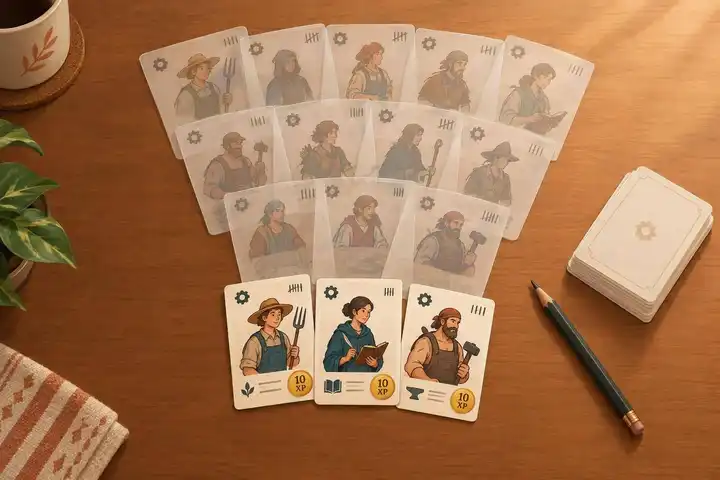
I start a DCC funnel with three or four level-0 characters, not one hero. I keep a separate card for each, name who takes each action, and track risks and results character by character.
Here’s my approach:
- Keep records short: Note HP, gear, occupation, and one personality cue.
- Make choices clear: Use each character’s background to guide decisions, then let the Judge resolve uncertain actions.
- Expect losses: Record deaths, rescues, debts, and discoveries - not just loot.
- Check advancement: At 10 XP, survivors reach level 1 and choose an eligible class.
My goal isn’t to save everyone. It’s to let what happens at the table shape the survivors - and turn one unfinished problem into the party’s next adventure.

DCC Funnel: From Level 0 to Campaign
Prepare and Track Your Level-0 Characters
Generate Characters and Agree on Campaign Rules
Before play, give each player three or four random level-0 characters. Roll 3d6 for ability scores. Each character starts with 1d4 hit points plus their Stamina modifier. Roll a random occupation, then record its weapon and trade goods.
With the roster ready, agree on a simple way to resolve actions and tell the characters apart.
Keep a Short Record for Each Character
Use one index card per character. Record their name, occupation, HP, AC, ability modifiers, Luck, weapons, and gear. Make the most-used values easy to spot so you don’t have to flip through full character sheets during play.
Add one short personality cue to help guide each character’s decisions during round-by-round play.
Examples: “cowardly,” “curious,” or “protective.”
Manage Actions and Make Occupation-Based Choices
Follow a Clear Group Action Procedure
Have each player state what each living character does. Resolve shared movement and exploration together. Split actions only when a character’s position or risk changes. The Judge decides whether an action succeeds automatically, needs a saving throw, or requires a roll. Batch identical rolls only when circumstances match, and track each character’s result separately.
Level-0 characters die fast, so keep every action easy to follow. Maintain an acting order on the table with names, positions, and status. Remove dead characters from the active roster immediately. After each scene, update HP, conditions, gear transfers, and relationships.
Keep each character’s records separate from the party’s shared plan so everyone can follow the action.
Separate Character Records from Party Plans
| Track individually | Track collectively |
|---|---|
| Hit points and status | Shared marching-order list |
| Equipment, money, and transfers | Shared goals |
| Occupations and personal actions | Scene plan |
Record who carries the light, rope, tools, and treasure. When an item changes hands, update both characters’ records before another action depends on it.
Use Occupations and Personalities to Guide Decisions
Occupations provide background, starting weapon training, trade goods, and relevant expertise - not automatic success or a fixed skill list. Explain how the background helps, then let the Judge rule. Routine recognition may need no roll. Uncertain or dangerous work may require one. Spotting a hazard does not mean a character can safely overcome it.
Personality guides a choice; it doesn’t force one.
A farmer might read muddy ground and crop damage to suggest a safer route. A blacksmith might inspect a rusted hinge and judge whether forcing it is worth the risk. Resolve the inspection first, then the dangerous attempt.
That choice can determine whether a character lives or dies. Afterward, record any new trust, resentment, or debt for use when the funnel ends, alongside who survived and what they bring forward.
0-Level Character Funnel Overview & Tips #dcc #dnd #ttrpg
Bring Funnel Survivors into a Campaign
Use the funnel’s index cards and notes to wrap up advancement. Run a post-funnel session to confirm who survived, apply advancement, and make the survivors’ shared history the campaign’s starting point.
Reach 10 XP and Choose an Eligible Class
Check each survivor’s XP before advancing: 10 XP reaches level 1.
Human survivors usually choose Cleric, Thief, Warrior, or Wizard. Dwarf, Elf, and Halfling survivors advance into their matching classes. Agree on any campaign variations with the Judge before making those choices final.
With classes chosen, update every survivor in one pass so play can move forward.
Complete the Level-1 Checklist
Work through survival, XP, class choice, hit points, saves, class abilities, spells, and gear, checking gear and coin totals as you go. Keep each survivor’s name, alignment, Luck sign, and important possessions.
Agree with the Judge on which survivors will become active party members. Then note one relationship or unresolved problem that will drive the next adventure.
Build Adventure Hooks from Losses and Discoveries
Give each survivor one drive or duty, and turn the funnel’s unfinished business into the campaign’s first objective.
Draw on recorded deaths, rescues, betrayals, debts, promises, rivalries, shared fears, and unresolved discoveries. These give the Judge material for a quest, rival, debt, or rescue lead. Note who needs scarce equipment and who claims a prized object.
Recovering a fallen companion’s remains or investigating a clue tied to a damaged tool can provide the next objective.
Carry the most useful clues, scars, and unfinished problems into the next adventure.
Conclusion: Choose the Party’s Next Objective
The funnel ends where the campaign begins: with the survivors’ first shared decision.
Keep the funnel habits that matter most: maintain separate records, resolve risk character by character, and let occupations guide choices. Once survivors reach 10 XP, advance them to level 1, choose eligible classes, and carry their relationships, losses, and hard-won experience into the campaign.
Then make one unresolved funnel consequence the party’s next objective. Use the strongest unresolved loss, clue, or promise as the hook for their next adventure.
FAQs
What if all my characters die during the funnel?
If every level-0 character in your funnel dies, no one advances to level 1. Roll up new level-0 characters and try again.
DCC funnels expect frequent character turnover. Each player starts with multiple expendable characters, and only those who survive and reach 10 XP become full adventurers. “No survivors” simply means “new recruits,” and play continues.
Can I keep multiple survivors in the campaign?
Yes. In Dungeon Crawl Classics, characters who survive the initial level-0 funnel become your campaign roster. They carry their experiences, scars, and treasures into later adventures.
Character deaths are common, so keeping survivors in reserve helps you replace fallen adventurers. When one dies, another from your roster can join the next expedition.
Can my survivor choose a class unrelated to their occupation?
Yes. Your survivor’s occupation doesn’t determine their adventuring class. Once they earn 10 XP, they move from level 0 to level 1 and choose an eligible class, such as warrior, thief, cleric, or wizard. Their chosen class supplies mechanics and abilities separate from their starting occupation.


