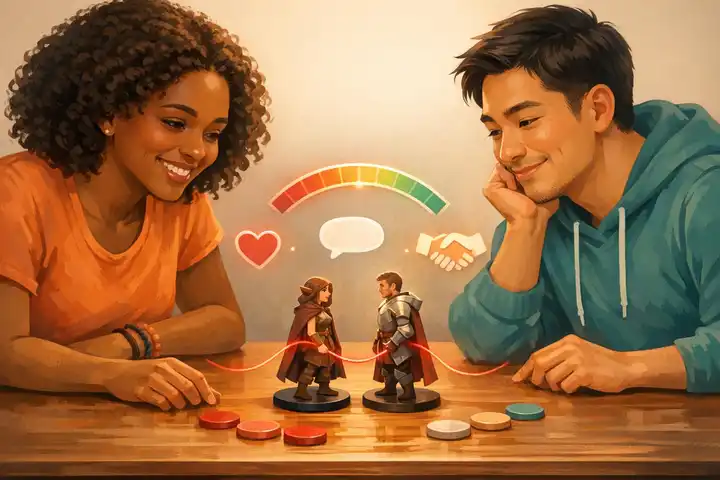
Relationship mechanics in tabletop RPGs create deeper storytelling by focusing on connections like trust, rivalry, and romance. These systems go beyond combat, enhancing character dynamics and emotional stakes. Here are five standout games that use these mechanics effectively:
- Baldur's Gate 3: Tracks approval through a numerical scale, shaping companion loyalty and unlocking unique quests.
- Mass Effect: Andromeda: Uses a flexible dialogue system and loyalty missions to deepen squadmate bonds.
- Monsterhearts: Focuses on teenage drama with "Strings" representing social leverage and emotional tension.
- Thirsty Sword Lesbians: Highlights emotional bonds and conflict resolution through collaborative storytelling.
- Dream Askew: Uses a token economy to balance vulnerability and power, emphasizing community and relationships.
Top 5 TTRPGs with Relationship Mechanics Compared
The Power of Friendship - Bonds and Friendship Mechanics in TTRPGs - Livestream #393
sbb-itb-b8b00a5
Quick Comparison
| Game | Relationship Focus | Key Mechanics | Ideal Campaign Style |
|---|---|---|---|
| Baldur's Gate 3 | Trust and loyalty | Approval system | Long campaigns with choices |
| Mass Effect: Andromeda | Squadmate loyalty and romance | Dialogue tones, loyalty missions | Character-driven narratives |
| Monsterhearts | Social tension and desire | Strings, Sex Moves | Teen drama, short arcs |
| Thirsty Sword Lesbians | Emotional bonds and care | Strings, Conditions | Queer-centered stories |
| Dream Askew | Vulnerability and community | Token economy | Short, collaborative sessions |
These games demonstrate how relationship mechanics can transform storytelling, adding emotional depth and personal stakes to gameplay.
1. Baldur's Gate 3

In Baldur's Gate 3, your companions' feelings about you aren't a mystery - they're clearly tied to an approval-based system. Every choice you make, whether it's in dialogue, quest resolutions, or combat decisions, triggers a notification: "approves" or "disapproves." Behind the scenes, these reactions are tied to a numerical scale ranging from –100 to 100, divided into seven tiers, from Exceptional approval to outright Abandonment.
Building strong relationships has its perks. High approval scores make persuasion checks easier by lowering the Difficulty Class, which means companions are more likely to follow your lead. But be careful - if approval dips to –50 or below, a companion can leave your party for good, taking their gear with them. As Larian Studios writer Kevin VanOrd explains:
"If a character trusts you enough, they'll go along with whatever you say, but if you need to convince them, that's when it becomes a dice roll."
What makes this system stand out is how alive the companions feel. They aren't just tagging along for the ride - they come with their own backstories, goals, and personal boundaries. Principal Writer Sarah Baylus captures this perfectly:
"When you meet the characters in this game, they're not really waiting for the player character to happen upon them. They have their motivations, reasons to be there, history."
These layered personalities lead to rich storytelling and varied outcomes. For example, romancing Astarion reveals his deeply rooted trauma, while Shadowheart's icy demeanor begins to thaw if you respect her boundaries. Push too hard, too soon, and the relationship stalls. These interactions unlock exclusive quests, alternate story paths, and even unique epilogues that make your choices feel impactful.
This system truly shines in long, narrative-driven campaigns where decisions have lasting consequences. It encourages authentic roleplaying rather than treating relationships as a checklist. Senior Narrative Designer Baudelaire Welch offers some advice for players:
"Be yourself and don't treat the romance as just a quest."
2. Mass Effect: Andromeda

Mass Effect: Andromeda takes a different path when it comes to relationship-building, offering a softer and more flexible system compared to the dynamic approval mechanics in Baldur's Gate 3. Instead of the binary Paragon/Renegade choices from the original trilogy, BioWare introduced a four-tone dialogue wheel. Players can shape Ryder's personality through Emotional, Logical, Casual, and Professional responses. As Richard Scott-Jones from PCGamesN put it: "A hot-headed, emotional Ryder will be able to say and do things that a cool, collected Ryder won't, and vice versa".
This approach feels more organic. BioWare Creative Director Mac Walters explained:
"Typically in the trilogy it was a bit formulaic. You'd talk to them and then get to that one point in the game where there was no going back and romance was going to happen. That's not real life. There should be some people who just want to hop in the sack immediately. There should be people who are interested in a long-term relationship."
To deepen relationships, players must complete Loyalty Missions - character-specific quests that not only unlock new abilities for squadmates but also impact their connection with Ryder by 10% to 30%. Skipping these missions could close off certain romantic opportunities, leaving the relationship at the level of a close friendship. However, casual arrangements, like Peebee's "no strings attached" dynamic, remain available for players who prefer a less committed route.
The rewards for pursuing these relationships are largely narrative. Successfully navigating a romance can unlock special cutscenes, unique side missions, and even reactions from other crew members. This system offers a wide range of possibilities, from deep connections with squadmates to lighter encounters with NPCs.
Mass Effect: Andromeda’s relationship mechanics shine in campaigns where character interactions are as important as combat. Much like tabletop RPGs that thrive on interpersonal drama, the game's temperament-based system encourages players to make choices that feel authentic to their version of Ryder. It’s a setup that rewards players who enjoy diving into the emotional and personal stakes of the story.
3. Monsterhearts

Monsterhearts takes a step away from epic fantasy and science fiction to dive into the messy, emotional world of teenage drama. Created by Avery Alder and powered by the Powered by the Apocalypse (PbtA) system, this game puts relationships and personal conflict front and center, with its mechanics revolving around the volatile nature of adolescent interactions.
At the heart of the game is a mechanic called Strings. Strings represent social leverage - think of them as emotional debts or vulnerabilities. Players can use Strings to influence others, tweak dice rolls, or even compel actions. Successfully tempting another character can even earn Experience Points. Reviewer Quinns describes it best:
"The string system is one of the many touches that means Monsterhearts simulates teenagers and not just monsters (or adults)... representing pathetic wads of social currency."
This unique system ensures that every choice in a relationship feels loaded with meaning and potential consequences.
Each character in Monsterhearts is defined by an archetype, or Skin, and these Skins come with a feature called a Sex Move. These moves trigger specific mechanical or narrative effects during moments of intimacy. For instance, the Ghost shares secrets with their partner, while the Vampire grows stronger by denying someone sexually. These moves weave the raw, turbulent emotions of adolescence directly into both the story and gameplay. Characters are also shaped by four stats - Hot, Cold, Volatile, and Dark - which correspond to social moves like Turn Someone On or Shut Someone Down.
Another standout feature is the Darkest Self mechanic. When a character is pushed to their breaking point, their monstrous side takes over, leading to irrational and often destructive behavior. This state lasts until a specific narrative condition is met. While it’s technically a penalty, the Darkest Self often leads to some of the game’s most gripping and dramatic moments. Over time, characters can evolve through "Growing Up" moves, which shift the focus from manipulation to emotional growth. These moves include actions like helping someone feel beautiful or calling them out on their behavior.
Monsterhearts has received widespread praise for its ability to create intense, emotionally charged stories. It shines brightest in short campaigns, where its high-stakes interpersonal drama can take center stage.
4. Thirsty Sword Lesbians

Taking cues from the emotional depth of Monsterhearts, Thirsty Sword Lesbians ups the ante with its focus on relationship drama and queer storytelling. Published by Evil Hat Productions and powered by the Powered by the Apocalypse (PbtA) system, this game has garnered critical acclaim and multiple awards.
At the heart of the game is its Strings mechanic. As described in the game’s System Reference Document (SRD):
"Strings represent emotional influence over another person. This could be the affection of a friend or lover, or it could be blackmail material. Think 'heartstrings.'"
Players earn Strings through actions like enticing another character, winning duels, or responding to archetype-specific prompts on a Relationship Worksheet during character creation. Collecting four Strings allows a String Advance, which grants 2 XP and unlocks new narrative possibilities. Strings can also be spent to give another player 1 XP for a specific action, adding a collaborative layer to gameplay.
The game also uses Conditions - emotional states such as Angry, Frightened, or Insecure - which impose a -2 penalty on certain moves. These conditions can be resolved through Emotional Support, which strengthens character bonds, or via Destructive Actions, which clear the condition but come with narrative consequences.
"The core excitement of Thirsty Sword Lesbians is seeing how personal relationships develop. In a fight, the game asks how the characters' relationships will change, not who is better at swinging their sword."
Mechanically, the game is straightforward, using 2d6 rolls combined with stat modifiers. Results fall into three categories: Up Beat (10+), Mixed Beat (7–9), or Down Beat (6–). With nine core playbooks - expanded to 19 in the Advanced Lovers & Lesbians supplement - it offers plenty of variety for campaigns focused on themes like found family, intrigue, or defending a community.
5. Dream Askew

Dream Askew takes a different approach to roleplaying mechanics by using a token economy instead of dice, putting narrative vulnerability at the heart of its gameplay. In this system, tokens act as a form of narrative currency. Players earn tokens by making weak moves - moments where their characters show vulnerability or experience failure. These tokens can then be spent to perform strong moves, allowing characters to take decisive actions or become the focal point of a scene. The game creates a balance: to gain power later, characters must first embrace moments of weakness, ensuring that relationships remain central to the story.
Each character sheet includes a Lure, a specific trait or action that rewards tokens when other players engage with it. For example, Nadja's Lure reads: "Whenever someone gives you an opportunity to strike from behind, they gain a token". This mechanic encourages players to interact with each other's characters in meaningful ways, weaving connections into the narrative.
"A token is a measure of narrative power: each character in the game has a number of strong moves with which they can become the central figure in a scene, but each of these moves costs a token to perform." - 1klb
Dream Askew also ditches the traditional Game Master role. Instead, players collectively manage setting elements like Scarcity or Roving Gangs, which introduce challenges and shape the story's direction. This collaborative approach reflects designer Avery Alder's vision:
"Apocalypse World positioned the act of roleplaying as a conversation... I was greedy and wanted more [emphasis on relationships]." - Avery Alder
The game is designed for short, emotionally charged sessions lasting 3–4 hours, often set in queer enclaves or marginalized communities. It prioritizes emergent storytelling over pre-written plots, making it perfect for groups who enjoy crafting narratives together. Dream Askew's innovative mechanics earned it three nominations at the 2019 ENNIE Awards: "Best Game", "Best Setting", and "Product of the Year." As of July 2024, its Belonging Outside Belonging system has inspired over 211 products on Itch.io.
Here’s a quick breakdown of the core mechanics that define Dream Askew:
| Mechanic | How It Works | Effect on Play |
|---|---|---|
| Weak Move | Earn a token by showing vulnerability or failure | Builds narrative power for future actions |
| Strong Move | Spend a token to resolve a conflict decisively | Lets players drive the story on their terms |
| Lure | Rewards others for engaging with your character's traits | Encourages interpersonal interaction |
| Setting Element | Shared tool for introducing community-level challenges | Spreads adversity and resolution among players |
Dream Askew’s system highlights how creative relationship mechanics can deepen the roleplaying experience, standing out alongside the approval systems, string economies, and narrative bonds explored in other games on this list.
Comparison Table
The table below compares three tabletop RPGs, focusing on how each incorporates relationship mechanics and their impact on gameplay:
| Game | Relationship Type | System Complexity | GM Burden | Ideal Campaign Style |
|---|---|---|---|---|
| Monsterhearts | Social tension, desire, and manipulation via Strings | Low-Medium - simple yet emotionally charged mechanics | Low - moves are player-driven and reactive | Short-to-medium arcs; teen drama and horror themes |
| Thirsty Sword Lesbians | Emotional bonds, conflict, and care | Low - narrative-first with light mechanical support | Low - the GM facilitates rather than controls | One-shots or short campaigns; queer-centered stories |
| Dream Askew | Vulnerability, community ties, token economy | Low - no dice, token-based narrative currency | None - GMless; players share setting responsibilities | Short, emotionally intense sessions (3–4 hours) |
This comparison highlights how relationship mechanics shape character interactions and gameplay styles. These systems lean heavily on storytelling and emotional depth, often prioritizing character connections over combat.
One standout trend is the reduced need for a traditional GM. For instance, Dream Askew is entirely GMless, with players collaboratively managing the narrative. Campaign length also varies: Monsterhearts supports medium-length arcs, while Dream Askew and Thirsty Sword Lesbians excel in shorter, emotionally focused sessions.
For more tabletop RPGs featuring inventive relationship systems, check out the TTRPG Games Directory. It offers detailed breakdowns of mechanics, themes, and styles to help you find the perfect fit for your group.
Conclusion
Every game brings its own twist to how relationships shape the RPG experience.
Take Monsterhearts, for example. Its social enmeshment system ensures that every success or failure amps up the tension between characters. As TTRPG designer Jasonite puts it:
"The rules do more than model relationships, they trap you inside them."
This highlights how game mechanics can deeply influence storytelling. Some games focus on narrative-driven relationship dynamics, while others make emotional stakes a central part of the adventure.
Ultimately, the best choice depends on whether you want relationships to simply add flavor to your story or to serve as its driving force. If you're still deciding, check out the TTRPG Games Directory for a detailed look at different systems and to find the one that fits your style.
FAQs
Which of these games works best for a one-shot?
If you're looking for tabletop games that focus on relationships and work well for one-shot sessions, here are some fantastic options:
- Hearts and Hazards: A light and easy-to-learn d6 game, perfect for creating romantic comedy chaos in your adventures.
- Lasers and Feelings: Jump into quick sci-fi adventures with this simple, fast-paced game.
- Unincorporated and A Complicated Profession: Both are GM-less storytelling games that require minimal preparation, making them great for spontaneous play.
- Fiasco: A cinematic, GM-less game designed to deliver dramatic and often hilarious stories, all within just a few hours.
These games are ideal for short bursts of fun while exploring character relationships in unique settings.
Do relationship mechanics require romance to be fun?
Relationship mechanics in games don’t have to revolve around romance to be engaging. These systems can reflect all kinds of connections - friendships, rivalries, partnerships, or even family ties. For example, Pathfinder 2nd Edition focuses on elements like shared histories, obligations, and social dynamics, adding layers of depth that go far beyond romantic relationships. If this intrigues you, dive into TTRPGs that highlight interpersonal dynamics tailored to your preferred playstyle.
How do you keep relationship drama comfortable for the table?
Navigating relationship drama in role-playing games calls for clear communication and respect for boundaries. Before diving into these complex dynamics, it’s important to establish limits on the types of relationships and the level of detail players are comfortable exploring. This groundwork helps ensure everyone feels safe and respected.
To create a supportive environment, consider using tools like Lines and Veils, which define what themes or content are off-limits (Lines) and what can be mentioned but not explored in detail (Veils). Regular mid-scene check-ins allow players to confirm they’re still comfortable as the story unfolds, while debrief sessions after gameplay provide an opportunity to reflect and address any lingering emotions.
Another key aspect to watch for is bleed - when a character’s emotions spill over into the player’s real feelings. Regular out-of-character check-ins can help manage this, giving players space to separate themselves from their characters and process any strong emotions.
By taking these steps, you can build trust among players and ensure that everyone has a positive and enjoyable experience.