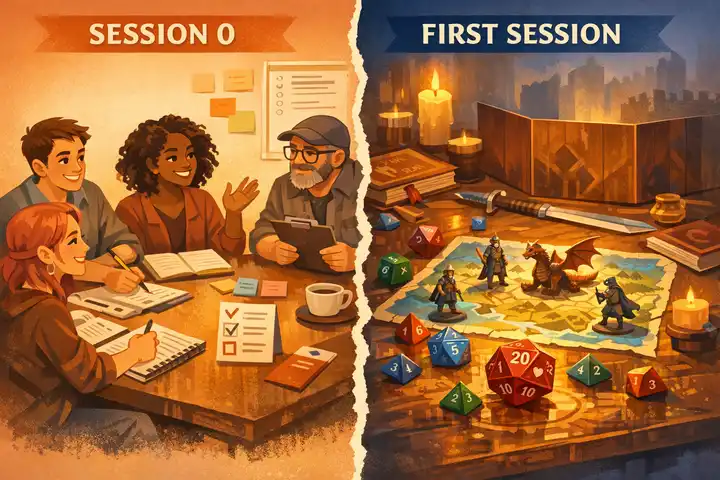
Session 0 and the first session serve different purposes in tabletop role-playing games (TTRPGs). Session 0 focuses on planning: setting expectations, creating characters, and discussing safety rules. The first session kicks off gameplay, immersing players in the story and mechanics. Here’s a quick breakdown:
- Session 0: Pre-game discussion to align on tone, rules, and character creation.
- First Session: Actual gameplay begins, introducing the story, characters, and mechanics.
Quick Comparison
| Aspect | Session 0 | First Session |
|---|---|---|
| Focus | Planning and preparation | Gameplay and story immersion |
| Activities | Discussion, character creation | In-character decisions, dice rolls |
| Pacing | Slower, conversational | Faster, action-oriented |
| Outcome | Group alignment and setup | Story and mechanics in action |
Both are essential for a smooth campaign. Skipping Session 0 risks mismatched expectations, while the first session brings plans to life.

Session 0 vs First Session Comparison for TTRPG Campaigns
How to run a Session 0 for D&D and other RPGs
What Is Session 0?
Session 0 is the pre-game meetup where the Game Master (GM) and players come together to plan and set expectations before diving into the campaign. Think of it as laying the groundwork for a smooth and enjoyable gaming experience. During this session, the group decides what kind of game they want to play and how they’ll collaborate at the table.
This meeting happens before anyone steps into character. It’s a chance to discuss expectations, build characters as a team, and agree on the tone, rules, and boundaries. Skipping this step can lead to misunderstandings or conflicts later on. Below, we’ll break down what makes a Session 0 effective, including its goals, activities, and possible variations.
Session 0 Goals
The main purpose of Session 0 is to get everyone on the same page. It’s where players and the GM align their expectations and decide on the tone and style of the campaign. For instance, the group might discuss whether the game will lean more toward action-packed combat or deep roleplaying, whether the story will be serious or lighthearted, and how strictly they’ll stick to the rules.
This session also helps establish the group’s table dynamics and social agreements. GMs often set guidelines for things like how to handle speaking turns, resolve conflicts, and address behavior at the table. Practical matters like attendance policies, how to handle cancellations, and resolving rules disputes are also covered - like agreeing to handle disagreements after a scene to keep the game flowing.
Another critical part of Session 0 is setting boundaries for content and safety. Players can share topics they’d prefer to avoid, such as graphic violence or certain sensitive themes. Safety tools like lines and veils or the X-card are introduced here to ensure everyone feels at ease.
Session 0 Activities
One of the most important activities during Session 0 is creating characters together. This collaborative process allows players to coordinate their character concepts so the group feels connected from the start. For example, one player might decide to play a city guard, while another chooses to be a healer, creating natural opportunities for teamwork.
Many groups also engage in collaborative worldbuilding, where they flesh out details like the starting town’s name, how common magic is, or what dangers exist in the region. This shared effort gets everyone invested in the game world and sets expectations for the story. Other activities might include reviewing basic rules, outlining the campaign’s premise, developing backstories and character connections, and handling logistics like scheduling and choosing a gaming platform.
Session 0 Variations
Session 0 doesn’t look the same for every group. For long campaigns, it might last several hours to cover everything in detail. Shorter games, on the other hand, might only need 30–60 minutes to touch on the essentials, leaving more detailed character creation for later.
Some groups handle parts of Session 0 asynchronously. For example, they might use group chats or emails to discuss house rules, scheduling, and the campaign pitch in advance. Then, they hold a quick live meeting to confirm boundaries and build character connections. For one-shots, the GM often preps most of the details ahead of time and uses Session 0 to check in on tone and safety before jumping into the game.
What Is the First Session?
The first session marks the official start of your campaign. After all the groundwork laid in Session 0, players finally step into their characters and begin making decisions within the game world. The focus shifts from planning and discussion to in-character actions, dice rolls, and storytelling.
Think of this session as a pilot episode. It’s your opportunity to set the tone of the campaign and give players a taste of what to expect week after week. The Game Master (GM) introduces the setting through gameplay, allowing everyone to see if the tone and pacing align with what was envisioned during Session 0.
First Session Goals
The first session has distinct objectives that go beyond the planning phase of Session 0:
- Introduce the campaign premise: Make sure everyone understands the type of story they’re stepping into - whether it’s monster hunting, solving mysteries, or navigating political drama.
- Unite the party in-character: Provide a solid reason for the group to work together, building on the agreements made in Session 0.
- Demonstrate core mechanics through play: Instead of lengthy rule explanations, let players learn by doing. Use simple, low-stakes scenarios to teach the basics.
- Set the tone and stakes: Whether the campaign is dark and gritty, lighthearted and adventurous, or something in between, establish that vibe early on.
- Introduce key elements of the world: Bring in at least one important NPC or location that will play a role later, helping the world feel more immersive from the start.
First Session Activities
The first session often features specific types of scenes designed to ease players into the game and establish the campaign’s rhythm. Here are a few ideas to include:
- A low-risk social scene: This could be a festival, a tavern meeting, or a mission briefing. It’s a chance for characters to showcase their personalities, interact with each other, and meet significant NPCs.
- A simple encounter: Whether it’s a short chase, a basic puzzle, or a straightforward fight, this lets players experiment with the mechanics in a low-pressure situation.
- A team task: Include a moment where the group works together to complete a task, reinforcing their ability to function as a team.
- An exploration scene: Give players the chance to search a location or gather information, introducing them to the world’s mysteries.
Each scene should serve multiple purposes. For example, a tavern scene might introduce a key NPC while also setting up the first quest, or a short dungeon crawl could teach combat rules while hinting at a larger mystery. This layered approach ensures the session feels purposeful and sets the stage for what’s to come.
Setting Up Future Sessions
As the session wraps up, aim to end on a natural decision point or a moment of intrigue. Use the last 15–20 minutes to reveal a surprising clue, introduce a looming threat, or present a decisive choice. Avoid cutting the session mid-combat or during a complicated rules interaction, especially if the group is new to the game.
Before everyone leaves, recap what the group achieved and outline the key options moving forward. For instance: “You’ve discovered the bandits are working for someone more powerful. You can either investigate the cave marked on their map or question the merchant who hired them.” This clarity helps players come to the next session ready to dive back in, without wasting time recalling where they left off.
Session 0 vs First Session: Main Differences
Side-by-Side Comparison
While both sessions are crucial, they serve very different roles. Session 0 is all about preparation and setting the stage, while the first session dives into the actual gameplay and story.
| Aspect | Session 0 | First Session |
|---|---|---|
| Primary Mode | Discussion and collaborative planning | Gameplay and in-character action |
| Main Focus | Defining expectations, safety, logistics, and character concepts | Introducing the story, immersing players in the world, and showcasing game mechanics |
| Typical Activities | Setting boundaries, agreeing on tone, creating character connections, and establishing house rules | Running scenes, rolling dice, making in-character decisions, and meeting NPCs |
| Pacing | Slower, conversational, with room for questions and discussion | Faster, action-packed, with brief rule explanations as needed |
| Expected Outcome | Establishing a social contract and campaign framework; characters conceptually ready | Completing the opening story beat; uniting the party; demonstrating the intended tone |
| When Problems Surface | Preemptively – mismatches are addressed early | Reactively – adjustments are made based on actual gameplay feedback |
| Common Misconception | "Session 0 wastes playtime" (in reality, it prevents conflicts later) | "We can negotiate during play instead" (in reality, this disrupts the flow mid-scene) |
This comparison highlights why both sessions are essential for creating a smooth and enjoyable campaign experience.
Why You Need Both Sessions
Session 0 is your chance to align the group on tone, boundaries, and play style before diving into the campaign. Skipping this step can lead to awkward moments later when players realize the game isn’t what they had in mind. Many Game Masters (GMs) report that a well-structured Session 0 significantly reduces mid-campaign conflicts and dropouts by addressing potential issues upfront.
The first session, however, serves a different purpose. It brings the plans from Session 0 to life and tests them in action. For example, the group might agree in Session 0 that they want "challenging combat", but only during actual gameplay will you see whether players find a tough encounter exciting or frustrating. This session allows you to refine your approach - adjusting difficulty, balancing spotlight time, and fine-tuning pacing. Plus, it’s where you use the groundwork laid in Session 0 - like character backstories and player preferences - to shape the opening scenes, introduce key NPCs, and choose narrative hooks that will resonate with your players.
How to Run Session 0
Steps for a Good Session 0
Start by presenting your campaign concept clearly. Lay out the tone, themes, expected duration, and session frequency so players can decide if it aligns with their interests. For example, if you're running a gritty cyberpunk game set in Berlin, highlight the unique aspects of the setting to draw players in. This kind of transparency helps players shape their character ideas early on, avoiding potential mismatches with the campaign's vibe.
Break your Session 0 into two key parts: expectation-setting and organizational tasks. Dedicate around 20–30 minutes to setting expectations. This includes discussing safety tools, boundaries, and group norms. Introduce tools like Lines and Veils or the X-card as a proactive measure, not as a reaction to problems. For example, you might say, “Graphic torture won’t be part of this game,” or “Romance is fine, but we’ll fade to black for explicit scenes.” After this, move on to logistics: scheduling, campaign length, session duration, online tools, and rules for cancellations. Decide how many players need to be present for a session to proceed.
Once the campaign concept and logistics are sorted, focus on character connections. Encourage players to develop backstories that tie characters together through shared relationships or locations. This creates a more cohesive party dynamic. Establish clear table norms for character roles, playstyles, and handling absences. A common approach is to have the Game Master (GM) temporarily control an absent player’s character, with a strict rule against making major decisions - like killing off a character - without the player’s consent.
When to Combine Session 0 and First Session
Although a full Session 0 is ideal, sometimes you’ll need to combine it with the first session due to time constraints. This is often the case for one-shots, convention games, or short campaigns where deep character development isn't a priority. In systems with simple rules and quick character creation, you can condense Session 0 into a 15–30 minute pre-game segment. Using pre-generated characters or tightly defined build options can also save time while still covering the basics. For groups with established norms, you might even skip extensive expectation-setting and dive straight into the game.
To streamline a combined session, prepare essential materials ahead of time: a clear campaign pitch, character templates, and safety tools. This helps you jump into gameplay more quickly. However, keep in mind that for longer campaigns, skipping or rushing through early discussions can lead to misaligned expectations, which may be harder to fix after several sessions.
How to Run the First Session
Strong Opening Techniques
Start your first session with a bang - action-packed and attention-grabbing. Throw your players into a situation that demands immediate decisions: a building engulfed in flames, a missing person with time running out, or even an ambush mid-journey. These scenarios instantly pull players into the story and sidestep the dreaded slow start where everyone wonders, "When does the game actually begin?"
Want to spice things up? Begin in the thick of things, like a heist in progress or a tense negotiation already underway. You can always use flashbacks to fill in the backstory later. To ground players in the world, introduce a memorable NPC tied to their Session 0 discussions - maybe a mentor, rival, or patron from their backstories.
When explaining mechanics, keep it simple and relevant to the immediate scene. Save the deeper rule dives for later encounters. Plan for a 3–4 hour session, but make sure the first big encounter happens within the first 30–45 minutes. This keeps the energy high and sets the tone for the rest of the game.
Mixing Different Gameplay Types
Your first session should give players a taste of everything the game has to offer. Include moments of social interaction, exploration, and combat or challenges so everyone gets a chance to engage with the playstyle they enjoy most.
For social interaction, plan a short scene - maybe a negotiation, interrogation, or casual chat with an NPC. Use it to hint at the larger story while letting characters showcase their personalities. For exploration, think about a scene where players investigate a crime scene, navigate a bustling market, or scout unfamiliar terrain. These moments encourage creative thinking and problem-solving. Finally, include a simple combat encounter. Whether it's a bandit ambush, a collapsing bridge, or a rival gang, keep it straightforward and manageable. This helps players learn the basics of initiative, movement, and teamwork without feeling overwhelmed.
By weaving these elements together, you’ll set the stage for a dynamic and engaging campaign while building on the foundation you laid in Session 0.
Using Session 0 Information
Session 0 is your goldmine for crafting an engaging first session. Use the character motivations and group dynamics you developed to create narrative hooks that feel personal. If a player’s character is searching for a missing sibling, introduce a lead or rumor tied to that goal. If the group shares a background - like a hometown, guild, or military unit - make that the reason they’re together, avoiding awkward introductions like, “Why are we all here?”
Respect the boundaries you set in Session 0. If players agreed to steer clear of graphic horror, focus on building suspense and mystery instead. Stick to the tone and genre you all agreed on, whether it’s heroic fantasy, gritty noir, or lighthearted fun. This shows your players that you’re delivering the experience they signed up for.
If you chose a game system that aligns with your group’s preferences - whether they lean toward tactical combat or narrative-driven play - highlight those strengths. A well-designed battle or a dramatic character moment can showcase what makes the system shine.
Wrap up the session with a cliffhanger or an unresolved question. Maybe the party opens a door to a mysterious chamber, the villain escapes with a crucial clue, or they receive a job offer with unexpected strings attached. This naturally sets up the next session and keeps players eager to return. Afterward, take a few minutes to debrief. Ask players what they liked and what they’d like more of, then use their feedback to shape future sessions.
Adjusting for Different Campaign Types
Long Campaigns vs. Short Arcs vs. One-Shots
The length of your campaign shapes how you approach both Session 0 and your first session. For long-running campaigns, dedicate a full 3–4 hours to Session 0. Use this time to dive into detailed world-building, map out long-term character arcs, establish safety boundaries with tools like Lines and Veils, and discuss how shifting schedules might impact the game. Your first session can take its time setting the stage - introduce the world, key NPCs, and the campaign's tone without rushing into major plot developments.
For short arcs lasting 3–8 sessions, you'll need a more focused approach. A 1–2 hour Session 0 should be enough. Prioritize the immediate hook and simplify world-building to what’s essential. Your first session should get straight to the point, introducing the main conflict early and giving players a clear sense of the arc’s direction.
In one-shots, Session 0 is typically a brief 15–30 minute rundown. The GM usually pre-selects the system, setting, and often provides pre-generated characters to save time. Start the session in medias res - throw players right into the action, like a castle infiltration or an intense chase. There’s no time for slow build-ups, so make the stakes and time constraints clear from the very beginning.
These strategies can shift further when adapting for online play.
Online vs. In-Person Play
Playing online adds a layer of technical logistics. For online Session 0s, set aside 15 minutes for a tech check - make sure microphones, cameras, and virtual tabletops (VTTs) are working properly. Establish clear speaking protocols to avoid players talking over each other due to audio delays, and confirm everyone’s time zones to avoid scheduling headaches.
Digital safety tools are a must in online games. Instead of physical X-cards, use options like anonymous Google Forms or safety modules built into VTTs, so players can privately signal any discomfort. Create a digital landing page with house rules, safety guidelines, and maps to keep players visually engaged during discussions. For the first session, plan for 10-minute breaks every 90 minutes to combat screen fatigue - something you don’t usually need to worry about in person. Also, keep the first combat encounter simple. This gives players a chance to familiarize themselves with the VTT’s dice rollers and macros without feeling overwhelmed.
Using TTRPG Games Directory for Both Sessions

Finding the Right System for Your Group
The TTRPG Games Directory (https://ttrpg-games.com) is a handy tool for Game Masters (GMs) looking to connect their Session 0 planning with a seamless and exciting first session. It simplifies the process of choosing a game system by categorizing options based on genres and subgenres like High-Fantasy, Cyberpunk, Cosmic Horror, and Post-Apocalyptic. Each listing includes concise descriptions, giving your group a clear idea of what to expect from the gameplay and setting. This makes it easier to find a system that matches the preferences of everyone in your group, whether they enjoy tactical combat, heavy roleplay, or a mix of both.
During Session 0, the "Browse by Category" feature can serve as a visual guide for group discussions. Reading through the subgenre definitions together helps ensure everyone is on the same page about the campaign's tone. For example, if you're leaning toward Dark Fantasy, this step can clarify whether the group is expecting gritty survival or something more heroic. It’s a great way to avoid mismatched expectations - like one player preparing for lighthearted adventures while another gears up for grim, high-stakes drama.
For longer campaigns, the directory encourages deeper discussions about the world and themes you’ll explore. If you’re running a one-shot and need to keep your Session 0 to a brief 15–30 minutes, the curated lists can save time by pointing you toward simpler, beginner-friendly systems. Whether it’s a sprawling campaign or a quick one-off, the directory helps you lock in a game that suits your group’s playstyle and sets the stage for a memorable first session.
Getting Ready for the First Session
Once you’ve chosen your system in Session 0, the next step is to bring its unique features to life in your first session. The TTRPG Games Directory provides detailed descriptions of each system’s mechanics and themes, which can act as a guide when planning your opening encounters. For instance, if your group opts for a Gothic system, you can weave in themes like decay and mystery into your first scene. If Cyberpunk is the vibe, kick things off with a scenario that highlights "advanced technology and societal decay", instantly immersing players in the world they’ve agreed to explore.
The directory also helps you design encounters that showcase the system's core mechanics from the start. Whether it’s combat, skill checks, or narrative-driven gameplay, you can use the provided insights to create scenarios that let players experience these mechanics firsthand. Plus, the directory links directly to full rulebooks, so you can brush up on the specifics - like combat rules or narrative mechanics - before crafting that all-important first session. This ensures the game flows smoothly and sets the tone for the adventures ahead.
Conclusion
Main Points
Session 0 and the first session play unique yet interconnected roles in setting up a thriving TTRPG campaign. Session 0 is all about preparation - talking through expectations, creating characters, establishing safety tools, and setting the tone for the adventure ahead . The first session, on the other hand, is where all that groundwork comes alive through gameplay, roleplaying, and immersion. Skipping Session 0 can lead to misaligned expectations that may not surface until much later - like one player being viewed as a "powergamer" while another feels overshadowed by combat-heavy gameplay. These mismatches can strain the group dynamic and even cause campaigns to fizzle out. A well-structured Session 0 helps streamline the setup process, making future sessions flow more smoothly. While it might not be as crucial for one-shots, Session 0 becomes essential for long-term campaigns, where alignment issues can grow over time.
These takeaways provide a solid foundation for running both sessions effectively.
Closing Advice
Approach both sessions with clear objectives and involve the entire group in the planning process. Thoughtful questions like “Why did we choose this setting?” can help build a shared narrative and connect characters, laying the groundwork for immersive gameplay in the first session . Even if time is tight, blending elements of both sessions is far better than skipping the planning phase entirely .
Think of Session 0 and the first session as collaborative investments in your campaign's success. Taking the time to discuss playstyles, scheduling, character relationships, and world details can make all the difference. When your first session hits the ground running, it creates the momentum that keeps players engaged and eager for more . By following these strategies, you’ll set the stage for a campaign that feels cohesive and captivating from the start.
FAQs
What makes Session 0 essential for a successful TTRPG campaign?
Session 0 plays a crucial role in kicking off any long-term tabletop RPG campaign. It’s the moment where the Game Master (GM) and players come together to align their expectations, delve into character backstories, and agree on the tone, rules, and boundaries of the game.
This session is all about laying the groundwork for a smooth and enjoyable experience. By addressing potential conflicts and clarifying everyone’s goals early on, it fosters a sense of collaboration and unity within the group. It’s a chance to ensure everyone is on the same page, reducing misunderstandings and setting the stage for a campaign that’s both engaging and built to last.
How can I combine Session 0 and the first session if I’m short on time?
If you're pressed for time, you can merge Session 0 with the first gameplay session by focusing on the most important aspects. Begin with the essentials of Session 0: creating characters, aligning expectations, and establishing safety tools. Keep this segment brief but interactive to ensure everyone is aligned.
After setting the stage, seamlessly shift into gameplay by introducing the story and mechanics in a way that ties back to the discussions. This method keeps things streamlined while still giving players a solid start to dive into the game.
What should be covered in a Session 0 when creating characters?
In Session 0, the spotlight is on building character backgrounds - digging into their goals, motivations, and relationships. It's also the perfect time to talk about the campaign's tone and setting, making sure each character feels like they belong in the story's world. This session should be a collaborative effort, where players create their characters together while also ironing out game rules and setting clear expectations for how the gameplay will unfold. By doing this, you set the stage for a smooth and engaging start to the campaign, ensuring everyone is aligned before diving into the action.


