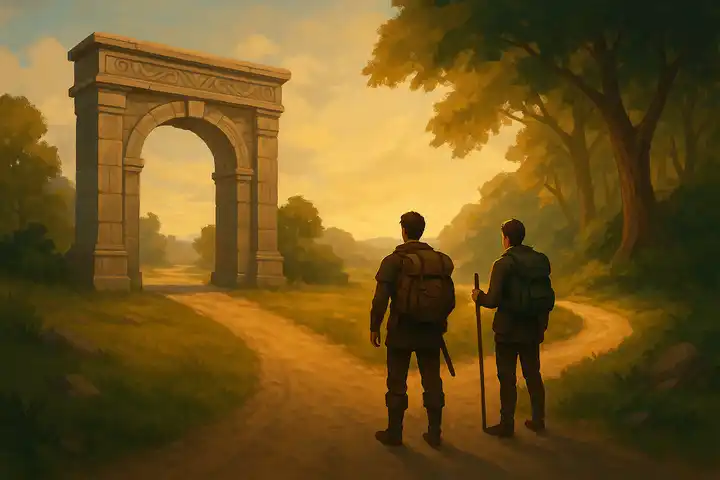
Choosing between player-driven quests and pre-written missions can shape your RPG campaign entirely. Here's a quick breakdown:
- Player-Driven Quests: Stories evolve from player decisions. They offer freedom, dynamic worlds, and unique outcomes but require GMs to think on their feet and manage complex narratives.
- Pre-Written Missions: Structured adventures with defined goals and story arcs. They’re easier to prepare and ideal for newer players but can feel restrictive with limited player impact.
Key Takeaway: Player-driven quests thrive on flexibility and creativity, while pre-written missions provide structure and clarity. Many GMs find success blending both approaches for a balanced, engaging experience.
Quick Comparison
| Factor | Player-Driven Quests | Pre-Written Missions |
|---|---|---|
| Player Influence | High - choices directly shape the story | Limited - choices often stay within a set path |
| GM Prep Time | Lower upfront, higher during sessions | Higher upfront, lower during sessions |
| Story Structure | Open-ended, evolves with players | Linear, with clear objectives |
| Best For | Experienced GMs and creative players | New GMs or groups needing clear direction |
This guide explores both styles in-depth and how to combine them for the ultimate RPG campaign.
What Are Player-Driven Quests?
Player-driven quests are stories that unfold naturally from the choices and goals of the players themselves. Unlike traditional quests that follow a fixed script, these emerge directly from what players decide to do, their character motivations, and how they interact with the game world. The narrative develops in real-time, shaped by what the players genuinely care about.
This approach puts players in the driver’s seat, making them co-creators of the story rather than passive participants. For instance, if a player becomes intrigued by a mysterious tower on the horizon, their curiosity could spark an entirely new quest. The game master (GM) takes this interest and weaves it into the narrative, creating a story thread that grows from the players’ actions and interests.
At its core, player-driven quests highlight the unique strength of tabletop RPGs: the GM’s ability to react and adapt to the players’ choices. Instead of steering the group toward pre-written scenarios, the GM builds a world where consequences naturally stem from the players’ actions and the internal logic of the setting.
How Player-Driven Quests Work
These quests come to life as players explore the world, interact with non-player characters (NPCs), or pursue personal ambitions. There’s no need for a quest-giver handing out objectives. Instead, the players’ curiosity or decisions spark the narrative.
The GM’s role shifts significantly in this style of storytelling. Instead of crafting detailed scenes with fixed outcomes, the GM prepares flexible setups: NPCs with their own motivations, factions with conflicting goals, and situations that can evolve based on player choices. The focus isn’t on “what will happen” but on “what could happen” depending on how the players engage with the world.
Here’s an example: players meet an NPC who casually mentions a missing heirloom. If they decide to investigate, they might uncover a criminal network tied to the item. Instead of a straightforward battle, the players could choose to infiltrate the organization, forming unexpected alliances and opening up new story paths.
Game systems like Apocalypse World’s Fronts/Threats or Progress Clocks provide tools for this style of play. These systems help the GM keep track of the world’s events independently of the players’ actions, ensuring that NPCs and factions react realistically. When the players engage, the GM can respond dynamically, creating a seamless, unscripted flow.
Main Characteristics of Player-Driven Quests
Player-driven quests stand out because they prioritize flexibility and collaboration. Here are some of their defining features:
- Narrative flexibility: The story evolves with each player decision. Instead of following a pre-written path, the narrative adapts based on the players’ choices, creating a unique experience every time.
- Player agency: Players have real influence over the story. Their ideas and plans shape the direction of the narrative, encouraging them to invest deeply in the game. The more their creativity is acknowledged, the more engaged they become.
- Emergent storytelling: These quests aren’t pre-written. Instead, they grow organically from in-game events and player interactions. Each group’s story is one-of-a-kind, reflecting their specific choices and interests.
- NPC reactivity: Non-player characters respond authentically to what players do. For example, if players provoke a criminal organization, that group will react in line with its goals and personality, not because a script demands it.
- Meaningful consequences: Player decisions carry weight. Successes feel earned, failures feel impactful, and the story progresses in ways that reflect the group’s actions. This sense of consequence makes players feel deeply connected to the narrative.
These elements transform the gameplay experience. Players become active participants, shaping a story that feels personal and immersive. When the narrative is built around their decisions, victories feel sweeter, setbacks sting more, and the overall journey feels like something they’ve truly created. This collaborative storytelling approach not only draws players into the game world but also fosters a sense of ownership over the unfolding tale.
Next, we’ll dive into the world of pre-written missions.
What Are Pre-Written Missions?
Pre-written missions, unlike player-driven quests, are carefully planned adventures designed by game masters (GMs) before the players even roll their first dice. These missions come with a structured storyline, predetermined plot points, set locations, encounters, and objectives. Think of it as a roadmap with fixed landmarks, though players may have some freedom in how they navigate between them. This structure lays the groundwork for how these missions unfold.
In these missions, the narrative is already mapped out. The GM establishes the main storyline, key events, and overall direction ahead of time. Players then experience a guided adventure, rather than creating the story as they go.
Pre-written missions can vary in scope, ranging from single-session adventures to sprawling, multi-part campaigns. They might come from published adventure modules - professionally crafted with tested encounters and polished narratives - or be custom-made by a GM who has poured hours into their creation. Regardless of the source, the defining feature is the same: the GM has already decided the "what", "where", and "when" of the story's key moments.
How Pre-Written Missions Work
These missions often follow a location-based progression: starting in a city, moving through wild terrains, and culminating in a dungeon. Each location is packed with specific encounters, NPCs, and challenges that the GM has meticulously prepared.
To build these missions, GMs focus on clear objectives for each scene. These objectives act as stepping stones toward the campaign's ultimate goal. For example, players might need to gather intel at a bustling tavern (Scene 1), journey through a haunted forest (Scene 2), and confront a necromancer in their lair (Scene 3). Each scene serves a purpose and connects seamlessly to the next, creating a cohesive narrative.
GMs often use structured formats to keep their plans organized. A common approach is "LOCATION/MAIN GOAL/OPTIONAL STUFF", ensuring each scene has a clear purpose while leaving room for minor variations in how players tackle challenges. This method helps GMs stay focused while also allowing players to add their own flair to the experience.
In addition to setting objectives, GMs prepare NPCs, behaviors, and outcomes in advance. They design quests using familiar types like fetch, kill, escort, or delivery. Often, the most engaging missions mix these elements - for instance, retrieving a dangerous artifact and then delivering it to a specific location creates a richer, more dynamic story.
While the GM plans most aspects ahead of time, pre-written missions often include optional encounters and branching paths. Players might choose which locations to visit, the order they explore them, or whether to skip certain side quests. These decisions can alter minor details, but the main storyline remains intact.
Main Characteristics of Pre-Written Missions
Here’s what makes pre-written missions distinct:
Controlled story pacing is one of their standout features. The GM determines the timing of major plot points, the speed of progression, and when dramatic moments unfold. This allows for well-timed twists, balanced challenges, and narrative arcs that build toward satisfying climaxes. It also ensures players don’t accidentally miss crucial details or stumble into encounters they aren’t ready for.
A deliberate narrative structure gives these missions a polished and cohesive feel. Since the GM designs the story with specific beats in mind, the adventure flows logically from one scene to the next. The result is a storyline with rising tension, a clear climax, and a resolution that feels complete rather than fragmented.
The GM’s ability to anticipate events is another key characteristic. Knowing what lies ahead allows the GM to prepare detailed descriptions, balanced encounters, and meaningful rewards. They can research relevant lore, craft intricate puzzles, and create NPCs with depth and personality. This preparation results in richer, more immersive gameplay than what might be achieved through on-the-spot improvisation.
Scenes with clear objectives are essential for guiding both the GM and the players. Each scene has a specific goal, whether it’s uncovering information, overcoming a challenge, or making a crucial decision. These objectives keep players focused and prevent the confusion that can arise when they’re unsure of what to do next.
While pre-written missions do allow for player choice, this flexibility is often limited to optional content and branching paths rather than changes to the core narrative. Players might decide which side quests to undertake, which NPCs to ally with, or the order in which they explore locations. However, the main storyline - the one the GM has prepared - remains unaffected by these smaller decisions. This can sometimes limit a sense of true agency, as outcomes are often predetermined to fit the overall narrative.
Pre-written missions offer several advantages. They provide clear direction, which can be especially helpful for new players or when a campaign needs a stronger sense of focus. They also encourage variety by exposing players to different types of challenges, settings, and mechanics. This structure can push players out of their comfort zones, enriching their overall experience.
However, there’s a trade-off. When players realize their choices don’t significantly impact the story’s direction, they may feel like they’re following a script rather than actively shaping the narrative. The best pre-written missions address this by allowing flexibility in how players achieve objectives, even if the objectives themselves are fixed. NPCs can react to unexpected player actions, and minor details can shift based on player decisions, adding a layer of dynamism to the otherwise structured framework.
Comparing Player-Driven Quests and Pre-Written Missions
Now that we've broken down each approach, let's weigh their strengths and challenges to help shape your campaign decisions.
Benefits of Player-Driven Quests
One of the biggest upsides of player-driven quests is the sense of freedom they offer. Players get to shape the storyline with their own ideas, choices, and plans, creating a narrative that feels deeply personal. Instead of picking from a list of pre-set options, they carve out their own path, making the experience feel unique to them.
This approach also takes full advantage of the flexibility that tabletop RPGs are known for. With a GM and NPCs reacting in real-time, the story can evolve based on the players' unexpected actions or creative problem-solving. These spontaneous moments often lead to some of the most memorable and authentic gameplay experiences.
Another plus is the reduced prep work for GMs. While they still need to have a solid grasp of the world and its characters, they don't need to script every single scene or encounter ahead of time. This lighter prep load can be a lifesaver for GMs who are juggling busy schedules.
Lastly, the open-ended nature of player-driven quests keeps things unpredictable. Since outcomes aren't set in stone, conflicts and challenges carry genuine tension, keeping players on their toes and deeply engaged.
Drawbacks of Player-Driven Quests
However, player-driven quests come with their own set of hurdles. For one, they demand a lot of improvisation from the GM. Being ready to adapt to any player decision requires an in-depth understanding of the world and its mechanics, which can be daunting, especially for newer GMs.
The freeform style can also lead to a lack of structure in the narrative. Without a clear arc, campaigns might wander, leaving important plot points unresolved. This can make the overall story feel disjointed or aimless without careful attention to pacing.
Another challenge is keeping track of all the moving parts. Player choices often create a web of cause and effect that grows more complex over time. Managing these variables can be mentally exhausting for the GM, and mistakes or inconsistencies can break immersion.
Lastly, without some guidance, players might fall into repetitive patterns, sticking to what feels familiar. To keep things fresh, GMs need to inject variety, whether through unexpected world events or dynamic NPCs.
Benefits of Pre-Written Missions
On the other hand, pre-written missions offer a more structured experience. They ease the improvisation burden on GMs by providing balanced encounters, fleshed-out NPCs, and a clear storyline. This allows GMs to focus on delivering the story rather than building it on the fly.
These missions are often playtested, ensuring well-balanced challenges and clear objectives - especially helpful for groups with newer players who might benefit from a bit more guidance.
For GMs who love crafting intricate stories, pre-written frameworks are a goldmine. They allow for carefully planned foreshadowing, callbacks, and dramatic reveals that might be harder to pull off in a more spontaneous setting.
Drawbacks of Pre-Written Missions
That said, pre-written missions aren't without flaws. The biggest drawback is their potential to limit player agency. When outcomes are scripted, players can feel like they're just along for the ride, which might stifle creativity if their unexpected choices don't fit into the predetermined plan.
The heavy upfront preparation is another downside. GMs need to invest a lot of time developing scenes, NPCs, and encounters before the campaign even starts. This can feel discouraging, especially if players veer off-course and much of that hard work goes unused.
If players do stray from the script, the GM faces a tough choice: either force them back onto the intended path (which can feel restrictive) or improvise heavily, which undermines the advantages of pre-written content.
Finally, pre-written missions often struggle with NPC reactivity. Since their dialogue and motivations are pre-planned, interactions can feel stiff or unnatural if players engage with them in unexpected ways. This rigidity can break the illusion of a vibrant, living world.
These points lay the groundwork for a side-by-side comparison of the two approaches.
Side-by-Side Comparison
Here's a detailed breakdown of how player-driven quests and pre-written missions compare across key factors that matter during gameplay. This comparison can help you decide which approach better suits your campaign style.
| Factor | Player-Driven Quests | Pre-Written Missions |
|---|---|---|
| Player Agency | Players shape the story with their choices, directly influencing outcomes | Players follow a structured path with limited impact on major plot points |
| GM Preparation Time | Minimal upfront work - GMs create flexible frameworks and adapt in real time | Requires significant initial effort to script scenes, design encounters, and plan NPCs |
| Session-to-Session Prep | Lower ongoing prep as the story evolves naturally from player actions | Once prepared, requires less ongoing work, though adjustments may be needed for deviations |
| Story Flexibility | Highly adaptable - storylines shift based on player decisions | More fixed narrative with planned scenes and outcomes, though some branching paths exist |
| Story Coherence | Open-ended structure can be unpredictable, requiring GMs to maintain thematic consistency | Clear arcs with consistent pacing and dramatic reveals |
| Duration & Scope | Suited for long-term goals spanning multiple sessions; scope adjusts with player interest | Focused on short-term objectives, often completed in one or a few sessions |
| Structure | Open-ended with multiple paths and emergent storytelling | Linear progression with guided steps toward specific goals |
| GM Skill Requirements | Demands strong improvisation and deep knowledge of the game world | Relies on thorough planning and organization, with less need for on-the-spot creativity |
| Player Impact on World | Player decisions directly shape the game world and its outcomes | Major events and outcomes are largely pre-scripted, limiting player influence |
| Encounter Balance | Balancing challenges on the fly, which can lead to inconsistencies | Pre-tested encounters ensure consistent difficulty levels |
| NPC Reactivity | NPCs respond dynamically to unexpected player actions | NPCs follow pre-planned dialogue and motivations, which may feel rigid if players deviate |
| Best For | Experienced GMs and players who enjoy freedom and emergent storytelling | Newer GMs, groups seeking clear direction, or campaigns requiring a tight narrative |
| Replayability | High - each playthrough offers unique outcomes | Generally lower, unless variations are introduced by the GM |
This table highlights the differences in preparation, storytelling flexibility, and player impact, giving you a clearer picture of how each approach plays out at the table.
Player motivation also varies significantly between these styles, influencing how GMs tailor their campaigns. Player-driven quests tap into intrinsic motivation, encouraging exploration and discovery. On the other hand, pre-written missions rely on structured rewards and clear objectives to engage players. The onboarding experience is another area where these approaches diverge. Pre-written missions are excellent for teaching game mechanics through guided tasks, making them ideal for newer players. In contrast, the open-ended nature of player-driven quests can feel overwhelming for those unfamiliar with freeform gameplay. Without structured goals, players might stick to familiar activities rather than exploring new challenges, which could lead to boredom.
These insights can help you find the right balance or even combine elements from both styles for a more dynamic campaign experience.
Combining Both Approaches
The most engaging campaigns often blend structured pre-written missions with the freedom of player-driven quests. This combination offers the best of both worlds: a solid narrative backbone while still allowing players to influence the story in meaningful ways.
To make this work, you can use established tools like the Fronts system from Apocalypse World. This system helps manage both planned storylines and emerging quests. A Front represents a specific threat or conflict with its own agenda and timeline. For example, you can create Fronts for key elements in your campaign, such as a villain's schemes or political unrest. These Fronts evolve based on player actions, tracked using progress clocks. Imagine a cult preparing a dangerous ritual: players might investigate, disrupt the ritual, or even manipulate the cult members. Each of these actions would alter the cult’s progress and potentially introduce new challenges. By preparing 2-4 major Fronts to represent the campaign's core conflicts, you can allow player-driven quests to emerge naturally as responses to these threats, creating a dynamic and interconnected narrative.
Pre-written missions work best as flexible frameworks, not rigid scripts. Design them to adapt to player choices. For instance, if players become attached to a side character during a mission, that character can take on a larger role in future events. This approach transforms potential derailments into opportunities for richer storytelling. Include clear decision points in pre-written missions - moments where player choices can branch into new content. These decision points are perfect for weaving in player-driven quests and keeping the story fluid.
To manage the interplay between pre-written and player-driven content, use tools like quest trackers and progress clocks. After each session, document how the world has changed, noting which elements of the pre-written story remain relevant and which have been altered by player actions. This not only ensures continuity but also helps maintain balance between the two approaches.
When preparing for your campaign, focus your time on the key elements of the pre-written content. Major conflicts, important NPCs, and mission frameworks should be well-developed to provide a strong foundation. For player-driven quests, prepare only the immediate consequences and a few possible outcomes. Instead of scripting every detail, create flexible NPC responses that can adapt to player decisions. This balance prevents burnout from over-preparation while still keeping the story grounded and cohesive.
Dynamic NPC behavior can act as a bridge between these approaches. NPCs should have their own agendas that react to player choices. If players ignore a pre-written mission hook, NPCs can continue pursuing their goals, potentially creating new opportunities for player-driven quests. This keeps the campaign world alive and ensures that player actions - or inactions - have meaningful consequences.
To maintain balance, establish clear stakes for both pre-written and player-driven content. Pre-written missions should involve high-stakes scenarios that directly impact the world or characters the players care about. For player-driven quests, consider how they contribute to the overall narrative. Use a "consequence cascade" approach: if players focus on a side quest while ignoring a major threat, let that threat escalate. For instance, a villain might gain more power or an alliance might crumble, creating new challenges for the group.
The balance between pre-written and player-driven content should shift over time. Early in a campaign, pre-written missions help establish the world, introduce key characters, and teach game mechanics. As players grow more invested and confident, you can gradually introduce more player-driven content. This natural progression reflects the players' growing connection to the world and their ability to shape its direction.
Finally, integrating daily missions and personal quests can add another layer of engagement. Daily missions act as short, time-sensitive challenges that fit within the campaign’s larger structure, while personal quests keep players involved between major story beats. These smaller tasks help maintain pacing and provide consistent opportunities for character growth and interaction.
When designing missions that blend both approaches, focus on preparing the mechanical structure and key objectives for pre-written content, while leaving room for players to influence the story. This balance between structure and improvisation ensures that every mission feels meaningful and contributes to the overall narrative. It’s the perfect way to create a campaign that feels both guided and player-driven.
Selecting the Right Approach for Your Game
Deciding between player-driven quests and pre-written missions comes down to a mix of your skills, your players’ preferences, the game system, the scope of your campaign, and how much prep time you can realistically manage. These elements work together to shape a campaign that’s both enjoyable and manageable.
If you’re just starting out as a Game Master (GM), pre-written missions can be a lifesaver. They provide structure with ready-made dialogue, encounters, and clear objectives. Once you’re more comfortable, you can start weaving in player-driven elements. On the other hand, seasoned GMs often gravitate toward player-driven quests because they’ve honed their improvisation skills and know how to adapt to unexpected player choices without derailing the story.
Understanding your players is key. Some groups prefer the clarity of structured objectives, while others thrive on the freedom to shape the narrative. You might want to ask your players directly about their preferences or look back at previous sessions to see what they enjoyed most. If they seem to light up during open-ended scenarios, it’s a good sign that player-driven content might be the way to go.
The game system you’re using also plays a role. Systems like Dungeon World and Blades in the Dark are designed for emergent storytelling, making them ideal for player-driven quests. Meanwhile, D&D 5th Edition leans toward structured missions, though with some tweaks, it can accommodate more open-ended gameplay. Keep in mind that trying to retrofit hand-crafted missions into a system built for sandbox mechanics (or vice versa) can feel clunky or inconsistent, especially later in a campaign.
The length and focus of your campaign should influence your choice as well. Short campaigns often benefit from pre-written missions, which provide clear narrative arcs. Longer campaigns, however, give you room to let player-driven quests grow naturally. If your campaign revolves around a specific goal - like defeating a major villain or preventing a disaster - structured missions can help keep things on track. But for campaigns centered on exploration or faction-building, player-driven quests are a better fit.
Time is another critical factor. Pre-written missions demand more preparation, while player-driven quests allow for looser outlines, which is great if you’re short on prep time. However, this approach requires confidence in your ability to improvise and a solid understanding of the game system.
Take a close look at your group and their preferences. Are they more into tactical combat or narrative roleplay? Do they want control over the story, or would they rather follow your lead? Combat-focused groups often enjoy pre-written missions with carefully balanced encounters, while roleplay-heavy groups might prefer the freedom to delve into their characters’ motivations through player-driven content. Be honest about your own strengths and limitations as a GM. It’s better to choose an approach that fits your available time and energy than to overextend yourself and risk burnout.
Pay attention to how your players engage with the game. Are they making creative choices and staying invested in their characters? Or do they seem frustrated by too much responsibility or too little control? Direct feedback is invaluable here and can help you make adjustments if the sessions start to feel stagnant.
It’s also helpful to distinguish between quests and missions. Missions are structured and goal-oriented, making them ideal for teaching game mechanics, introducing new players, or driving the story forward during key moments. Quests, on the other hand, are more open-ended and encourage exploration and creative problem-solving. However, they work best with players who are comfortable navigating ambiguity.
Ultimately, your approach should complement the core appeal of your campaign. If tactical combat is a big draw, pre-written missions might be the way to go. If your group loves emergent storytelling, lean into player-driven quests. The goal is to enhance what makes your campaign special, not work against it.
Don’t forget about reward pacing. In pre-written missions, you can carefully match rewards to the challenges you’ve designed. With player-driven quests, you’ll need a more flexible reward system that adjusts based on how things unfold. Poor reward pacing can lead to disengagement, regardless of the content style.
For new players, structured missions are a great way to introduce game mechanics. You can design these missions to teach the rules through hands-on experience rather than overwhelming them with explanations. Once they’re comfortable, you can gradually introduce more player-driven elements.
Finally, consider any technical constraints. Switching approaches mid-campaign can sometimes create inconsistencies, so make sure your chosen style aligns with your game’s framework before committing to major changes.
Conclusion
Pick the quest style that aligns best with your campaign’s vibe - whether it’s the flexibility of player-driven quests or the structure of pre-written missions. Player-driven quests encourage spontaneous storytelling and require less upfront preparation, but they do demand quick thinking and improvisation. On the other hand, pre-written missions offer well-balanced encounters and a clear narrative framework, though they take more effort to set up.
One pitfall to avoid with player-driven quests is offering illusory player agency - where players think their choices matter, but the outcomes are already decided. This defeats the purpose of giving players control and can lead to frustration. If you’re leaning toward player-driven content, make sure their decisions have real consequences. Avoid creating follow-up scenes that hinge on specific quest outcomes, as this can lock the story into a rigid path. Understanding how narrative choices impact gameplay is key to selecting the right system for your campaign.
Different RPG systems cater to different storytelling styles. For example, a system like Apocalypse World thrives on minimal preparation and player-driven chaos, making it perfect for game masters who enjoy creating stories on the fly. When choosing a system, think about whether its mechanics align with your preferred approach to quest design.
Many successful campaigns strike a balance between both styles. You might use pre-written missions for pivotal moments in the story while allowing player-driven quests to fill in the gaps. Alternatively, structured missions can help new players learn the ropes before transitioning to more open-ended gameplay as they gain confidence.
For a deeper dive into RPG systems and quest design, check out the TTRPG Games Directory.
At the end of the day, the best approach is the one that keeps your group engaged and excited. Pay attention to how your players respond, and be ready to adapt your methods. The goal isn’t to stick rigidly to one style - it’s to create unforgettable moments that everyone at the table will cherish.
FAQs
How can I seamlessly combine player-driven quests with pre-written missions in my RPG campaign?
Combining player-driven quests with pre-written missions can breathe life into an RPG, making the experience more immersive and unpredictable. A great way to achieve this is by using pre-written missions as a solid starting point. These missions help establish the world’s setting, key events, and overarching storylines. From there, you can let player-driven quests unfold naturally, shaped by the unique choices, goals, and backstories of your players.
Striking the right balance is essential. Pre-written content should provide enough structure to guide the narrative without stifling the players’ creativity. One effective method is to adapt pre-written missions to align with player-driven goals. For example, you could tie a character’s backstory directly into an existing plot or modify a mission to reflect the players’ decisions. This keeps the story cohesive while allowing for flexibility and personalization.
If you're looking for games that cater to both structured and freeform playstyles, the TTRPG Games Directory is a fantastic resource. It offers detailed descriptions of tabletop RPGs, covering everything from strategic combat systems to deeply immersive storytelling experiences.
How can I manage player choices while keeping the story cohesive in player-driven quests?
Managing player choices in player-driven quests is all about finding the right balance between giving players freedom and maintaining a structured narrative. A good starting point is to design a flexible story framework with key milestones or pivotal events. This way, players can explore and make choices without the story veering completely off course.
It’s also important to stay ready for surprises - players often make unexpected decisions. Being prepared to adjust the narrative on the fly ensures the experience remains engaging and feels tailored to their actions.
To keep the story cohesive, focus on consistent world-building and believable character motivations. Make sure NPCs, factions, and the game world respond logically to what players do. This not only makes the story feel real but also guides players naturally toward significant and impactful outcomes.
What should I consider when deciding between player-driven quests and pre-written missions for my tabletop RPG group?
When deciding between player-driven quests and pre-written missions, it’s all about what suits your group’s vibe and playstyle. Player-driven quests open the door for creativity and allow players to shape the story, diving into unique character arcs and unexpected adventures. But here’s the catch - they demand more improvisation and prep work from the game master (GM).
Pre-written missions, on the flip side, offer a solid, structured storyline with clear objectives. These are perfect for groups that prefer a more guided experience or for GMs looking to cut down on planning time.
Consider your group’s experience and preferences. If you’re working with newer players, the structure of pre-written missions can make things easier and less overwhelming. For seasoned players, the freedom of player-driven storytelling might be the perfect way to keep things exciting. Mixing both approaches can also add variety and keep your campaigns feeling fresh.


