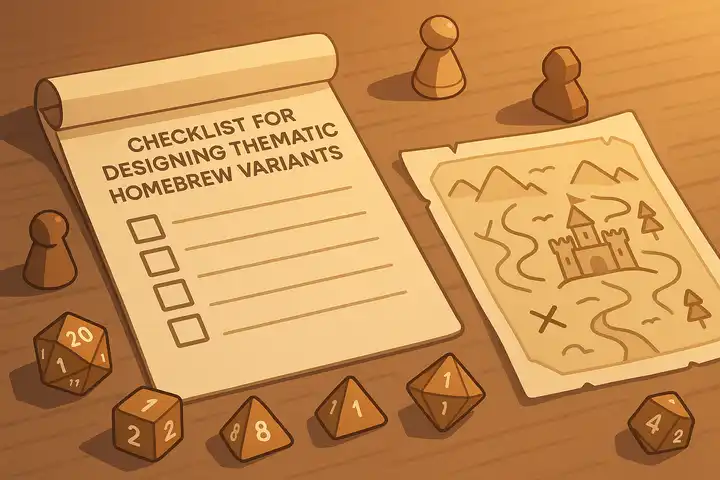
Thematic homebrew variants transform tabletop RPGs by aligning game mechanics with your campaign's narrative. This guide shows you how to create immersive, tailored experiences for your players. Here's the process:
- Start with a theme: Choose a clear, engaging theme that fits your story and resonates with your group.
- Analyze the system: Review core rules, identify tweakable mechanics, and ensure balance.
- Modify mechanics: Adjust combat, progression, or character abilities to match the theme.
- Document changes: Write clear, organized rules for players and game masters.
- Playtest and refine: Test your variant, gather feedback, and make improvements.
- Share your work: Distribute your variant with proper documentation and feedback channels.
This checklist ensures your design stays organized, balanced, and fun. Tailoring mechanics to your story enhances gameplay and creates a memorable campaign for your group.
7 Simple Tips on How To Implement and Test New Homebrews for Your Tabletop RPG
Step 1: Building the Foundation
Before diving into rule tweaks or inventing new mechanics, it's crucial to establish a strong starting point. This involves picking a theme that aligns with your storytelling goals, understanding the system you're working with, and learning from others who've walked this path before.
Selecting a Central Theme
Your theme is the backbone of your design - it shapes every decision you make. A good theme should have a clear narrative identity so players immediately grasp the kind of story they’re stepping into. It should also hint at the mechanical changes needed to bring it to life.
For instance, a "sci-fi dystopia" theme naturally suggests elements like corporate intrigue and resource scarcity. You can adapt existing combat systems by reimagining weapons and technology while keeping the core mechanics intact. Similarly, a mythical folklore theme might focus on rare and mysterious magic, while a post-apocalyptic survival theme could emphasize limited resources and stricter healing rules.
The key is to pick a theme that not only resonates with your group but also fits the strengths of the base system. A well-matched theme, like "cyberpunk noir in a megacity", provides a clear direction - urban exploration, corporate drama, and tech integration - without overcomplicating the setup. On the flip side, a poorly aligned theme may require so many changes that it risks breaking the game.
Before finalizing, talk to your players. Find out their favorite genres, preferred tone, and how complex they like their mechanics. A theme that excites your group will make the game far more engaging and enjoyable.
Once your theme is locked in, it’s time to dig into the system’s mechanics.
Analyzing the Base System
With your theme set, the next step is to figure out how the base system operates and identify what can be tweaked. Start by mapping out the core mechanics - how conflicts are resolved, how characters grow, and what defines success or failure in the game.
Separate the core rules from the optional ones. Core mechanics - like character creation, conflict resolution, and advancement systems - are tightly interwoven and require careful handling. Meanwhile, peripheral elements like spell lists or equipment tables are more flexible and easier to adjust without upsetting the game’s balance.
For example, if your theme emphasizes scarcity by reducing treasure, you’ll need to adjust equipment costs to keep things fair. Otherwise, players might find themselves unable to afford essential gear, leading to frustration instead of fun.
Take a close look at how resources flow in the game. Understand the progression curve - how characters gain power, what resources they accumulate, and how these scale over time. This includes things like gold, experience points, or magical items. Knowing the power ceiling - the maximum potential of characters - helps you avoid changes that could disrupt the game’s balance.
If your players love customizing their characters, make sure your changes support this. On the other hand, if they prefer simplicity, avoid adding unnecessary complexity, even if it fits the theme. Keeping your players’ preferences front and center ensures your design enhances their experience.
Reviewing Existing Variants
Before reinventing the wheel, take a look at what others have done. Research existing variants to see what works, what doesn’t, and where there’s room for something new.
Ask yourself: What themes have already been explored in this system? How did other designers tackle similar challenges? What solutions were effective, and which caused balance issues? Are there gaps in existing designs that your theme could fill?
Pay attention to common design patterns - how others have reimagined classes, revised spell lists, or adjusted progression rates. Look for examples of both success and failure. For instance, if most sci-fi variants focus on reskinning technology, you might stand out by diving deeper into how resource scarcity or technological advancement levels affect gameplay.
Document your findings. This not only prevents you from accidentally duplicating someone else’s work but also provides a solid foundation for your own design. It’s like having a roadmap to guide your creative process.
Finally, create a preliminary design document. This should include your theme, an analysis of the base system, and your initial ideas for mechanics. Break it down into sections like theme overview, target audience, system analysis, and proposed modifications (marked as "to be tested"). Include a section for your guiding principles - things like "magic should feel rare and dangerous" or "combat should reward tactical thinking." This document will be your go-to reference as you refine your design, ensuring every change stays true to your vision.
Step 2: Adapting Mechanics to Fit the Theme
This is where you take your game’s theme and turn it into practical, playable rules. The key is to align the mechanics with the theme while keeping the game balanced and fun.
Identifying Rules to Modify
Start by pinpointing which mechanics have the biggest impact on the player experience. You don’t need to overhaul everything - focus on the systems that shape gameplay and player decisions in the moment.
Combat mechanics are often a good starting point. For example, a survival-themed game might introduce wound penalties, making each injury feel more impactful. A horror setting could include sanity rules that trigger during combat or tense encounters. On the other hand, a swashbuckling adventure could reward daring, flashy moves with mechanical bonuses to encourage a more cinematic style of play.
Don’t overlook progression systems. If your theme prioritizes exploration over combat, consider rewarding players for uncovering new locations or learning hidden lore instead of just defeating enemies. For a campaign centered around political drama, you might grant experience points for forging alliances or navigating complex negotiations.
Character abilities and class features often need tweaking as well. Think about whether existing abilities fit your setting. Does a wizard’s spell list feel out of place in a low-magic world? Would a rogue’s stealth need adjustments in a brightly lit cyberpunk city? You can restrict certain options, introduce new ones, or modify how abilities work to better match the tone of your game.
Don’t forget interaction systems - how characters engage with NPCs and the world around them. A theme focused on social dynamics might benefit from expanded rules for persuasion and conversation. Meanwhile, a survival game would need detailed mechanics for managing resources, crafting, and handling environmental hazards.
Finally, adjust the structure of your adventures to reflect your theme. A wilderness exploration game might emphasize travel mechanics, navigation challenges, and camp management, while a political intrigue campaign could include downtime systems for scheming, gathering intelligence, and building influence.
The goal is to make changes that reinforce your theme without overwhelming players. Too many adjustments can make your game feel unfamiliar, while too few might leave the theme feeling shallow.
Balancing New Mechanics
When you introduce new rules, balance is crucial. Start by understanding the game’s existing power curve - how strong characters are expected to be at different levels and what resources they typically have. If you’re limiting treasure in a scarcity-themed game, adjust equipment costs to avoid frustrating players. Similarly, if you’re adding powerful new abilities, make sure they don’t overshadow existing ones or make certain character builds irrelevant.
Keep new mechanics simple and thematic. Avoid adding overly complicated systems that could bog down gameplay. Test each change individually - try out one new rule, play with it for a session or two, and make sure it works as intended without breaking the flow of the game. Watch for unexpected interactions between new and existing mechanics, and don’t be afraid to tweak or scrap ideas that don’t work.
Once you’ve refined your changes through playtesting, it’s time to document everything clearly.
Documenting Changes
Clear documentation is essential for smooth gameplay. Create a reference guide that organizes all your changes logically. For example, group all combat adjustments together, list progression changes in their own section, and so on. For each rule, explain what changed, why it was changed, and how it works now. Including your reasoning helps players and game masters understand and adopt the new mechanics.
Separate table-specific rules (like house rules) from core system changes. This distinction makes it easier for others to adapt your variant to their own preferences.
Use examples to clarify complex changes. For instance, instead of just stating that "healing is more difficult", provide a step-by-step example of how the new healing rules play out. Organize your notes with bullet points for quick reference, highlight key terms, and use tables to compare options or list modified items. If you’re sharing your documentation digitally, add links between sections to make navigation easier during gameplay.
Maintain a changelog to track updates - note what was changed, when it was changed, and why. This keeps everyone on the same page and avoids confusion over outdated rules. Make sure your documentation is easily accessible, whether through printed handouts, a shared digital file, or your campaign notes, so players can reference it as needed.
Step 3: Testing and Gathering Feedback
Playtesting is a key step in determining whether your thematic homebrew variant delivers a balanced and enjoyable gameplay experience. This phase helps you see how your design performs in real-world scenarios and often highlights areas that need tweaking.
Refining Based on Feedback
Use the feedback from playtesting to fine-tune your design. Be open to reworking your initial ideas. Player input can guide you toward specific adjustments that improve the overall experience. Keep in mind that elements that seem balanced on paper may behave differently during actual gameplay, so testing within the campaign context is essential.
Document every change you make, along with the reasoning behind it, to ensure your variant stays true to its original theme. Once you've carefully recorded and implemented the refinements, you’ll be ready to finalize and share your updated creation.
Step 4: Completing and Distributing Your Variant
Once you've finished playtesting, the next step is to prepare clear, concise reference materials and share your variant with the gaming community.
Creating Reference Materials
Good documentation can make or break your variant. Players need quick access to modified rules during gameplay, while game masters (GMs) require a deeper dive into how these changes affect campaign management. Here's how to handle both:
Start with a rules summary that highlights the most important mechanical changes. Organize this summary in the order players will encounter the rules during gameplay rather than grouping them by category. For example, if you’ve adjusted initiative rules, place that information early since it impacts every combat encounter.
Make sure to provide updated character sheets or supplements that clearly show what’s changed. If your variant introduces new attributes or eliminates existing ones, include a side-by-side comparison of the original and modified layouts. This visual guide helps players quickly adapt without confusion.
A quick-reference guide is a must-have for frequently consulted rules. Focus on mechanics like combat actions, skill checks, or any unique systems introduced by your variant. Keep it simple - ideally, a single page that can sit on the table without cluttering the play area.
Use tools like structured layouts, tables, and bullet points to make your materials easy to navigate. Consistent typography and a clear hierarchy (headers, subheaders, body text) help players find what they need quickly. You can also use color coding to differentiate information, such as one color for player actions, another for GM guidance, and a third for mechanical effects. Don’t underestimate the power of whitespace to keep things visually clean and easy to follow.
Separate content for players and GMs. Players benefit from streamlined rules that focus on their decision-making and actions. GMs, on the other hand, need deeper insights into the design philosophy behind your changes to address edge cases and manage gameplay effectively.
Once your materials are polished and well-organized, you’re ready to share your variant with the world.
Sharing Your Variant
With your documentation in hand, it’s time to distribute your variant. Choose platforms that align with your goals and target audience.
Community platforms and document-sharing services are great starting points. Directories like the TTRPG Games Directory can help you reach a broader audience by listing your variant alongside other games. These directories often include detailed descriptions of mechanics and themes, making it easier for players to find something that matches their interests. Submitting your variant here can expand its visibility beyond your immediate circle, and newsletters highlighting new content can give you an additional boost.
Make sure to use version numbers (e.g., 1.0, 1.1) to track updates. Maintain a changelog that explains what’s been updated and why. This not only keeps players informed but also helps them decide whether to implement updates in the middle of a campaign.
Don't overlook licensing and legal considerations. Check whether the base system allows derivative works and under what conditions. Many indie TTRPGs use Creative Commons or open-source licenses, which often permit modifications and redistribution. Be sure to include proper attribution and clearly state your variant’s license in all distributed materials.
Set up feedback channels to gather input for future improvements. Online forms, community forums, or direct communication can all work well. Use a feedback template that encourages users to comment on mechanical balance, rule clarity, thematic consistency, and overall enjoyment. Acknowledging contributors who provide valuable feedback can encourage more participation.
Finally, consider creating a personal website or blog to host your variant long-term. Unlike third-party platforms, this gives you full control over presentation and organization. Email newsletters are another great way to stay connected with playtesters and interested players, keeping them engaged and informed about updates or new releases.
Checklist for Designing Thematic Homebrew Variants
Here’s a step-by-step guide to help you design your own thematic homebrew variant. This checklist breaks down the process into manageable phases, making it easier to stay organized and cover all the key elements.
Foundation Phase
Start by choosing a central theme that stands out and feels worth exploring. Take a close look at the core mechanics of the base system to see which rules align with your theme and which might conflict. Then, outline your vision in a short premise statement, including the gameplay modes you want to highlight.
Mechanical Adaptation Phase
Pinpoint the specific rules that need adjustments to bring your theme to life. Focus on changes that directly affect player decisions during gameplay - things like initiative systems, combat mechanics, skill checks, or character progression. Create a list of all the modifications you plan to make, such as new races, classes, or house rules. Test these changes against edge cases to ensure they’re balanced before diving into playtesting. Keep the scope manageable by concentrating on the most impactful changes first.
Documentation Phase
Write down all your changes in a clear, organized format that follows the flow of gameplay. Separate materials for players and GMs: players need concise, easy-to-reference rules, while GMs benefit from a deeper dive into the reasoning behind your changes. Use structured layouts to keep everything accessible and intuitive.
Playtesting Phase
Run playtests across various scenarios to capture a range of gameplay experiences. Break the playtests into segments for better clarity and focus. Gather player feedback on balance, clarity, thematic alignment, and overall enjoyment. Pay special attention to their observations and concerns - these can often reveal hidden issues that might not be obvious during design.
Finalization Phase
Create a condensed rules summary along with a one-page quick-reference guide for easy use. Assign version numbers to your work and maintain a changelog to track updates and improvements.
Distribution Phase
Choose platforms like the TTRPG Games Directory to share your variant. Set up feedback channels - such as online forms, forums, or direct communication - to gather insights for future updates. Consider hosting your work on a personal website or blog to retain full control over its presentation. Use email newsletters to keep your community informed about updates and new releases. Once shared, stay open to feedback for ongoing improvement.
Ongoing Refinement
Keep evolving your variant based on playtest feedback and iterative adjustments. Stay organized by maintaining session notes, a campaign calendar, and detailed records of all changes. Remember, the best homebrew variants often emerge after multiple rounds of testing and revision, so don’t rush the process. Consistent refinement is key to creating something truly engaging.
Conclusion
Thematic homebrew variants have the power to turn standard TTRPG sessions into deeply personalized adventures that reflect your group's unique vision. By tailoring the mechanics to align with your story and setting, you create a game world where every rule feels like a natural extension of the narrative. This level of customization not only makes gameplay more engaging but also increases player investment, as their creative ideas come to life within the game.
Using a checklist approach simplifies the process of designing these variants. It helps ensure that all critical elements are addressed, keeps the theme consistent throughout development, and identifies potential problems before they disrupt your game.
The true impact of your design becomes evident once your variant hits the table. A well-crafted variant showcases your passion and adds value to the larger TTRPG community. Sharing your work on platforms dedicated to homebrew content fosters collaboration, inspiring others to build on your ideas. You might even find that different groups adapt your variant in ways you never anticipated, further enriching its contribution to the community.
Think of your variant as a work in progress that evolves through playtesting and feedback. Stay engaged after releasing it - answer questions, listen to suggestions, and be open to making adjustments. This ongoing refinement process, shaped by real-world play experiences, ensures that your variant continues to meet the needs of the community.
Starting with a clear checklist and refining through iterative testing allows your variant to grow into something truly special. Whether your design focuses on exploration, collaborative storytelling, or draws inspiration from specific mythologies, you’re helping make TTRPGs more inviting and enjoyable for a diverse range of players. Every rule you tweak strengthens the story, creating a campaign your group will never forget.
FAQs
How can I make sure the theme I pick for my homebrew variant works well with the base system's mechanics?
To make sure your theme works well with the base system's mechanics, start by pinpointing the core elements of gameplay - whether it's combat, exploration, or storytelling. Then, think about how your theme can enhance these aspects without adding unnecessary complexity or throwing off the balance.
When tweaking the system, aim to introduce thematic rules or features that naturally fit within its structure. For instance, if the system focuses on strategic combat, you might incorporate thematic abilities or environments that expand on that strength. And don't skip playtesting - testing your variant with a group is essential. It helps uncover any issues and allows you to fine-tune the balance between your theme and the mechanics based on real feedback.
How can I balance new mechanics in a thematic homebrew variant to keep gameplay smooth and enjoyable?
Balancing new mechanics in a thematic homebrew game takes effort and attention to detail, but it’s a rewarding process. Start by making sure the mechanics fit seamlessly with the theme and tone of your game. They should feel like a natural extension of the world you're building, rather than something tacked on. Next, test how these new rules interact with the existing ones. Watch out for anything that might create conflicts or feel too powerful compared to the rest of the system.
Playtesting is your best friend here. Run several sessions with different groups of players and gather as much feedback as you can. Pay close attention to how the mechanics influence pacing, engagement, and fairness. Are players enjoying the new additions? Do they feel balanced? Use this feedback to make small, gradual adjustments. Even minor tweaks can make a big difference in creating a smoother, more enjoyable experience.
If you’re looking for inspiration, check out resources like the TTRPG Games Directory. It showcases a wide range of tabletop RPGs and their mechanics, which can spark ideas and help you fine-tune your approach. By drawing from these examples and refining through testing, you can craft a balanced and immersive game that players will love.
How can I effectively gather and use player feedback during playtesting for my homebrew variant?
When conducting playtesting, it's essential to create an inviting atmosphere where players feel at ease sharing their opinions. Encourage open dialogue by asking targeted questions about their experience. For example, you might ask if the rules felt fair or if the theme connected with them.
Keep thorough notes during or right after each session, paying close attention to patterns in feedback or recurring suggestions. Focus on the points that have the greatest influence on the overall experience and test any changes in future sessions. Playtesting is all about refining through repetition, so be ready to tweak and adjust your variant multiple times to get it just right.


